Silver set to outperform Gold as global crisis escalates

The world reels from the recent geopolitical events including the Iran attack on Israel. The financial markets have seen a marked shift towards safer investments. Gold and silver are traditional bastions during times of uncertainty. These metals have surged as investors seek refuge from the volatility of the broader markets. During this global crisis, silver is set to outperform gold.
Historical trends and current market dynamics
Historically, gold and silver have served as reliable indicators of market sentiment during periods of crisis. The 1970s and early 1980s are prime examples of these metals reaching unprecedented highs. This era was characterized by severe geopolitical and economic disruptions. These include the oil embargo of 1973 and the collapse of the Bretton Woods system in 1971. These events spurred rampant inflation and eroded trust in fiat currencies. This scenario prompted investors to flock to gold and silver as more stable stores of value.
The pattern of these metals during the crisis is illuminating: while both tend to rise, silver often outpaces gold. This was notably visible in 1980 when silver peaked dramatically before reversing. A similar trend occurred in 2011. This involved the global financial instability triggered by the 2008 economic downturn and compounded by the Eurozone debt crisis. Here again, silver moved sharply, touching record highs.
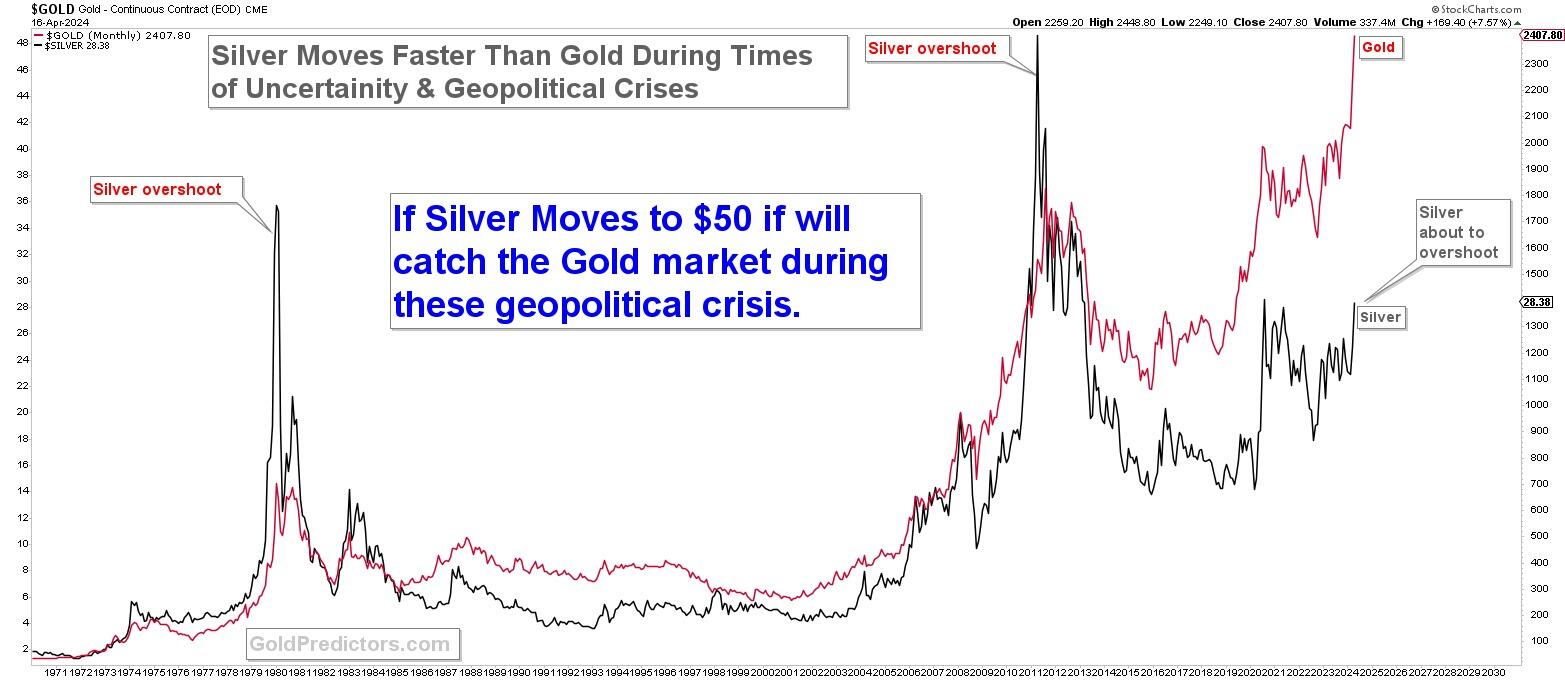
Currently, the markets reflect a strong uptrend in gold, which is trading robustly, as seen in the above chart. However, silver seems to lag in comparison, but historical patterns suggest it might catch up swiftly if the geopolitical tension escalates. Silver broke through the $26.50 mark recently. This mark is considered as a critical resistance level identified by an inverted head-and-shoulders pattern on the charts. This breakout signals the potential for rapid gains and set silver to outperform gold.
This dynamic suggests that in times of heightened uncertainty. At the same time, both metals are attractive, silver may offer quicker returns. This is due to the lower price point in silver where it is currently trading. This allows more significant percentage gains on smaller absolute moves than gold. The higher inflation will support the strong rally.
Key takeaways
The current charts and historical data reveal a growing divergence between gold and silver prices, with silver starting to accelerate. If past trends are reliable indicators and the Middle East crisis continues to deepen, we might expect both metals to climb further. Silver could potentially test the historical resistance level of $50, mirroring its rapid ascents during previous periods of global instability.
Investors and market watchers would do well to monitor these developments. The tendency of silver to outperform gold in such times can provide strategic opportunities for those looking to capitalize on the metals’ movements. Moreover, as the global landscape evolves with ongoing conflicts and economic shifts, the allure of gold and silver as safe havens will likely persist, possibly driving their prices even higher. Trading these events will benefit many investors but carries significant risks due to wide ranges. We have one entry in the spot silver for premium members at lower levels and are looking for the next entry point.
In conclusion, the current market scenario and historical insights suggest a continued uptrend for precious metals, with silver possibly leading the way. As we move into 2024, the prices for these metals are expected to remain strong, underpinned by their status as traditional safe havens amid financial turmoil. Any correction in gold and silver markets is considered a buying opportunity, with silver likely to offer a higher potential for upside moves.
Unlock exclusive gold and silver trading signals and updates that most investors don’t see. Join our free newsletter now!
Author

Muhammad Umair, PhD
Gold Predictors
Muhammad Umair is a financial markets analyst and investor who focuses on the forex and precious metals markets.