Signs of a Trade Deal Emerge as China Economy Weakens

The price of crude oil spiked by as much as 20% as the markets reopened after the weekend attacks on Saudi Arabia’s biggest refinery. This was the biggest daily gain in more than three decades. Reports said that Saudi Arabia, the world’s biggest supplier of crude oil, will be below maximum for several weeks. In the aftermath of the attack, Houthi rebels, who are funded by Iran claimed responsibility. The leaders of the group said that such targeted attacks will increase in reaction to the Saudi Arabian blockade in Yemen. United States attributed the attacks to Iran, which is going through a recession following the return of US sanctions. In a tweet, Donald Trump said that the US was locked, loaded, and ready to retaliate.
Investors woke up to another stream of weak economic data from China. A report from the National Bureau of Statistics showed that the country’s economy was going through a strained period. In August, fixed asset investments rose by 5.5%, which was higher than the previous 5.7%. This was slightly lower than the consensus estimates of 5.6%. Industrial production rose by 4.4%, which was lower than the expected gain of 5.2% and the July gain of 4.8%. YTD, the industrial production rose by 5.6%. Meanwhile, retail sales in the month rose by 7.5%, which was lower than the consensus estimate of 7.9% and the previous increase of 7.6%. This weakness means that China could strive to get a trade deal with the United States in the upcoming meetings. It also means that the PBOC will intervene to provide stimulus.
The US dollar strengthened against the euro as traders set their eyes on the Federal Reserve. The committee that sets interest rates will start its meeting tomorrow to deliberate on the pace of rate cuts. In the previous meeting, the bank lowered interest rates by 25 basis points. The officials said the rate was part of the ‘mid-cycle adjustment to policy’. This statement was interpreted as being relatively hawkish. Traders will want to know whether the Fed intends to continue lowering rates. In the past few months, Donald Trump has continued to pressure the Fed to lower interest rates.
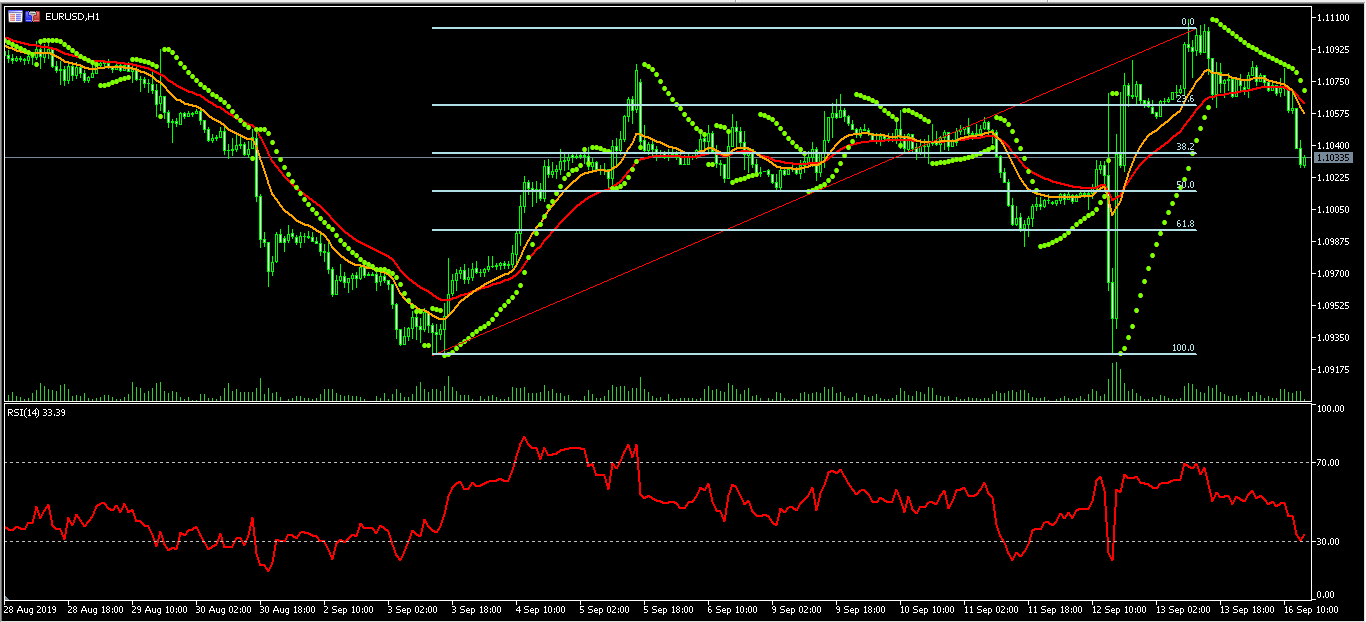
The EUR/USD pair declined sharply to a low of 1.1025 from a high of 1.1083. On the hourly chart, the pair is trading below the 14-day and 28-day moving averages. The RSI has dropped to a low of 30 while the price is along the 38.2% Fibonacci Retracement level. The Parabolic SAR is above the current price. The pair will likely continue moving lower during the American session.
XTI/USD
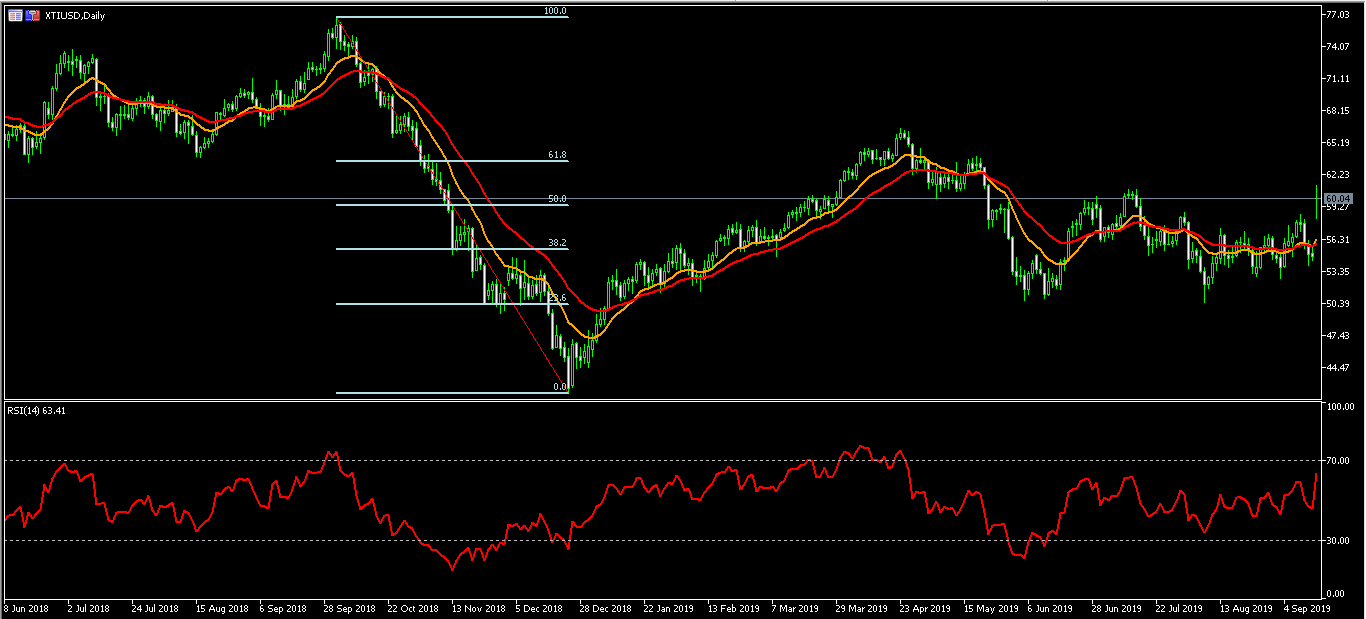
The price of WTI increased to a high of $61.25 as investors reacted to the bombings in Saudi Arabia. The XTI/USD pair is now trading at 60, which is slightly lower than the day’s high of 61.25. On the daily chart, the price is slightly above the 50% Fibonacci Retracement level. This price is also above the 14-day and 28-day moving averages while the RSI remains slightly below the overbought level of 70. The pair will likely continue being volatile as traders watch out for more news on Saudi Arabia.
USD/CHF
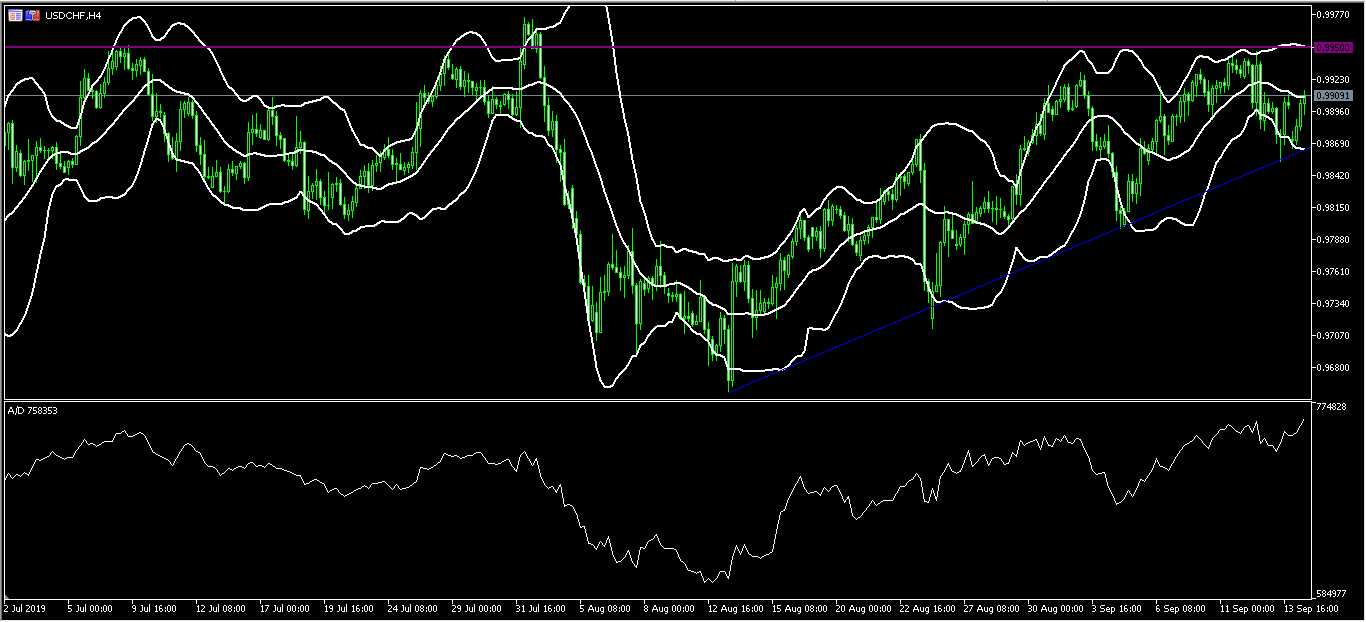
The USD/CHF pair declined sharply in the morning session as traders rushed to safety. The pair reached a low of 0.9864 before paring back all those losses. It is now trading at 0.9913, which is the highest level it has been since Thursday last week. On the four-hour chart, the pair is trading along the middle line of the Bollinger Bands and above the blue Bollinger Bands shown below. The accumulation/distribution indicator has continued to soar. There is a possibility that the pair will likely continue moving higher to test the 0.9950 resistance level.
Author
OctaFx Analyst Team
OctaFX
OctaFX is a market-leading forex broker, providing personalised forex brokerage services to customers in over 100 countries worldwide.