Reserve Bank of New Zealand Cash Rate Decision Preview: once is not enough
- The Reserve Bank of New Zealand is expected to hold rates steady on Wednesday
- May’s 25 basis point cut to 1.50%, a record low, was the first in more than two years
- Economic conditions and global concerns will keep the reduction bias intact
- A July cut is fully priced into the markets
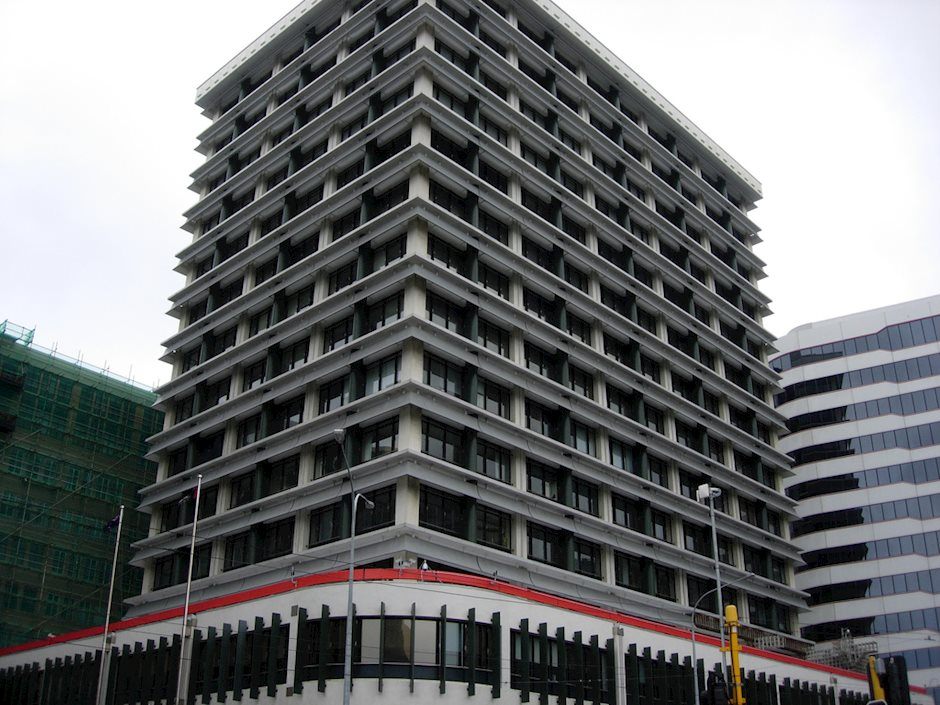

The Reserve Bank of New Zealand (RBNZ) will announce its rate decision at 10:00 pm EDT June 25th, 2:00 pm NZST and 2:00 am GMT June 26th.
Forecast
The RBNZ is widely expected to maintain its current cash rate of 1.50% after reducing its base rate by 0.25% at the May meeting.
RBNZ and global rate policy
The New Zealand central bank has led this round of rate policy. Governor Adrian Orr reduced the cash rate on May 8th and has since been followed by the Reserve Bank of Australia with a quarter point cut to 1.25% on June 4th. The American Federal Reserve moved to an expected July cut when it eliminated its temporizing language from the June 19th FOMC policy statement. European Central Bank (ECB) President Mario Draghi joined the party when he said last week that the bank could cut interest rates again or conduct more asset purchases if inflation doesn’t meet its target. His comments sent European bond yields tumbling, with the German 10-year Bunds touching -0.32% a record and the French 10-year return turning negative for the first time.

Reuters
None of the economies above whose central banks have or seem disposed to cuts rates shortly exhibit the economic weakness that traditionally presages a negative rate cycle.
The Australian economy expanded 1.8% on the year in the first quarter, down from 2.3% and 2.8% in the prior two quarters. The United States grew at a 3.1% annualized rate in the first three months with 2.2% and 3.4% in the prior quarters. Even the eurozone the weakest of the four expanded 1.2% over the year in the first quarter slightly better than predicted and 1.2% and 1.7% previously.
New Zealand Economy
New Zealand is no exception. Its economy grew at a 2.5% seasonally adjusted rate year over year in the first quarter, a bit better than anticipated and though the Treasury reduced its forecast for the 12-months ending June 30th to 2.1% from the December prediction of 2.9%, the New Zealand economy is hardly stuttering to a halt.

Reuters
Inflation was 1.5% annually in the first quarter, half the RBNZ target band of 1-3% and down from 1.9% in the previous two quarters.

Reuters
Unemployment dropped to 4.2% in the first quarter from 4.3% and is just 0.2% above the post-financial crisis low.

Reuters
There is little in the NZ statistics that seem to warrant a series of rate cuts, particularly from the already low gate of 1.75%.
NZD/USD
The New Zealand Dollar is at the low end of its three year range versus the US currency largely because of the Fed's rate ascendency over almost all of the world's other central banks. The recent and minor recovery of the kiwi owes most to the Fed's apparant change of heart. If a July US cut does not materalize, and it is not assured despite the 100% conviction of the futures market, current directions in currencies will reverse.

RBNZ policy
The reactions of the central bankers are ones of future fear. On one side there is the potential for a serious and worldwide slowdown in economic growth and trade if the US-China trade war, now cold turns hot. On the other is the concern that their economies could be left behind as rate cuts proliferate.
While Presidents Xi and Trump are scheduled to meet at the G-20 meeting next week, there seems to be no speculation that there is a deal in the works. The rate cuts that are blossoming around the world are insurance against the very likely economic damage from China-US fallout.
For most of the world, excepting to some degree the US, interest rates have never recovered even a modicum of their pre-crash levels. With so little room to cut should a recession strike it is easier and probably more effective to offer their economies more leverage in the hope that faster growth will prevent a serious slowdown from occurring rather than trying to tackle one once started.
With so little rate ammunition the world’s central banks are in essence trying to head off a recession rather than meeting it head on with a series of rapidly moving rate cuts.
The RBNZ and the RBA are closer to the Chinese economy than the US or EU so they have more to fear.
Author
Joseph Trevisani
FXStreet
Joseph Trevisani began his thirty-year career in the financial markets at Credit Suisse in New York and Singapore where he worked for 12 years as an interbank currency trader and trading desk manager.