Euro on the edge of Oblivion

Despite an initial rally off the back of safe haven flows once what is now being termed as the “Third Gulf War” commenced, the Euro has since then been the worst G-10 currency performer MTD. The situation is playing out much the same as the 2022 invasion of Ukraine, with the same suspect behind both weakening: high energy prices.
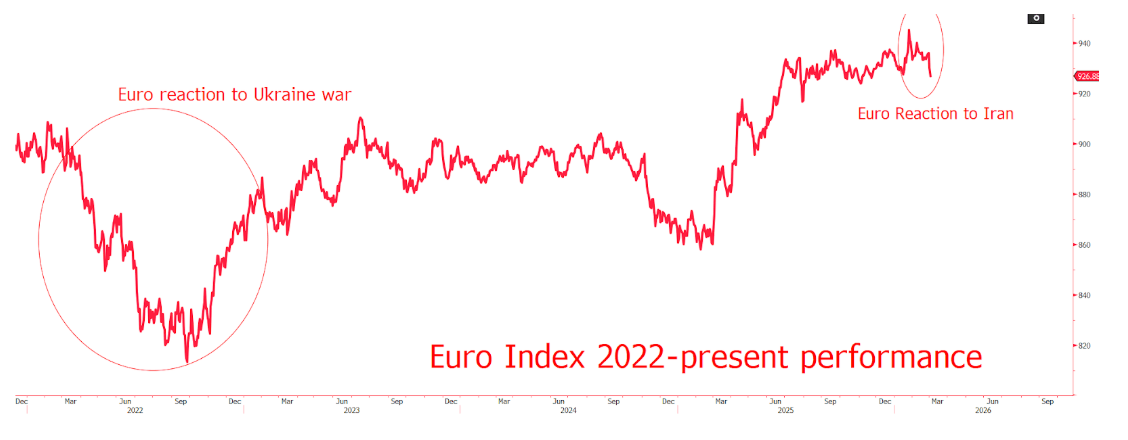
Naturally, the reaction to this current conflict is far more subdued than that of the Ukraine War, with the -1.25% weakening in the broad Euro pale in comparison to the 10% drop seen during the worst times of 2022. But it does provide a haunting playbook should this conflict and its associated energy price shock continue interminably for months.
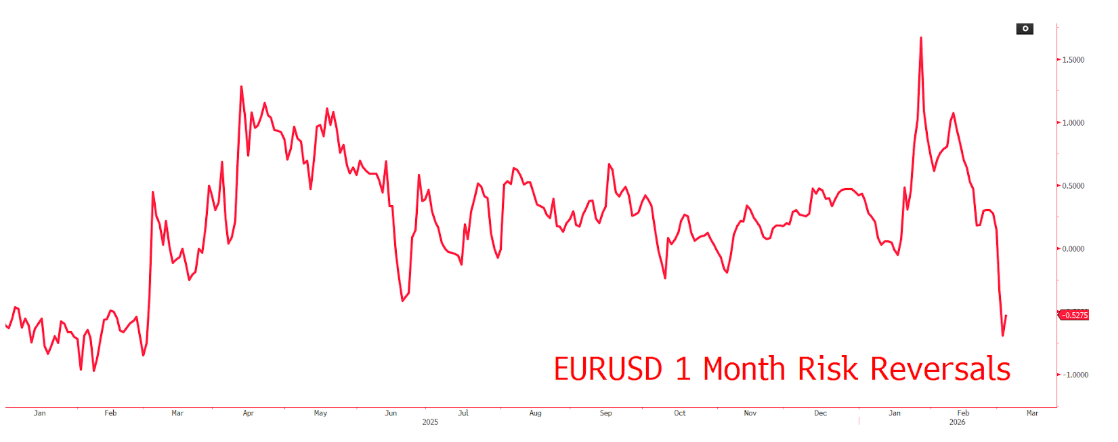
Risk reversals slightly improved during yesterday’s session to be modestly less bearish, although the one-week EURUSD risk reversal tenor widened to their most bearish Euro level since 2022. One-month reversals however are only their most Euro bearish since March of 2025, when tariff anxiety was close to fever pitch.
All of this has come at a particularly bad time for the Euro, just as German manufacturing had reached its best PMI level since they started collecting that data and broader European manufacturers were also feeling more optimistic. The triple shock of COVID, Ukraine and tariffs seemed to be wearing off, just for European gas futures to leap 26% since the start of the conflict.
The Euro may seem stoic for the moment, but a prolonged conflagration in the Gulf, the source of 10% of LNG imports for the EU, could be disastrous for the bloc and for the Euro.
Given the UK Prime Minister’s reluctance to commit UK military assets because he has heard no “clear defined plan of exit” from the US admin, this may drag on yet.
Author
David Stritch
Caxton
Working as an FX Analyst at London-based payments provider Caxton since 2022, David has deftly guided clients through the immediate post-Liz Truss volatility, the 2020 and 2024 US elections and innumerable other crises and events.