NZD/USD Elliott Wave technical analysis [Video]
![NZD/USD Elliott Wave technical analysis [Video]](https://editorial.fxstreet.com/images/Markets/Currencies/Majors/NZDUSD/new-zealand-dollar-closeup-28405768_XtraLarge.jpg)

NZD/USD Elliott Wave technical analysis
Function: Trend.
Mode: Impulsive.
Structure: Navy blue wave 3.
Position: Gray wave 3.
Direction next lower degrees: Navy blue wave 3 (started).
Details: Navy blue wave 2 looking completed, navy blue wave 3 is in play.
Wave cancel invalid level: 0.658517,
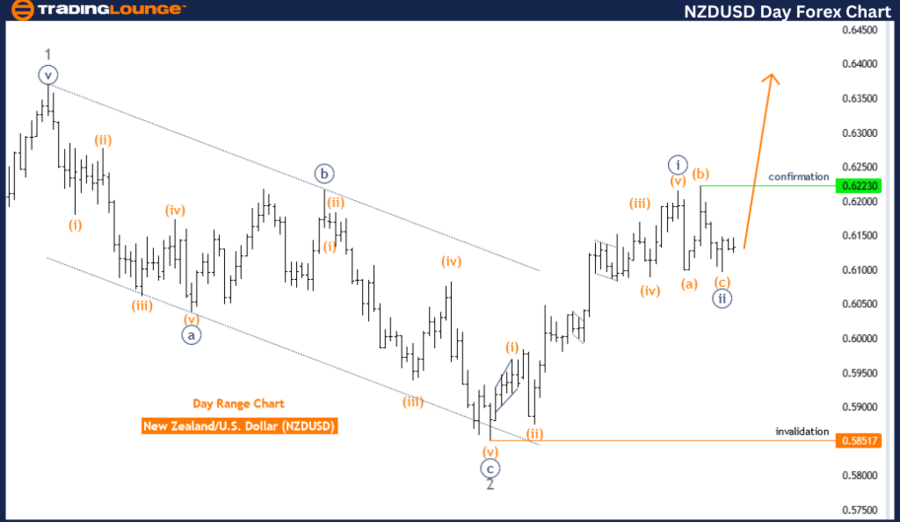
The NZDUSD Elliott Wave analysis on the day chart offers a comprehensive view of the current market trend using an impulsive mode. The primary focus is on understanding the wave structure and forecasting future movements within the Elliott Wave framework. The structure under analysis is navy blue wave 3, which is positioned within the broader context of gray wave 3.
The main function of this analysis is to monitor the ongoing trend in the NZDUSD market, currently characterized by an impulsive phase. This phase indicates strong directional movement, a hallmark of Elliott Wave's impulsive mode. The impulsive mode suggests that the market is experiencing significant momentum in one direction, specifically within the structure of navy blue wave 3.
The direction for the next lower degrees is identified as navy blue wave 3, which has already started. This implies that the market has moved past the initial corrective phase and is now progressing into the more extended and dynamic phase of the impulsive trend.
The detailed analysis indicates that navy blue wave 2 appears to have been completed. This completion marks the end of the previous corrective phase and the beginning of the current impulsive phase within navy blue wave 3. This ongoing wave signifies the continuation of the upward trend, following the established patterns of Elliott Wave theory.
A crucial aspect of this analysis is the wave cancel invalid level, set at 0.658517. This level serves as a critical benchmark for validating the current wave structure. Should the market price drop below this level, it would invalidate the existing wave count, necessitating a reevaluation of the Elliott Wave analysis and potentially altering the market outlook.
In summary, the NZDUSD day chart analysis reveals that the market is currently in an impulsive phase within navy blue wave 3, which is part of the larger gray wave 3. With the completion of navy blue wave 2, the market has transitioned into navy blue wave 3, continuing the impulsive trend. The wave cancel invalid level at 0.658517 is essential for confirming the current wave count and guiding future market expectations based on Elliott Wave principles.
NZD/USD daily chart
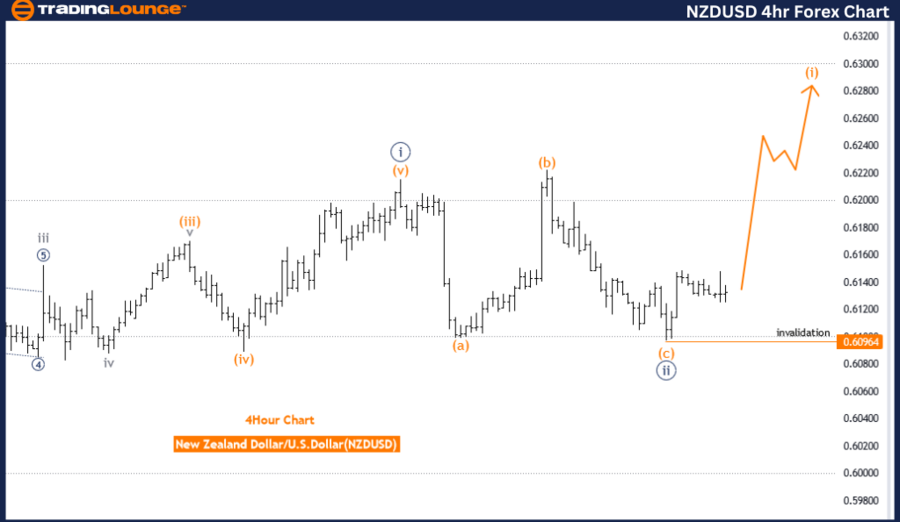
NZD/USD four-hour chart
Function: Trend.
Mode: Impulsive.
Structure: Orange wave 1.
Position: Navy blue wave 3.
Direction next lower degrees: Orange wave 2.
Details: Navy blue wave 2 looking completed, now orange wave 1 of 3 is in play.
Wave cancel invalid level: 0.60964.
The NZDUSD Elliott Wave analysis on the 4-hour chart provides an in-depth look at the current market trend using an impulsive mode. The analysis focuses on identifying the wave structure and predicting subsequent movements within the Elliott Wave framework. The structure under observation is orange wave 1, which is positioned within the larger context of navy blue wave 3.
The primary function of this analysis is to track the ongoing trend in the NZDUSD market, which is currently in an impulsive phase. This phase is characterized by a strong directional movement that is part of a broader wave pattern. The impulsive mode indicates that the market is moving forcefully in one direction, specifically within the orange wave 1 structure of navy blue wave 3.
The direction for the next lower degrees is identified as orange wave 2. This suggests that following the completion of the current impulsive phase in orange wave 1, the market is expected to transition into a corrective phase, known as orange wave 2. This phase will likely involve a pullback or consolidation after the current upward movement.
Detailed analysis reveals that navy blue wave 2 appears to be completed. This completion signifies that the market has finished its previous corrective phase and is now advancing into orange wave 1 of 3. This ongoing wave represents the continuation of the impulsive trend within the larger navy blue wave 3 framework.
An essential component of this analysis is the wave cancel invalid level, set at 0.60964. This level acts as a critical threshold for validating the current wave structure. If the market price falls below this level, it would invalidate the existing wave count, necessitating a reassessment of the Elliott Wave analysis and potentially altering the market outlook.
In summary, the NZDUSD 4-hour chart analysis indicates that the market is currently in an impulsive phase within orange wave 1, which is part of the larger navy blue wave 3. Once orange wave 1 is complete, the market is expected to transition into orange wave 2, initiating a corrective sequence. The wave cancel invalid level at 0.60964 is crucial for confirming the current wave count and guiding future market expectations based on Elliott Wave principles.
NZD/USD Elliott Wave technical analysis [Video]
Author
Peter Mathers
TradingLounge
Peter Mathers started actively trading in 1982. He began his career at Hoei and Shoin, a Japanese futures trading company.

















