Nonfarm Payrolls Preview: Jobs’ headline could be a make it or break it in tapering’s decision
- The US is expected to have added 550K new jobs in November.
- US Federal Reserve chief Powell hinted at speeding up tapering.
- The Dollar’s rally is on pause, although the US currency holds near yearly highs.

The US will announce its November employment figures on Friday, December 3. The country is expected to have added 550K new jobs in November, while the unemployment rate is seen contracting to 4.5% from 4.6%. The country added 531K positions in October, which brought the total number of jobs to 148.3 million, leaving a shortfall of 4.2 million compared to pre-pandemic levels.
Is inflation the only problem?
Back in October, the US Federal Reserve was optimistic about jobs’ creation, noting that a couple more good reports would be enough to trigger tapering. Also, back then, higher inflation was considered “temporary.” Policymakers were concerned about price pressures, although not enough to refrain from announcing tapering. Chair Jerome Powell announced in early November that the FOMC would start to reduce the pace of asset purchases this December.
Throughout November, inflation-related concerns escalated, while a newly discovered coronavirus variant resulted in Powell warning that the Omicron strain could slow job growth and extend the supply chain disruption.
Also, he said that it’s time to retire” the word “transitory” to describe inflation and discuss speeding up tapering. Ending the pandemic-related financial support would open the doors for sooner rate hikes.
Job creation and tapering future
But is skyrocketing inflation enough to act? As said, the US still needs to recover 4.2 million job positions just to return to pre-pandemic levels. Being optimistic, such a goal could be achieved mid-2022, as long as uncertainty related to the coronavirus Omicron variant can be dealt with.
Tepid job creation coupled with stubbornly high inflation may put the Fed between a rock and a hard place, as the risk of retrieving financial support too soon may pose a risk to economic progress.
A Nonfarm Payrolls headline reading of 300K or lesser will sound the alarms. As long as it stays above 400K, policymakers will be able to act.
Possible market’s reactions
The greenback has reached fresh yearly highs against most major rivals in November, with the following pullback looking corrective at this point. A solid employment report could trigger speculation that the Fed will announce new measures as soon as next week, something that should push the dollar higher and equities lower.
US Treasury yields’ behaviour will be critical for the market’s direction, however, particularly the 10-year note yield. Currently at around 1.43%, a move above 1.50% will likely boost the USD across the FX board.
Worth mentioning that Canada will also release its monthly employment report, which may result in USD/CAD initially seesawing without a clear direction
The pound and the aussie are the dollar’s weakest rivals and could fall to fresh 2021 lows on higher yields and lower equities.
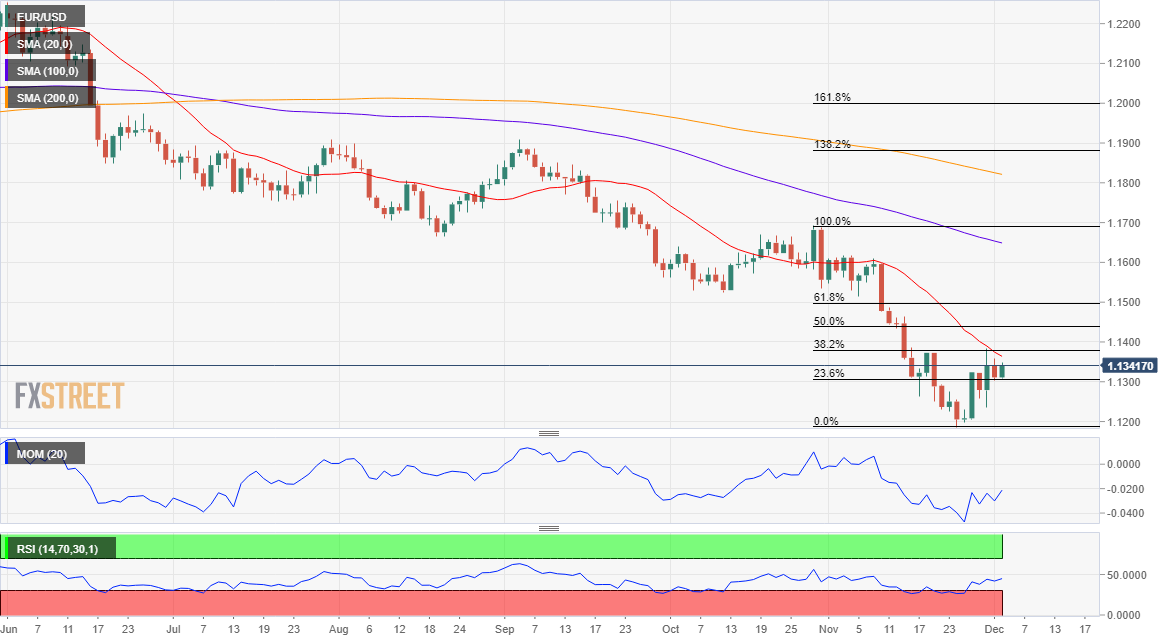
As for the EUR/USD pair, as long as it remains below 1.1380, the risk will be skewed to the downside. A break below 1.1300 and the chances are of a slide towards the 1.1160 price zone. As far as the upside goes, a move higher could see the pair test a critical long term resistance level at 1.1470.
Author

Valeria Bednarik
FXStreet
Valeria Bednarik was born and lives in Buenos Aires, Argentina. Her passion for math and numbers pushed her into studying economics in her younger years.
















