Monster earnings report adds to market pressures

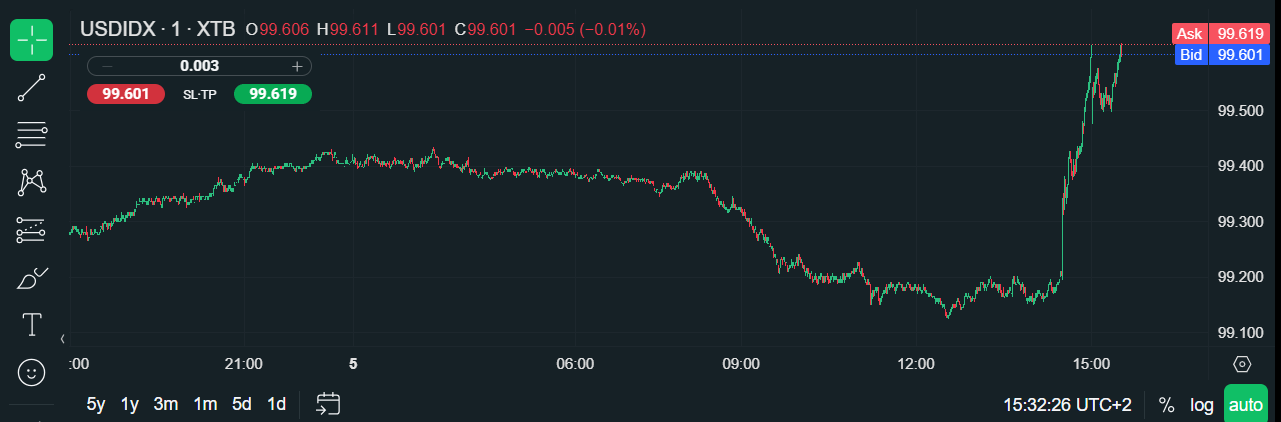
The 172k increase in Non-Farm Payrolls for May was far higher than the 85k expected. The unemployment rate remained steady at 4.3%, however, this report has already made its mark on financial markets. Treasury yields are surging, the 2-year yield is higher by nearly 10bps on Friday, the dollar is higher on a broad basis, and is the strongest currency in the G10 FX space, and US stocks are pointing to a steep decline later today, led by the tech sector.
The details of the jobs report suggest that although healthcare and education continue to do the bulk of hiring, more sectors are increasing workers including leisure and hospitality and local government. In contrast, the financial sector shed jobs last month, with little change in the other major industries. The decline in financial sector jobs may arouse fears that AI spending is killing jobs. Financial sector employment has been moderating since its peak in May 2025, so if AI is a factor in these job losses, then we should expect to see more come through the pipeline. However, for now, losses seem to be contained, and the US looks like it is seeing an upswing in the hiring cycle, with more sectors joining in the hiring boom.
The household survey, which measures the unemployment rate, corroborated strength in the NFP report. It reported that 149,000 new hires had been added to the labour force last month.
This is a monster jobs report for Kevin Warsh, the new Fed chair, to digest, and it is likely to impact his tone when he gives his first press conference after the FOMC meeting on 17th June. This report adds to pressure on the Fed to drop its easing bias, but it may not trigger a rush to price in rate hikes anytime soon. There is still a less than 40% chance of a hike from the Fed by year end after this NFP report, as stability in wage growth suggests that a rebound in hiring is not having an inflationary impact on the wider economy. This could cap gains for Treasuries and limit dollar upside in the longer term.
One of the biggest reactions to the NFP reading was in USD/JPY, which initially surged above 160.00. This is a significant level, as it is seen as a line in the sand for the Bank of Japan, who have intervened to strengthen the yen at this level. For now, the currency pair is hovering around 160.00, and Japan has downed tools for the weekend. However, if we continue to see upward pressure build on USD/JPY into next week, then expect some intervention-related volatility.
We expect to see another leg lower in the tech trade on Friday. The tech sector in the US fell 1.6% on Thursday, led lower by Broadcom, which saw its market capitalization fall by $250bn in a single session. The stock price is lower once again on Friday, Broadcom is down another 2%, suggesting that the AI-linked sell-off is not over yet. The sell-off could spread to the Magnificent 7 tech giants, which were resilient to Thursday’s tech stock sell-off. However, in the pre-market, Amazon, Apple, Nvidia and Microsoft are all lower, which suggests a deeper sell off could be coming.
There was a clear rotation out of tech and into other less highly valued sectors of the economy on Thursday. Financials, healthcare and real estate were all in demand, which sent the Dow Jones surging to another record high, as small and large cap value stocks were in demand. We expect to see value sectors continue to outperform on Friday, and the Dow Jones is pointing to a higher open later today, as it proves to be more resilient compared to the S&P 500 and the Nasdaq. The narrow breadth of the recent rally was always a risk for US indices, as a decline in just a few names in the AI sector can weigh heavily on the index. S&P 500 and the Nasdaq, which is what we are seeing now.
As we reach the end of the week, the market is facing another tech sell-off, and fears that more strong economic data could force the Fed’s hand to drop its easing bias this month, and perhaps even signal that rate hikes are a possibility in the future.
Chart 1: Dollar index surges after NFP
Author

Kathleen Brooks
XTB UK
Kathleen has nearly 15 years’ experience working with some of the leading retail trading and investment companies in the City of London.