Gold Weekly Forecast: Strong US labor market weighs heavily as Middle East uncertainty lingers
- Gold registered large weekly losses, pressured by strong US data and Middle East uncertainty.
- May CPI inflation data from the US could trigger the next big action.
- The technical outlook points to a bearish breakout.

Following the previous week’s indecisive action, Gold (XAU/USD) remained stuck in a relatively tight range for the majority of the week before falling sharply on Friday as markets reacted to the persistent Middle East uncertainty and impressive macroeconomic data releases from the US. May inflation data from the US and US-Iran war developments could trigger the next big action in Gold in the near term.
Gold reacts to Middle East headlines and US data
Following US President Donald Trump announcement on Truth Social on Friday that they will lift the blockade and allow ships caught in the Strait of Hormuz to start the process of "heading home," Iran's Fars News agency reported that Iran has rejected Trump's claims.
Over the weekend, the BBC reported that Trump is seeking changes related to the Strait of Hormuz and the removal of enriched uranium in the Memorandum of Understanding (MoU). Meanwhile, the US military said that it attacked Iranian radar and drone sites in the city of Goruk and the island of Qehm.
In this context, markets started the week on a cautious note and Gold lost more than 1% on Monday. Additionally, Iranian news outlets reported that Iran's negotiating team stopped exchanging messages through mediators with the US in protest against Israel’s renewed attacks on Lebanon.
Although Trump announced that he called Israeli Prime Minister Benjamin Netanyahu and asked him not to proceed with a major raid on Beirut, Gold failed to gather recovery momentum on Tuesday. The US Dollar (USD) gathered strength and capped XAU/USD’s upside after the data from the US showed that JOLTS Job Openings rose sharply to 7.61 million in April from 6.88 million in March.
Gold came under renewed bearish pressure and dropped below $4,430 midweek as better-than-expected private sector employment data for May supported the USD. Additionally, geopolitical tensions remained high and further weighed on Gold as the US military said that it launched "self-defence" strikes on Iran's Qeshm Island and defeated multiple Iranian missiles and drones in response to Iran's drone attacks on US forces in Kuwait.
News of Israel and Lebanon agreeing to renew the ceasefire helped Gold erase a portion of its weekly losses on Thursday. Furthermore, US President Donald Trump noted that they were in the middle of final negotiations to end the war with Iran when the House voted to limit his powers earlier in the week.
Gold started the day on the back foot on Friday after Hezbollah said they rejected the decision and Israeli and Hezbollah forces started exchanging strikes again. Later in the day, XAU/USD extended its slide on renewed US Dollar (USD) strength and dropped to its weakest level since late March below $4,350. The US Bureau of Labor Statistics reported that Nonfarm Payrolls (NFP) rose by 172K in May, beating the market expectation of 85K by a wide margin, and revised the April NFP growth to 179K from 115K.
Gold investors await US inflation data
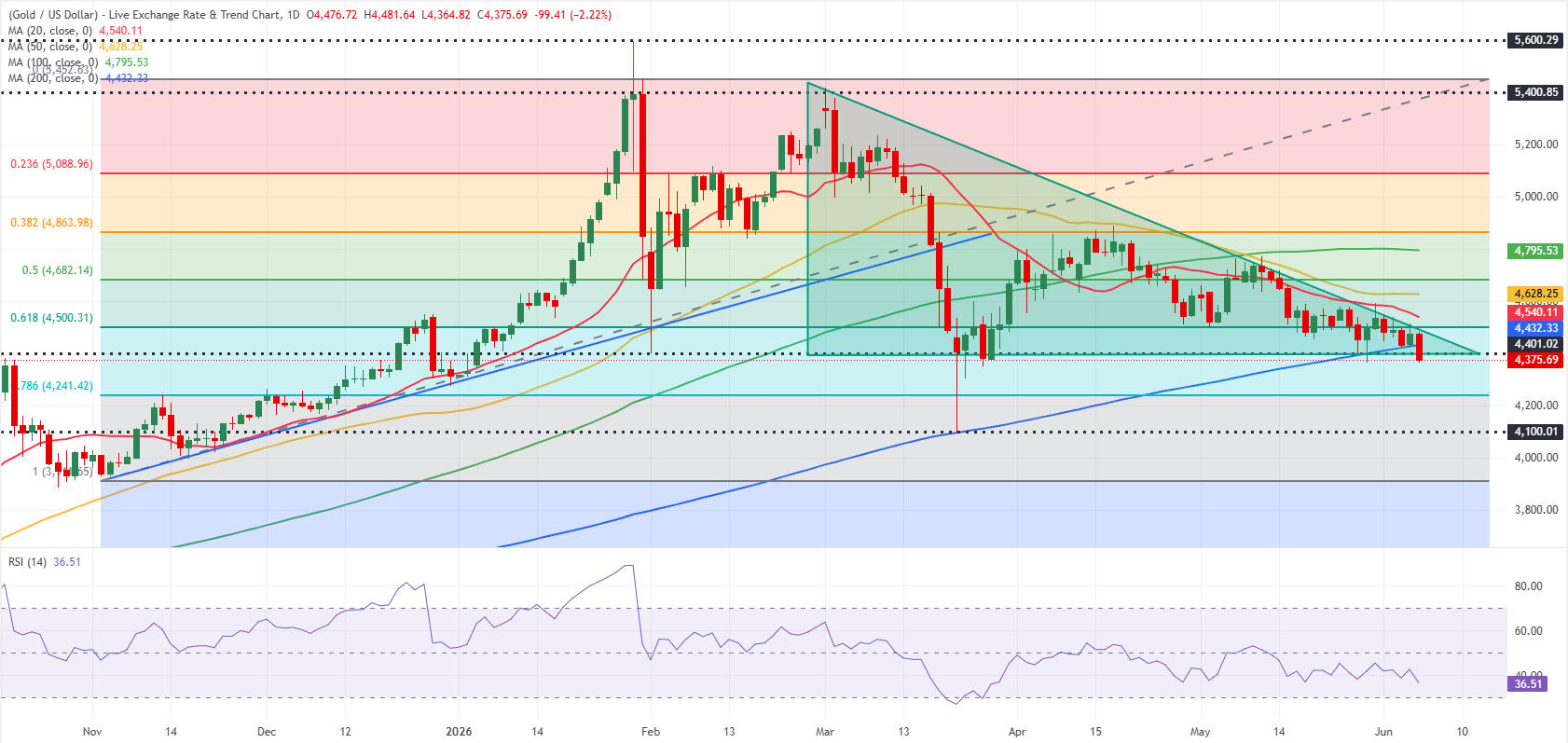
The Federal Reserve (Fed) will be in the blackout period. The May Consumer Price Index (CPI) data, scheduled to be released on Wednesday, will be the last critical piece of information ahead of the June 16-17 Federal Open Market Committee (FOMC) meeting.
On a monthly basis, the CPI is forecast to rise 0.5% following the 0.6% increase recorded in April. In this period, the core CPI, which excludes volatile food and energy prices, is seen rising 0.3%, compared to 0.4% in April.
Investors are likely to react to the monthly core CPI print to see whether high energy costs are spreading into the wider economy.
A reading above the market forecast could feed into expectations for a hawkish Fed policy outlook, especially after latest data confirmed healthy labor market conditions, and boost the USD with the immediate reaction. In this scenario, XAU/USD is likely to remain under bearish pressure.
Conversely, a softer-than-expected core CPI print could help XAU/USD stage a rebound with the immediate reaction. However, any bullish action in Gold could remain short-lived unless there is a sharp decline in crude Oil prices followed by a resolution in the Middle East.
According to the CME FedWatch Tool, markets are currently pricing in about a 70% chance that the Fed will raise the interest rate by 25 basis points (bps) at least once by the end of the year. Moreover, the probability of a hike as early as September stands around 60%.
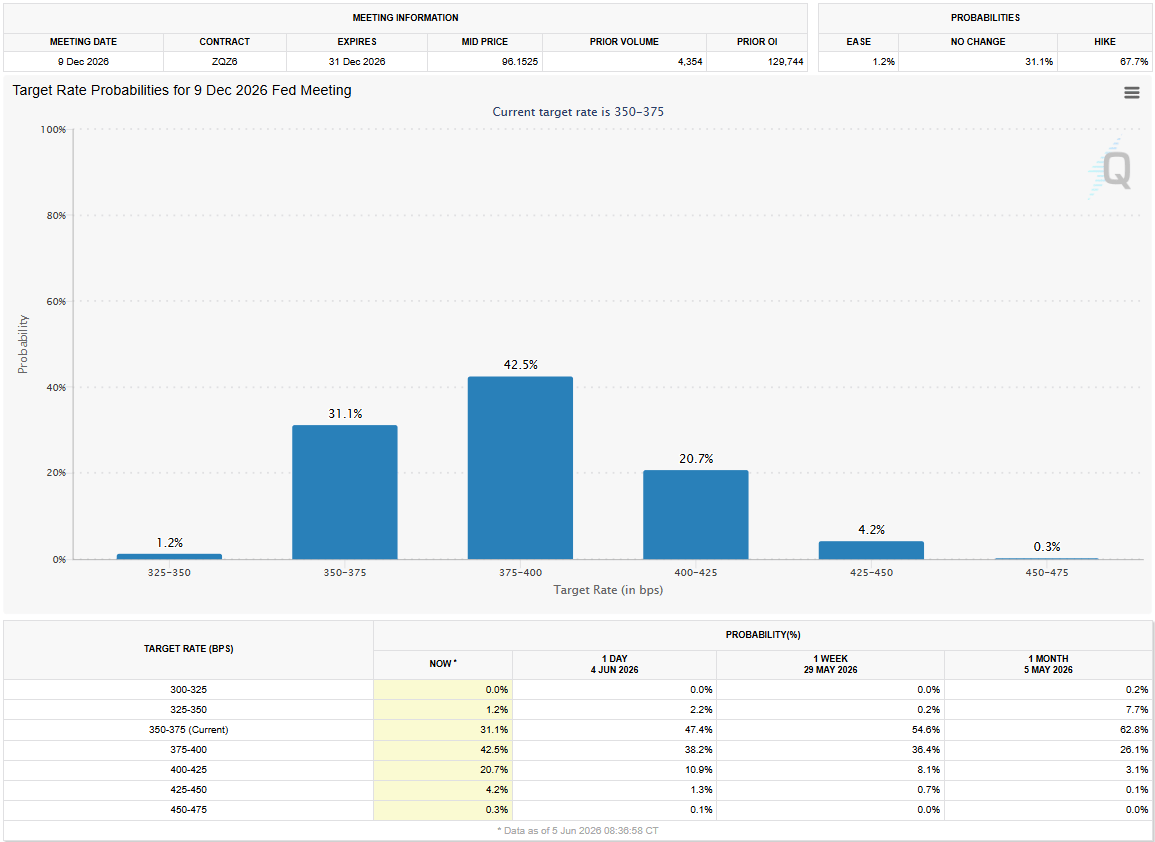
“Following a somewhat contentious US rate-cutting cycle that began in 2024, the market has pivoted to the strong possibility of rate hikes into year-end and beyond, with a firm economy facing pass-through inflation pressures,” Johan Palmberg, senior quantitative analyst at the World Gold Council, says. “This could weigh on risk assets through discount rates, as well as increase borrowing costs for households and businesses.”
The largest near-term risk may come from energy markets, Palmberg adds. “Oil is dominating headlines and inflation expectations, as well as driving bond yields. A sharp rise in energy prices driven by inventory depletion could initially push yields higher, strengthen the US Dollar and extend Gold's current malaise before the longer-term implications become apparent.”
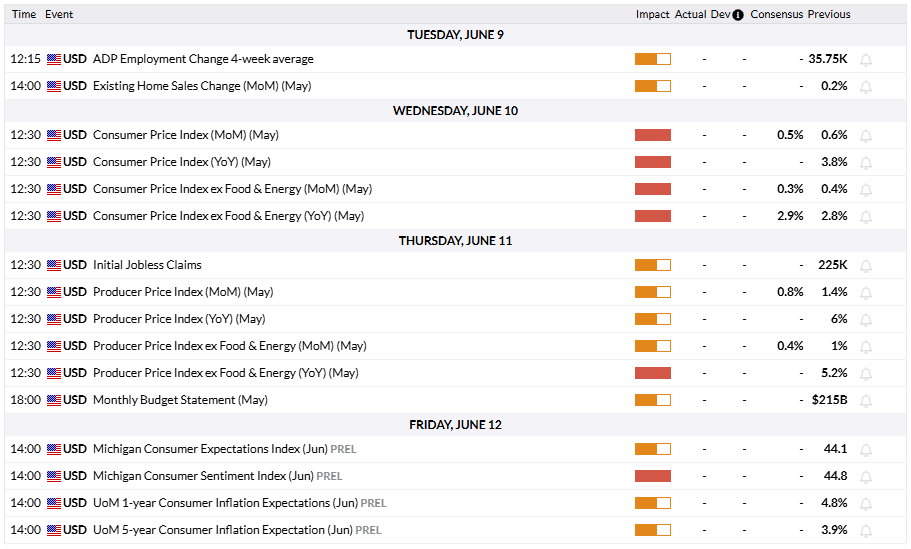
Gold technical analysis: Short-term outlook signals a bearish breakout
Gold dropped below the 200-day Simple Moving Average (SMA) and the bottom line of the descending triangle on the daily chart, a bearish continuation pattern. The Relative Strength Index (RSI) indicator fell below 40 following short-lasting recovery attempts, highlighting a buildup in bearish momentum.
In case Gold remains below $4,430-$4,400, where the bottom of the descending triangle and the 200-day SMA meet, and continues to use that area as resistance, technical sellers could continue to dominate the action and open the door for another leg lower toward $4,240, the Fibonacci 78.6% retracement level of the November-February uptrend, $4,100 (static level, round level) and $4,000 (psychological level).
Gold needs to stabilize above $4,430-$4,400 to alleviate the bearish pressure. Once that happens, $4,520-$4,540 (descending trend line, 20-day SMA) could be seen as the next resistance area ahead of $4,680 (Fibonacci 50% retracement) and $4,800 (100-day SMA).
Gold FAQs
Gold has played a key role in human’s history as it has been widely used as a store of value and medium of exchange. Currently, apart from its shine and usage for jewelry, the precious metal is widely seen as a safe-haven asset, meaning that it is considered a good investment during turbulent times. Gold is also widely seen as a hedge against inflation and against depreciating currencies as it doesn’t rely on any specific issuer or government.
Central banks are the biggest Gold holders. In their aim to support their currencies in turbulent times, central banks tend to diversify their reserves and buy Gold to improve the perceived strength of the economy and the currency. High Gold reserves can be a source of trust for a country’s solvency. Central banks added 1,136 tonnes of Gold worth around $70 billion to their reserves in 2022, according to data from the World Gold Council. This is the highest yearly purchase since records began. Central banks from emerging economies such as China, India and Turkey are quickly increasing their Gold reserves.
Gold has an inverse correlation with the US Dollar and US Treasuries, which are both major reserve and safe-haven assets. When the Dollar depreciates, Gold tends to rise, enabling investors and central banks to diversify their assets in turbulent times. Gold is also inversely correlated with risk assets. A rally in the stock market tends to weaken Gold price, while sell-offs in riskier markets tend to favor the precious metal.
The price can move due to a wide range of factors. Geopolitical instability or fears of a deep recession can quickly make Gold price escalate due to its safe-haven status. As a yield-less asset, Gold tends to rise with lower interest rates, while higher cost of money usually weighs down on the yellow metal. Still, most moves depend on how the US Dollar (USD) behaves as the asset is priced in dollars (XAU/USD). A strong Dollar tends to keep the price of Gold controlled, whereas a weaker Dollar is likely to push Gold prices up.
Author

Eren Sengezer
FXStreet
As an economist at heart, Eren Sengezer specializes in the assessment of the short-term and long-term impacts of macroeconomic data, central bank policies and political developments on financial assets.

















