Mid-Terms: Can Democrats change Trump's trade policies? Experts are divided
- Trump's tariffs have had a considerable impact on currency markets.
- If Democrats win the House, can they impact this topic?
- Experts are divided on the potential impact of Congress on Trump.
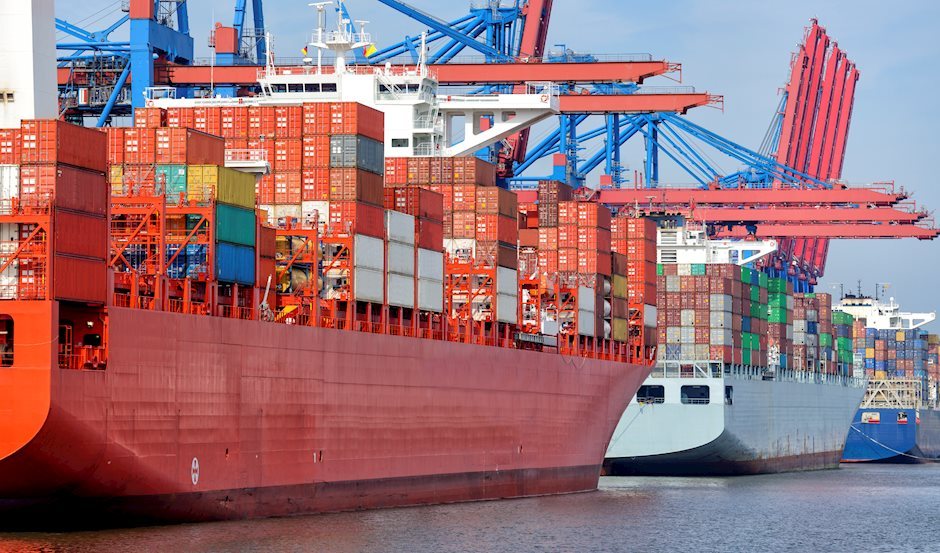

The Trump Administration slapped tariffs on the EU, on America's North American partners, and most importantly, on China. The duties have been met with retaliation in most cases and have triggered concerns about the global economy. The US Dollar took advantage of the deterioration of trade relations.
Democrats are favorites to win the House of Representatives. Can they force Trump to take a different approach? This is the third and last question we posed to six experts and they are divided in their responses.
Here are the previous pieces:
- Will the Dollar rise on a Republican win or just do its own thing? Experts weigh in
- Are currencies more sensitive to trade, taxes, or other Trump policies? Experts have their say
And now for the responses on the question at the top:
Ed Ponsi
Ed Ponsi CMT, CTA sees Democrats trying to stop Trump on trade and basically on anything:
Yes. Due to the current political climate in the U.S., I wouldn’t be surprised if some politicians try to expressly undermine any and all of the President’s policies, regardless of their effectiveness.
John W. O'Donnell
John W. O’Donnell, from the Online Trading Academy,
No, Trump is a “trade bully”, his political base loves his present trade policies and negotiations strategies.
Joseph Trevisani
Our in-house expert Joseph Trevisani does not think Dems will spend the new political capital on trade and points to other topics of high interest for the opposition party:
No. The Democrats will stress domestic policies that are important to their base and have a direct impact on the electorate. Trade will be a distant and non-emotional second.
Except for the Senate approval of treaties trade policy in the United States and foreign policy, in general, is under the control of the President. Congress, particularly the House has little direct authority on trade or international relations.
If the Democrats win control of the House their prospective agenda, as outlined by Minority leader Nancy Pelosi, is focused on items as health care, immigration, gun control, Congressional transparency, support for special counsel Robert Mueller's investigation and other domestic policy initiatives. A special desire and one that is likely to take most of the media attention is the planned investigations of the Trump Administration and President Trump and many of this associates and family personally.
In recent polling, by the Luntz Global Partners, 62 percent of American said that tariffs are worth the risk to get a better trade deal. Democrats will not spend their new political capital on trade policy.
Barbara Rockefeller
Barbara Rockefeller, from Rockefeller Treasury Services, describes the different roles of the White House and Congress in relation to trade but doubts that Democrats have the spine to act.
No. The presidential power to impose tariffs is based on “national security” and obviously a false reason in the current situation. Trump didn’t have the authority to dump NAFTA, either—only Congress can abrogate a treaty, and the NAFTA Agreement does rise to the status of “treaty.” But if the Dems in Congress lacked the spine to do anything about Trump’s usurping power from Congress, having the majority is not going magically to inject spines. Noise, yes. Actions, no.
Dr. Woody Johnson
Dr. Woody Johnson, from the Online Trading Academy, looks at another aspect of victory and of a Republican one. The results may be very different for markets:
If the Democrats win both chambers of Congress in the elections, the market reaction is likely to be much more impactful. As is apparent the chances of Trump facing impeachment would rise substantially in the event of the Democrats controlling both chambers of Congress given the need for a two-thirds majority In the Senate for impeachment to be successful. If the Democrats secure a big win in these elections along with any further proof of Trump's transgressions and alleged criminal activity, this conversation could gather more traction.
On the other hand, if the elections go Republican and they gain control of both chambers of Congress but with a supermajority in the Senate, the market reaction is likely to be just as severe. This outcome would raise the likelihood of further tax cuts and more deregulation along with more rigorous immigration laws, health care reform, and fiscal policy adjustments. These developments would likely result in greater monetary policy tightening by the Fed which should create stronger yields in bonds and a stronger US Dollar.
Mike "Mish" Shedlock
Mike "Mish" Shedlock, from Sitka Pacific Capital Management, acknowledges the role of tariffs but also notes out other global topics and warns that it is hard to tell what the future may have for us:
Tariffs are also strongly in play. More tariffs will definitely hurt the US economy and the global economy as well. Short-term, tariffs may cause a bit of price inflation and strengthen the dollar. Long-term, the Fed will resort to very unexpected rate cuts (at least as viewed from the present). If this plays out, the dollar may decline significantly. Iran provides a similar setup.
There is potential for a real short-term inflationary disaster if Trump sanctions work and oil from Iran is cutoff. There is also the potential for the ECB, India, and other nations to ignore them. Oil fears may be overblown or not. I suspect they are, and look for oil to weaken. I like the election question because it has everyone’s attention. But in reality, the other things I mentioned (Tariffs, Iran, Fed and ECB actions) are far more important than the midterms.
We are all guessing at things here. Anyone who pretends otherwise is a charlatan. But as long as we are going to guess, let’s guess about the right things.
Going out on a limb, my guess is Trump’s tariffs backfire spectacularly, a global recession hits in 2019, the Fed starts cutting rates, the dollar tanks, stocks dive, and gold soars.
Author
FXStreet Team
FXStreet

















