|

Merk Research: U.S. Business Cycle -- recession??

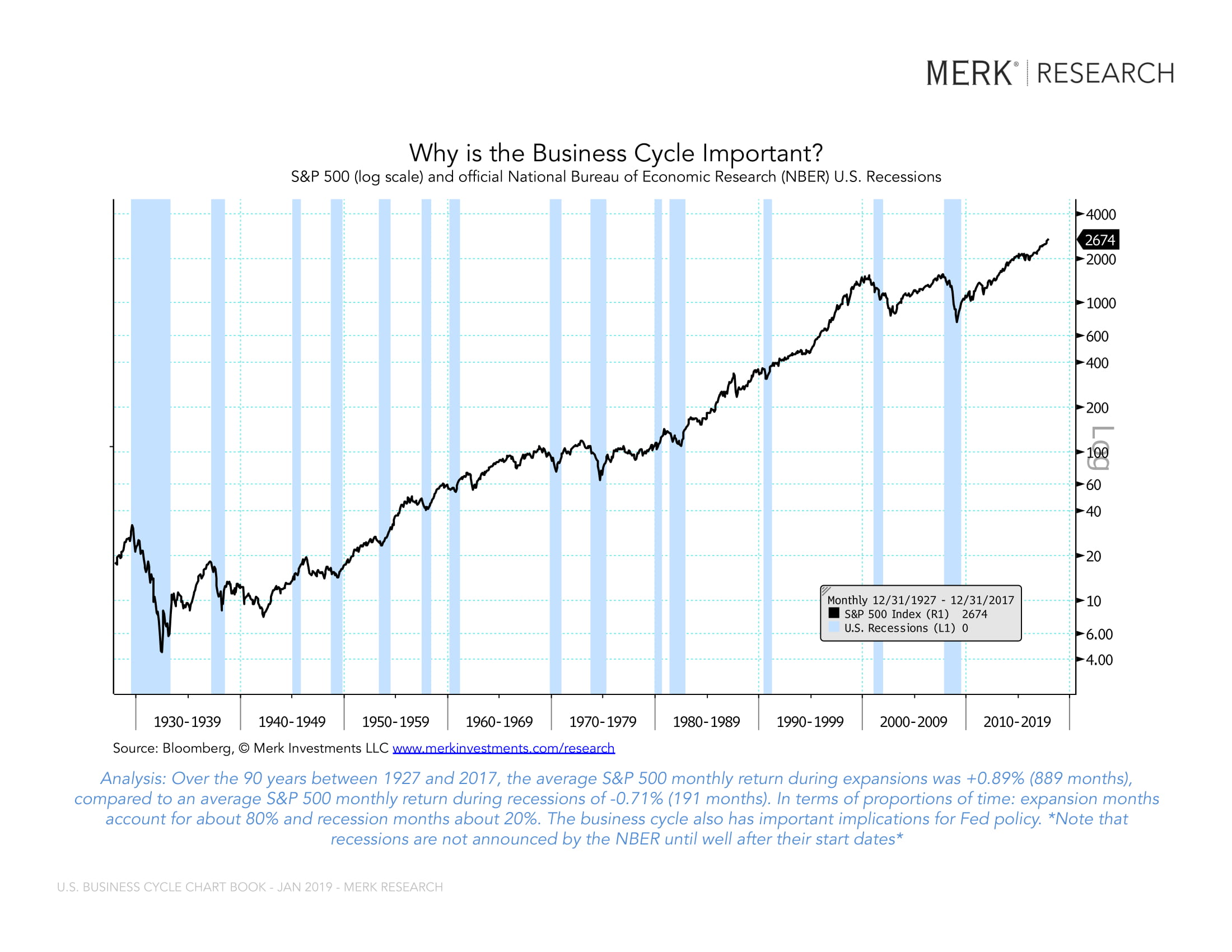
Why is the Business Cycle Important?

Analysis: Over the 90 years between 1927 and 2017, the average S&P 500 monthly return during expansions was +0.89% (889 months), compared to an average S&P 500 monthly return during recessions of -0.71% (191 months). In terms of proportions of time: expansion months account for about 80% and recession months about 20%. The business cycle also has important implications for Fed policy. *Note that recessions are not announced by the NBER until well after their start dates*
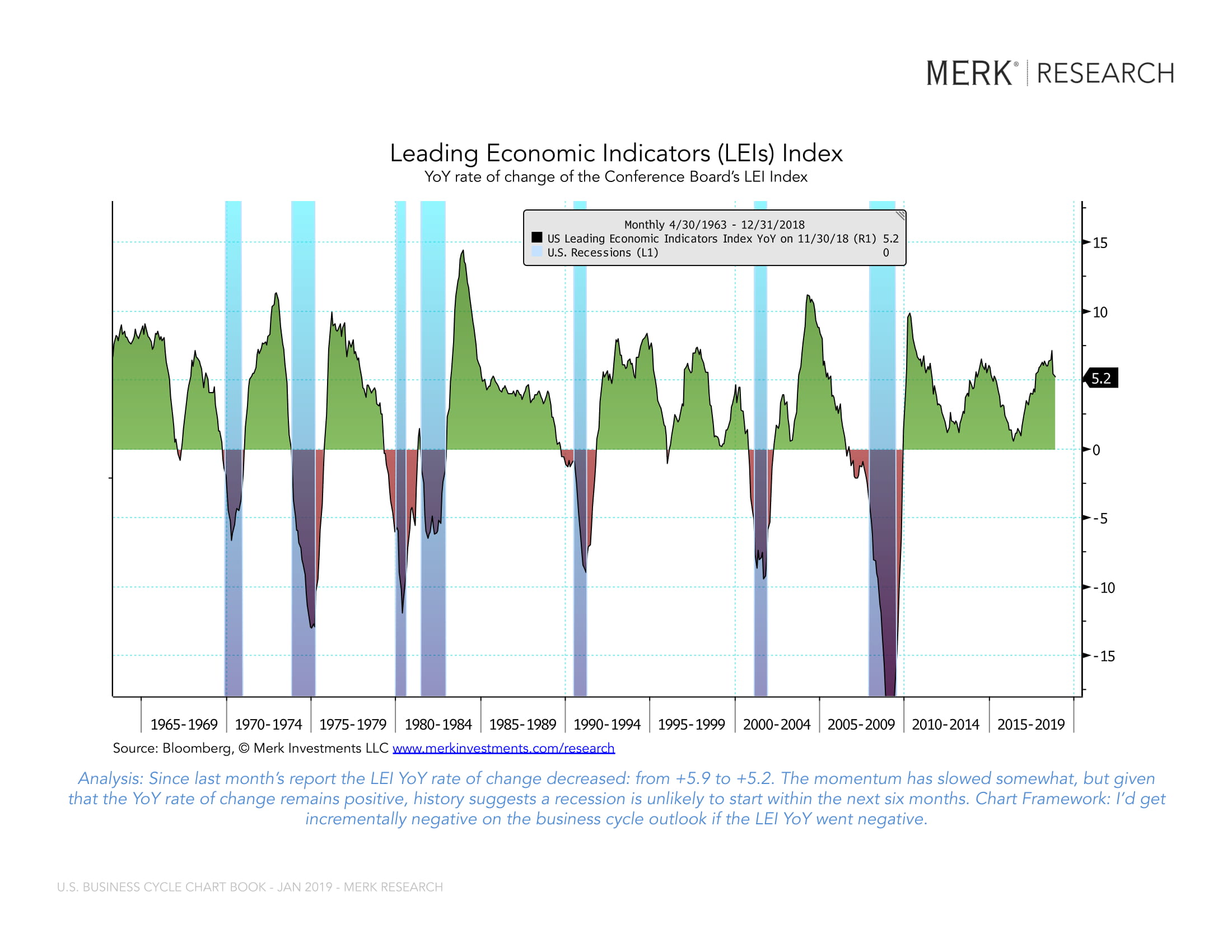
Leading Economic Indicators (LEIs) Index

Analysis: Since last month’s report the LEI YoY rate of change decreased: from +5.9 to +5.2. The momentum has slowed somewhat, but given that the YoY rate of change remains positive, history suggests a recession is unlikely to start within the next six months. Chart Framework: I’d get incrementally negative on the business cycle outlook if the LEI YoY went negative.
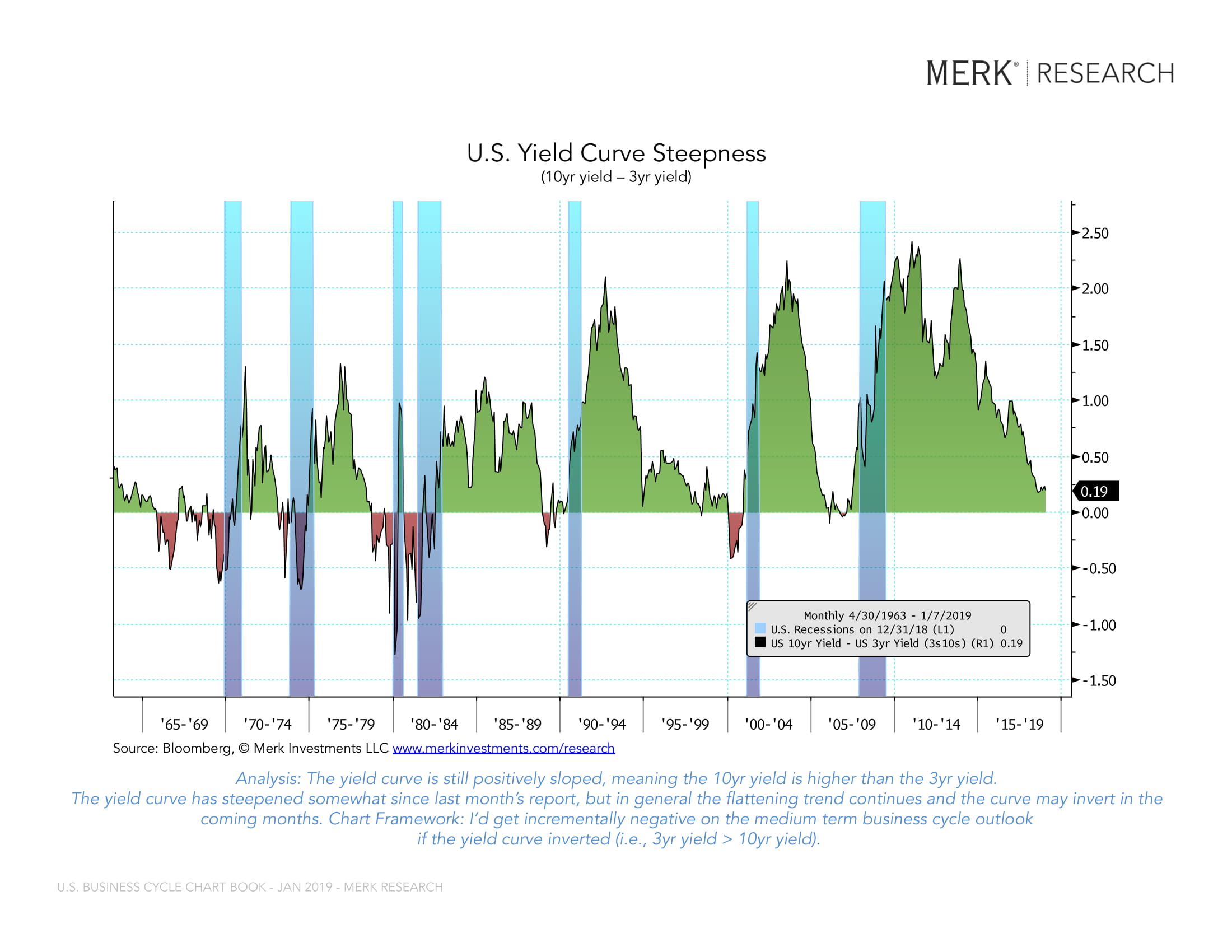
U.S. Yield Curve Steepness

Analysis: The yield curve is still positively sloped, meaning the 10yr yield is higher than the 3yr yield. The yield curve has steepened somewhat since last month’s report, but in general the flattening trend continues and the curve may invert in the coming months. Chart Framework: I’d get incrementally negative on the medium term business cycle outlook if the yield curve inverted (i.e., 3yr yield > 10yr yield).

Download The Full U.S. Business Cycle

Author

Axel Merk

Axel Merk

Merk Hard Currency Fund

Axel Merk is the Founder and President of Merk Investments. Merk is an expert on macro trends, hard money, international investing and on building sustainable wealth.


More from Axel Merk
Share:

Markets move fast. We move first.

Orange Juice Newsletter brings you expert driven insights - not headlines. Every day on your inbox.

By subscribing you agree to our Terms and conditions.

Editor's Picks

EUR/USD declines toward 1.1700 on solid USD recovery

EUR/USD turns south and declines toward 1.1700 on Wednesday. A solid comeback staged by the US Dollar weighs heavily on the pair, as traders look to USD short covering ahead of US CPI on Thursday. However, the downside could be capped by hawkish ECB expectations. 

GBP/USD slides toward 1.3300 after softer-than-expected UK inflation data

GBP/USD has come under intense selling pressure, eyeing 1.3300 in the European session on Wednesday. The UK annual headline and core CPI rose by 3.2% each, missing estimates of 3.5% and 3.4%, respectively, reaffirming dovish BoE expectations and smashing the Pound Sterling across the board. 

Gold clings to modest gains above $4,300

Following Tuesday's volatile action, Gold regains its traction on Wednesday and trades in positive territory above $4,300. While the buildup in the USD recovery momentum caps XAU/USD's upside, the cautious market stance helps ithe pair hold its ground.

Bitcoin, Ethereum and Ripple extend correction as bearish momentum builds

Bitcoin, Ethereum, and Ripple remain under pressure as the broader market continues its corrective phase into midweek. The weak price action of these top three cryptocurrencies by market capitalization suggests a deeper correction, as momentum indicators are beginning to tilt bearish.

Ukraine-Russia in the spotlight once again

Since the start of the week, gold’s price has moved lower, but has yet to erase the gains made last week. In today’s report we intend to focus on the newest round of peace talks between Russia and Ukraine, whilst noting the release of the US Employment data later on day and end our report with an update in regards to the tensions brewing in Venezuela.

AAVE slips below $186 as bearish signals outweigh the SEC investigation closure

Aave (AAVE) price continues its decline, trading below $186 at the time of writing on Wednesday after a rejection at the key resistance zone. Derivatives positioning and momentum indicators suggest that bearish forces still dominate in the near term.