Is There Any Gold in Auburn?


What comes to your mind when you hear about Auburn, Alabama? I guess nothing. But this is a mistake. There is a real treasure hidden there. Am I talking about gold?
Mises Institute
No. I’m talking about the Mises Institute, the worldwide epicenter of libertarian political theory and the Austrian school of economics. It is named after Ludwig von Mises, one of the greatest economists of the 20th century. The Institute was founded in 1982 by Murray Rothbard (among others), another eminent economist and a co-founder of the Cato Institute (he decided to establish the Mises Institute after a split between him and the Cato Institute). The Institute also gets backing from Fredrich Hayek, the 1974 Nobel Laureate in Economics. OK, fine. But why am I writing about that? Well, there are a few good reasons for that.
Cantillon Effect and Gold
First of all, I have been spending the summer in Auburn as a Summer Fellow. It’s a great full-time research project opportunity. Actually, I’m a fellow for the second time. Last time I was in Auburn in 2014, when I worked on my Ph.D. dissertation about the Cantillon Effect. What is it? Well, the key thing is that the increase in money supply doesn’t affect all individuals and businesses proportionately and at the same time, but disproportionately and sequentially, leading to changes in income distribution and then in the price structure and production.
An example? Richard Cantillon, the Irish economist who lived in the 16th and 17th century (so, under the gold standard) and who first described this phenomenon, noticed that newly extracted gold first reached the mine owners and miners. As the prices have not risen yet, they will be in better position, being able to consume more. The same applies to their suppliers – and new money gradually spreads through the economy. However, those who get new money late will suffer as in the meantime they will have to pay higher prices. Hence, there is a change in the distribution of income, the structure of relative prices and, in consequence, in the structure of production.
Or, in other words, the effect of the increase in money supply depends on how new money enters the economy. If the new money comes from gold mines, their owners and miners are better off. If the new money was spent on gold, then its prices would increase. However, we know that it is not the case. Instead, new money enters the economy via open market operations, so government bonds yields decline and the Treasury can pay lower interest rates. When new money enters the economy via the asset market, as it is today, then we have asset prices inflation. And, of course, when the prices of risky assets are pumped, then the value of safe-haven assets, such as gold, declines.
Side Effects of Monetary Policy and Gold
This year I work on my habilitation thesis about the unintended consequences of unconventional monetary policy. What do I mean by that? Well, my research is still at an early stage, but the general idea is that quantitative easing and ultra-low interest rates did not work. I mean, the Fed perhaps prevented the total collapse of the financial system, but it failed to revive credit action and economic growth (as a reminder, we are in the slowest recovery in the post-war period).
Instead, it caused some unintended (or maybe intended?) consequences, such as the rise in asset prices (to generate a wealth effect and boost spending – hint: it did not work either, instead inequalities rose), the zombification of the economy (ultra-low interest rates and easy liquidity artificially kept unproductive companies alive), and risk-taking. When interest rates are close to zero, investors search for yields, investing in more risky assets but with higher yields.
So we shouldn’t be surprised that gold prices have been in a sideways trend. The relatively sluggish economic growth is positive for the yellow metal. But, on the other hand, ultra-low interest rates encourage individuals to invest not in gold, but in risky assets with higher yields.
Hence, somewhat paradoxically, the Fed’s tightening cycle might actually be positive for gold if it halts the excessive risk taking and if risk premia return to more normal levels.
Some Photos Instead of Conclusions
There is also another link between the Mises Institute and gold. Coming to the Mises University or talking with the staff you can learn a lot about the gold directly. I don’t mean that they are all gold bugs, although some of them are. And some prefer Bitcoin. But what they have in common is that they are opponents of the current monetary system based on fiat currencies. They clearly prefer some version of a commodity standard – and in the Institute’s massive library you can find a lot of books - not only on the gold standard, but also about gold itself and its trading.
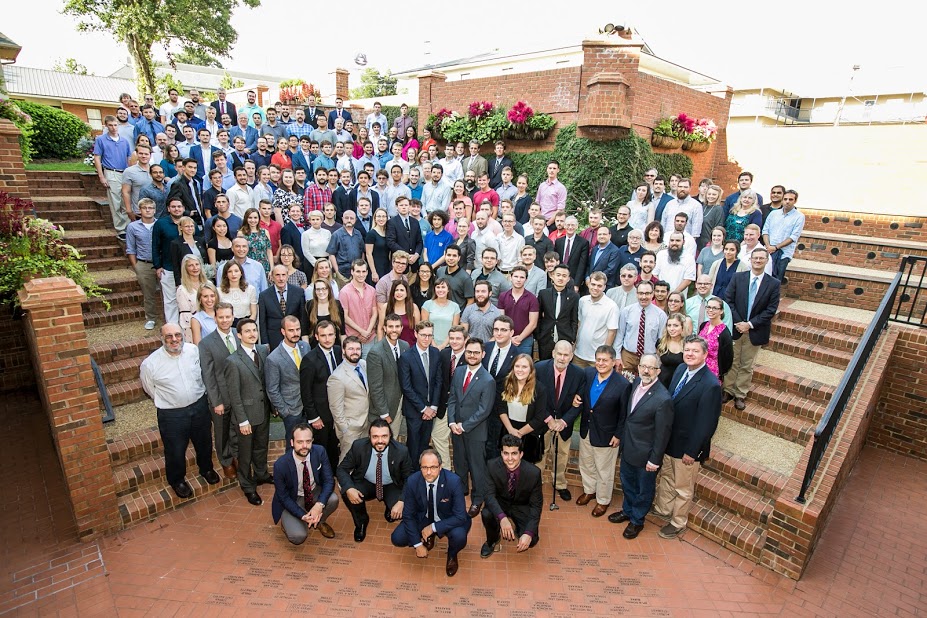
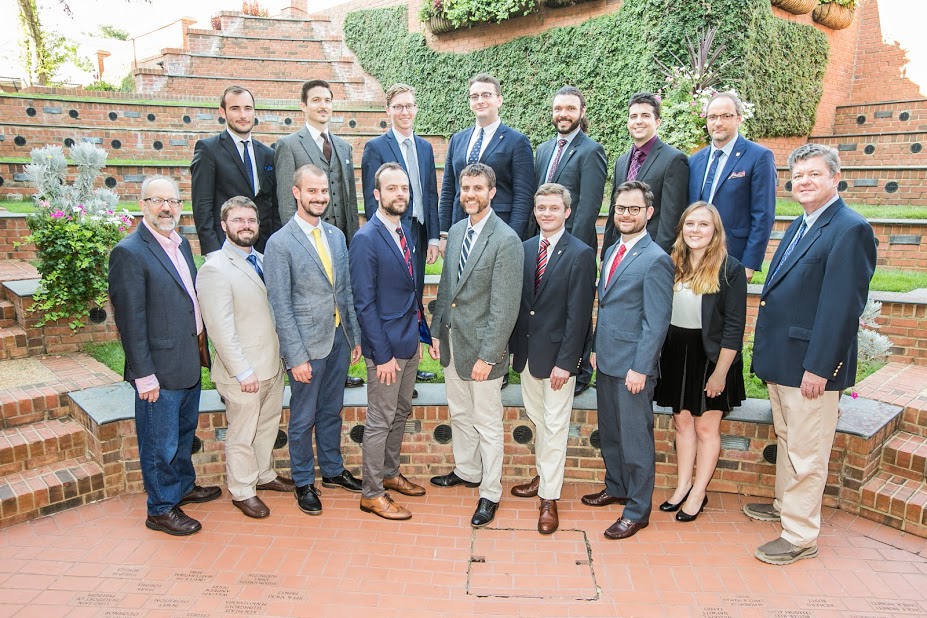
As I constantly try to deepen my knowledge about the precious metals market, I’m going to read and review some of those books for our Readers in the near future. In the meantime, I send you a few photos, and best summer wishes, directly from Sweet Home Alabama.
Want free follow-ups to the above article and details not available to 99%+ investors? Sign up to our free newsletter today!
Author
Arkadiusz Sieroń
Sunshine Profits
Arkadiusz Sieroń received his Ph.D. in economics in 2016 (his doctoral thesis was about Cantillon effects), and has been an assistant professor at the Institute of Economic Sciences at the University of Wrocław since 2017.