Inflation jumps the most in a decade, US markets unmoved
- Consumer Price Index rises 0.6% in March and 2.6% annually.
- Largest monthly gain in since August 2012, biggest annual increase in 12 years.
- Dollar and Treasury yields fall, equities mixed on higher than forecast inflation.
- Gasoline prices soar 9.1% in March and 22.5% over the year.

Consumer inflation ratched higher as the reopening momentum of the US economy coincided with price comparisons from the depth of the COVID-19 lockdowns a year ago.
The Consumer Price Index (CPI) climbed 0.6% in March and 2.6% annually following 0.5% and 1.7% gains in February, reported the Bureau of Labor Statistics on Tuesday. This was the largest monthly increase in eight-and-a-half years, and the highest annual rate since August 2018.
Consumer Price Index
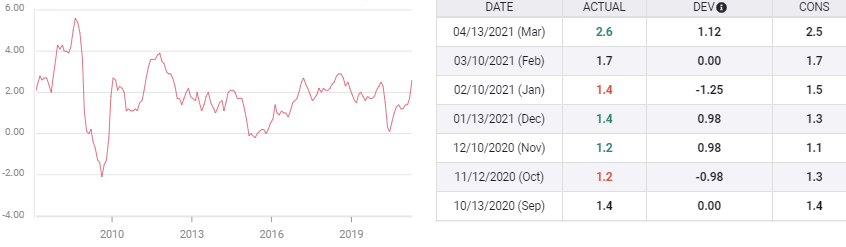
Prices had been forecast to rise 0.5% monthly and 2.5% yearly in the Reuters survey of economists.
Core inflation, which ignores food and energy purchases, rose 0.2% in March and 1.6% from 2020 after gaining 0.1% and 1.3% in February.
Market response
Markets took the increases in stride even though the 0.9% vault in the annual CPI was the steepest single gain since December 2009, a surge which took place in similar circumstances after the collapse of consumer prices in the financial crisis a year earlier.
Equites were indifferent to the report. The Dow fell from yesterday’s record while the S&P 500 and the NASDAQ rose with the improved recent US economic data.
The S&P 500 rose 0.33%, 13.60 points to 4141.59, the NASDAQ added 146.10 points, 1.05% to 13996.10, and the Dow dropped 0.2%, 68.13 points to 33677.27.
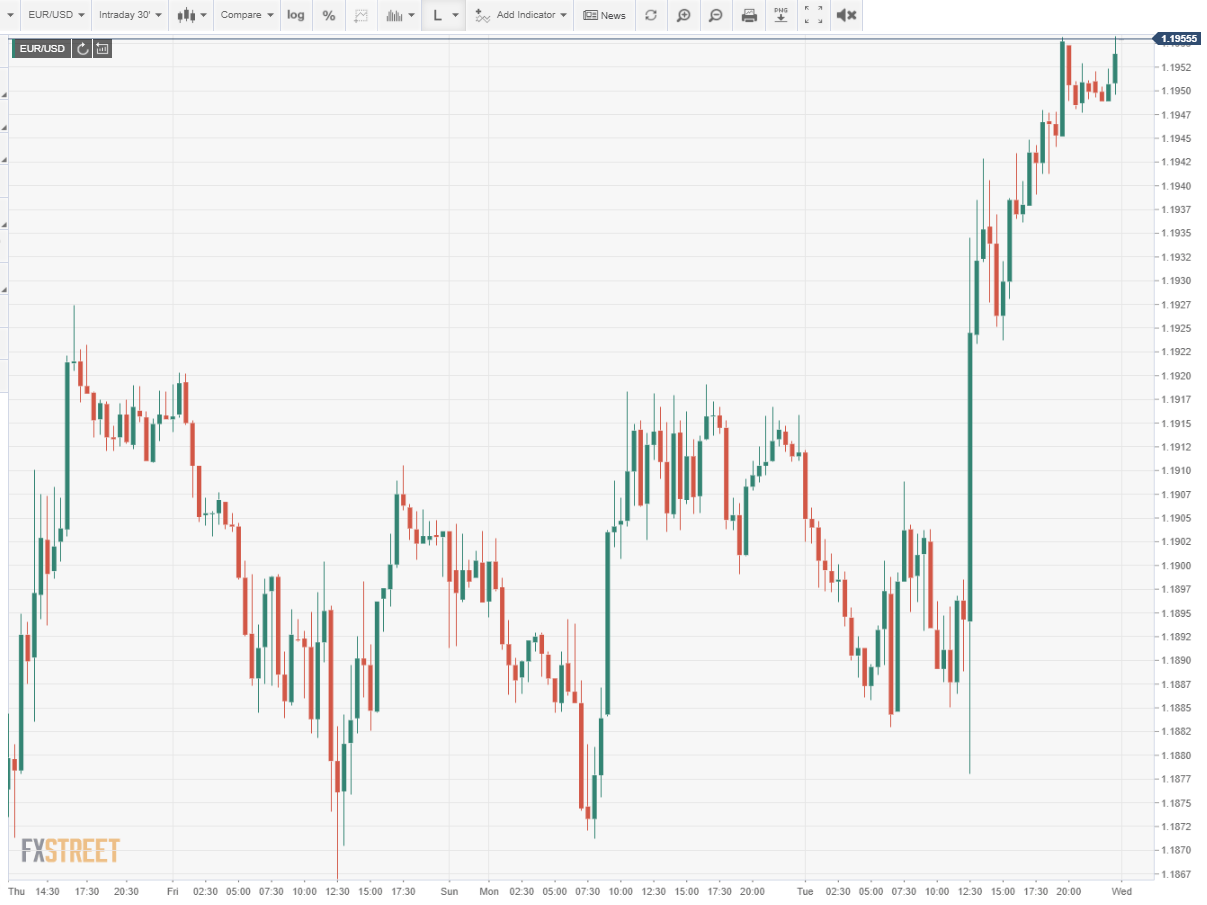
The dollar fell on the release and finished lower in all the major pairs with the euro closing at 1.1951 and the USD/JPY at 109.06.
Treasury yields retreated across the longer end of the curve, with the 10-year note losing about six points to 1.62%, the 30-year bond shedding five points to 2.30% and the 5-year note dropping five points to 0.839%. The return on the 2-year fell on one point to 1.61%.
US 10-year Treasury yield

CNBC
Inflation concerns and the Fed
While CPI was sharply higher in March, the increase was largely as expected and not thought to be enough to prompt the Federal Reserve into defensive measures. Without the prospect or at least anticipation of inflation, yields and the dollar lost their immediate driver.
Longer term inflation concerns stem from the combination of accelerating consumer demand as the recovery gathers steam combined with the massive and continuing federal stimulus spending.
The Fed’s own estimate puts US GDP at 6.5% for the year. The Atlanta Fed’s GDPNow model is at 6% in its latest issue.

So far Washington has pumped more than three trillion dollars into the US economy with the White House proposing to double that in the next year. All of this deficit financing would seem to provide the classic conditions for a rise in inflation and inflation expectations.
Against this expectation is the experience of the several quantitative easing programs of the last decade. When they were enacted many analysts forecast a rise in inflation from the Fed’s massive monetary infusion. Instead, inflation remained low through the decade, restrained by weak consumer demand and the impact of globalized manufacturing.
Federal Reserve officials, most notably Chair Jerome Powell, have said that the current run of inflation will be temporary and should not require a policy response.
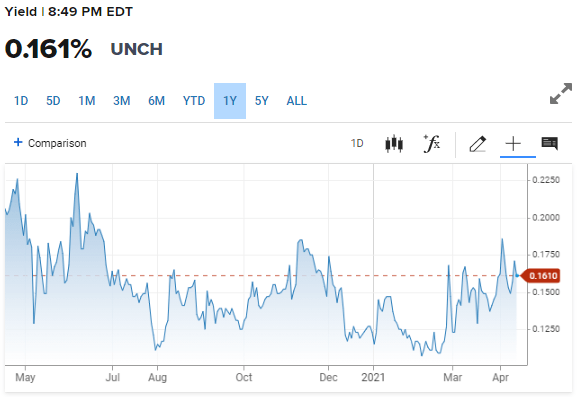
The bank has continued its $120 billion in monthly Treasury and bond purchases, primarily at the short end of the yield curve. While the return on the commercially important 10-year note has gained 70 points since December 31, providing some insurance against future inflation, the 2-year has added just four points to 0.161%.
2-year Treasury yield
CNBC
Interestingly, Chair Powell and other governors have not been critical of the increase in Treasury and longer -term market rates. Their dual track policy lets the bank support the economy, employment and the recovery with very low short-term rates while permitting the Treasury market to respond to any threat of inflation.
Base effect and prices
Even though the annual inflation rate at 2.6% was the highest in almost three years, the main component of the gain was the contrast to the collapse in prices that began in March 2020, the so-called base effect. In the first five months of last year the annual CPI rate plummeted from 2.5% in January to 0.1% in May.
Inflation is expected to continue at the same or slightly higher levels for the next several months until the price index works through the lockdown weakness that lasted through last summer.
Gasoline and food
Gasoline prices were the largest factor in the overall CPI rise, with the 9.1% jump in March contributing about half the overall increase.
The cost of a gallon of regular gasoline has soared 22.5% in the past year, partly because fuel consumption is expected to rise as the economy recovers and partly because the Biden administration prohibited new fracking leases on federally owned land, limiting domestic production. Energy prices in all categories have increased 13.2% in the same period.
Food prices rose modestly, up 0.1% in March and 3.5% in the year, with items for home consumption rising 3.3%, take-out dining climbing 3.7% and restaurant service increasing 6.5%, the biggest jump in the 24-year series.
Author

Joseph Trevisani
FXStreet
Joseph Trevisani began his thirty-year career in the financial markets at Credit Suisse in New York and Singapore where he worked for 12 years as an interbank currency trader and trading desk manager.

















