India Gold imports resilient despite price pressure


Despite high prices pressuring demand, Indian gold imports remained resilient in April.
India ranks as the world's second-largest gold market behind China.
India imported $3.1 billion in gold in April, according to Ministry of Commerce data. That was significantly lower than March, but above the January-February average and 5 percent higher than April 2024.
Based on the data, the World Gold Council estimates the country imported between 30 and 36 tonnes of gold.
According to the World Gold Council, the import data "points to continued underlying demand, even in a high-price environment."
Gold is up 23 percent year-to-date in rupee terms, and the yellow metal has dominated every other Indian asset class.
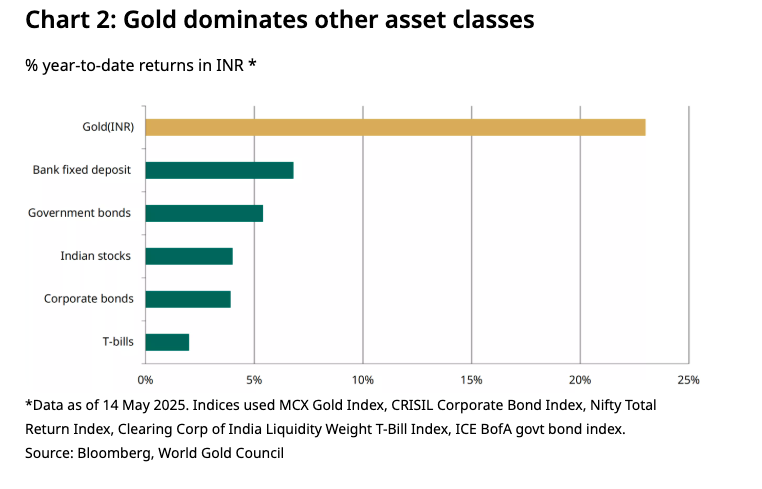
Gold surged to record levels in April, hitting $3,500, but has corrected in May, falling by about 8 percent. The price followed a similar trajectory in rupee terms, although the correction has been more moderate (5 percent) due to the appreciation of the Indian currency.
The high prices have created headwinds for demand in India.
The World Gold Council described jewelry sales in April and early May as "subdued."
The Akshaya Tritiya festival fell on April 30. According to the WGC, "overall demand during the festival was restrained and mixed as per market reports."
"While large and corporate retailers reported higher footfalls and sales – largely driven by aggressive promotional and marketing campaigns - small and independent jewelers experienced sharp declines in demand."
The investment bullion market was less impacted by high prices, with bar and coin sales relatively robust. According to the World Gold Council, low-weight coins were particularly popular.
"These were bought as ‘token’ purchases for the festival, with a notable share of sales occurring through online and e-commerce platforms. This behavior highlights a growing consumer shift towards organized players and investment-oriented gold products."
Despite a drop in the volume of gold sold during the festival, the overall value of sales is projected to have increased, reflecting a nearly 30 percent increase in the gold price since last year.
Higher prices also drove some profit-taking in the investment sphere. India-based gold ETFs recorded modest outflows of around 0.7 tonnes.
Even with the decrease in gold holdings, total assets under management (AUM) by India-based funds rose 4 percent month-on-month and 87 percent year-on-year.
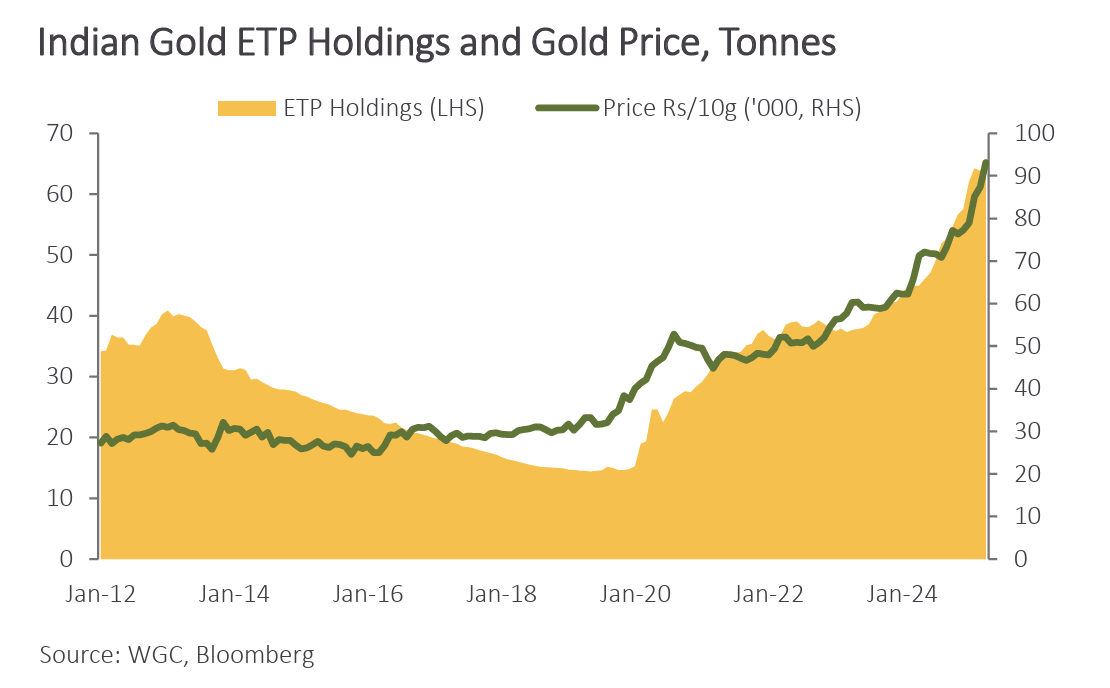
Investor interest in gold was reflected by 180,000 new Indian gold ETF accounts. This brought the total number of gold ETF investor accounts to a record 7.1 million.
A gold ETF is backed by a trust company that holds metal owned and stored by the trust. In most cases, investing in an ETF does not entitle you to any amount of physical gold. You own a share of the ETF, not gold itself. ETFs are a convenient way for investors to play the gold market, but owning ETF shares is not the same as holding physical gold.
Indians have a longstanding love affair with gold.
The yellow metal is deeply interwoven into the country’s marriage ceremonies, along with its religious and cultural rituals. Festival seasons typically boost gold demand.
Indians have long valued the yellow metal as a store of wealth, especially in poorer rural regions. Around two-thirds of India’s gold demand comes from beyond the urban centers, where large numbers of people operate outside the tax system. Many Indians use gold jewelry not only as an adornment but as a way to preserve wealth.
In the West, gold is generally viewed as a luxury item. Not in India. Even poor Indians buy gold. According to a 2018 ICE 360 survey, one in every two households in India had purchased gold within the last five years. Overall, 87 percent of Indian households own some gold. Even households at the lowest income levels in India hold some of the yellow metal. According to the survey, more than 75 percent of families in the bottom 10 percent of income managed to buy some gold.
The yellow metal was a lifeline for Indians buffeted by the economic storm caused by the government's response to COVID-19. After the Indian government locked down the country, banks tightened credit to mitigate the default risk. Unable to secure traditional loans, Indians used gold to secure financing. As Indians endured a second wave of lockdowns, many Indians resorted to selling gold outright to make ends meet.
To receive free commentary and analysis on the gold and silver markets, click here to be added to the Money Metals news service.
To receive free commentary and analysis on the gold and silver markets, click here to be added to the Money Metals news service.
Author
Mike Maharrey
Money Metals Exchange
Mike Maharrey is a journalist and market analyst for MoneyMetals.com with over a decade of experience in precious metals. He holds a BS in accounting from the University of Kentucky and a BA in journalism from the University of South Florida.