Gold’s $4,000 test: Przemyslaw K. Radomski [Video]
Gold and silver may face more near-term pressure, but precious metals analyst Przemyslaw K. Radomski, CFA, does not believe the long-term bull market is over.
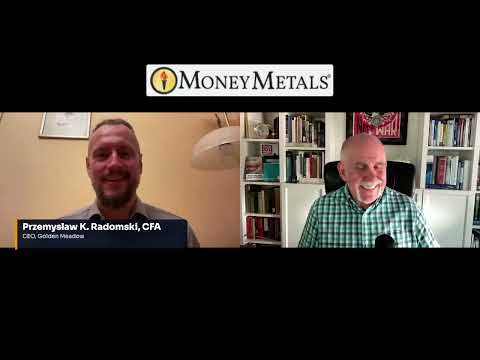
In an interview with Money Metals podcast host Mike Maharrey, Radomski discussed technical warning signs, rising interest rates, the Federal Reserve’s policy dilemma, and why gold and silver can fall alongside stocks during a market selloff.
Gold faces a short-term test
As the interview was recorded, gold was trading near $4,000 an ounce after falling below $4,100. Brent crude oil had surged to about $111 a barrel. Maharrey noted that gold had held above $4,000 despite headwinds from higher yields and a stronger dollar, but asked whether that support could continue to hold.
Radomski said he did not expect gold to remain above $4,000 for long. He pointed to gold’s failure to rally even as the U.S. dollar weakened, along with bearish reversals in mining stocks and a brief period when silver outperformed gold. In his analysis, that combination could signal further declines, possibly taking gold to new yearly lows within days or weeks.
He described the outlook as bearish over the near term, meaning weeks to several months, but said that would not necessarily end the longer-term precious metals bull market. Radomski sees underlying fundamentals—including geopolitical tensions and large-scale money creation—as supportive of gold and silver over a much longer horizon.
Why Gold and Silver can fall with stocks
Maharrey asked why gold was declining at the same time as stocks, even though investors often view precious metals as a hedge during market turmoil. Radomski said liquidity pressures can explain the apparent contradiction.
When stocks fall sharply, investors may be forced to raise cash to meet margin requirements or cover losses. They may sell assets that have recently risen substantially, including gold. That can pull precious metals lower along with equities, even when the underlying reasons for owning them remain.
Radomski compared the current dynamic with the 2008 financial crisis and the 2020 market shock. In 2008, he said, silver fell by about one-third over a relatively short period, even though its fundamental supply and demand picture had not fundamentally changed. He warned that strong long-term fundamentals may not prevent a sharp price drop if investors are selling to meet immediate liquidity needs.
Silver could be especially vulnerable during a stock market decline because it has significant industrial uses and is connected to economic activity. Mining stocks may also be pressured because they are equities. Radomski said that during a liquidity event, both silver and mining shares could decline alongside the broader stock market.
Interest Rates and The Federal Reserve
The conversation turned to interest rates, rising yields, and inflation concerns. Maharrey noted that higher oil prices can increase inflation worries and lead investors to expect the Federal Reserve to raise rates. He asked whether rising government debt could limit the Fed’s ability to keep rates high.
Radomski said the Fed faces a difficult choice. Cutting rates could allow inflation to worsen, while keeping rates elevated could intensify pressure on an economy already burdened by debt. He also cited geopolitical tensions, tariffs, and strained energy supplies as factors that could add to inflationary pressure.
He suggested the Fed might keep rates higher until a serious stock market decline forces a change in policy. If that happened, the Fed could then cut rates to respond to the downturn. Radomski added that political considerations may shape policy decisions. Officials, he argued, may try to avoid being blamed for a crisis and could frame their actions as necessary responses to circumstances beyond their control.
Maharrey connected that point to the period before the pandemic. In 2018 and 2019, the Federal Reserve was raising rates after nearly a decade of near-zero rates, and markets weakened as monetary conditions tightened. The pandemic then gave policymakers a reason to cut rates and provide stimulus, though Maharrey argued that underlying economic and monetary problems had already begun to build.
With gold, stocks, and bonds all under pressure, Maharrey asked where investors were finding safety. Radomski said gold remained at a historically high price level—around $4,000 an ounce—even after its decline. He interpreted that as evidence that investors had not abandoned gold en masse.
Still, higher interest rates can change the incentives for investors. Gold does not pay interest, while bonds may offer yields of around 5%. When gold is rising, investors may be more comfortable holding it. If its price stalls or declines while bond yields remain attractive, some may sell gold to move into bonds.
Radomski noted that interest rates had been extremely low for years and said current levels may look high from a recent perspective without being unusually high compared with rates over several decades. Rates could potentially move higher, he said, adding pressure to non-yielding assets such as gold.
What Silver and mining stocks may signal
Radomski described two market relationships he monitors: mining stocks compared with gold, and silver compared with gold. Mining stocks often outperform gold during the earlier stages of a rally. If that outperformance fades and miners begin to lag, it can suggest that a rally is losing strength.
He said weakening miner performance can be a warning sign near a market top. In some cases, miners may even show a brief final burst of strength before turning lower, though Radomski emphasized that no single signal works every time.
A correction does not settle the long-term outlook
Radomski’s main message was that a near-term decline and a long-term bull market can coexist. He sees technical and interest-rate pressures that could weigh on gold and silver in the coming weeks or months. At the same time, he believes the broader conditions supporting precious metals remain in place.
The interview with Mike Maharrey examines how liquidity, investor psychology, Federal Reserve policy, and technical signals can affect precious metals prices. Radomski publishes his analysis, daily alerts, and premium market commentary at goldenmeadow.eu.
To receive free commentary and analysis on the gold and silver markets, click here to be added to the Money Metals news service.
Author

Money Metals Exchange
Money Metals Exchange
Now you can safeguard your assets from financial turmoil and the devaluing dollar – without paying costly middleman mark-ups or fending off high pressure, bait-and-switch sales tactics.