|

Gold price analysis: Gold is sideways waiting for Nonfarm Payrolls

This week, FED - the US Federal Reserve notified that the QE (quantitative easing) will be reduced slowly from November till June 2022. The chairman of FED, Jerome Powell also declared that 15 billion dollars will be withdrawn every month. Importantly, Bitcoin is rising as a new king of the safe-heaven in the new decade, which pushes gold to the second choice for saving assets.

Going against gold, the DXY - US Dollar Index climbs up significantly these days because of the new positive policy of the FED.

Today, the US Bureau of Labor Statistics will release Non-farm Payrolls which will have an important effect on the USD, especially gold.

Moving average analysis

On the daily chart, the MA20/MA50 have reverse signals, however, it is not enough for the bulls to hold the game. The MA20/MA50 are still above the MA200. Eventually, the bears is coming back.
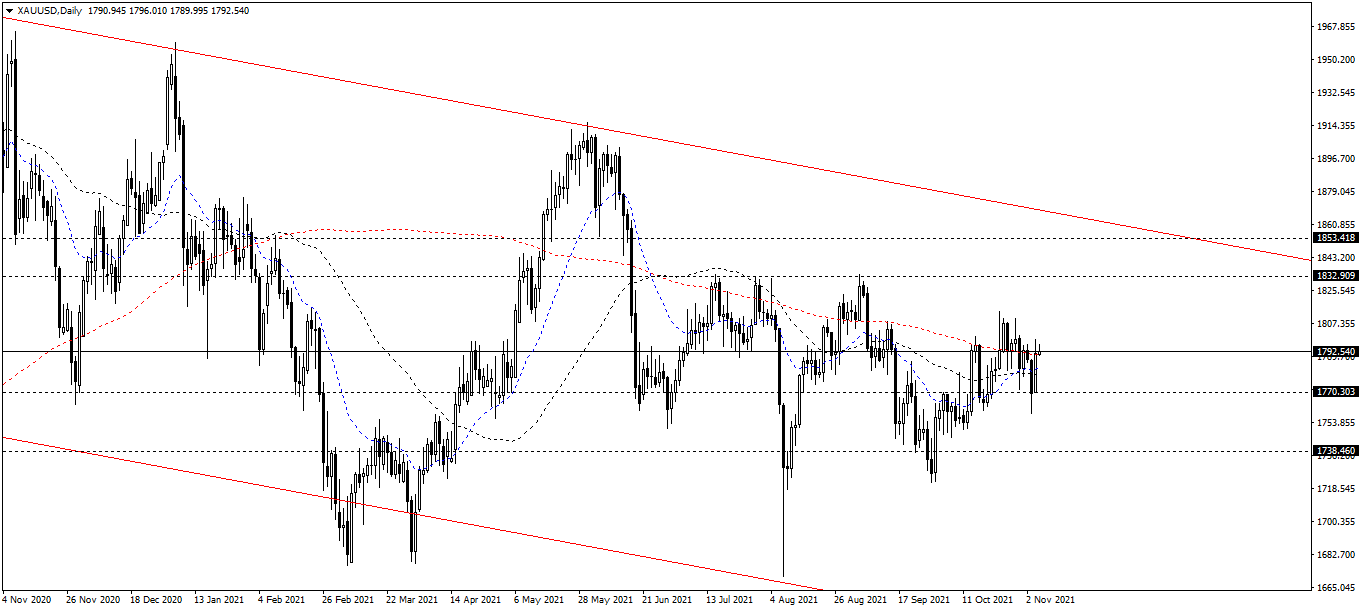
XAU/USD The daily chart

On the 4-hour chart, both the two MA20/MA50 climbed up, making a significant uptrend. The MA20 is below the MA50 showing that there may be a chance gold will fall down at the weekend.
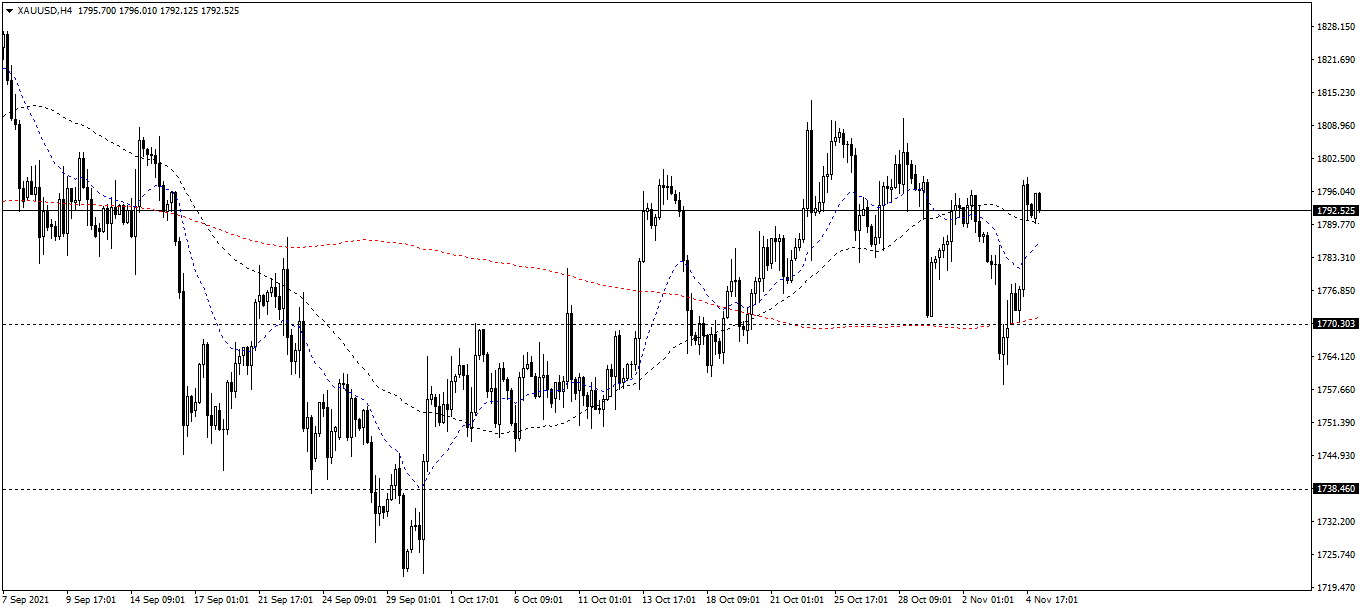
XAU/USD The 4-hour chart

On the 1-hour chart, the MA200 crossed over the MA20/MA50 and made a significant diversification over the MA50. But, be careful about the climbing of the MA20 which reaches the peak of MA200 right now.
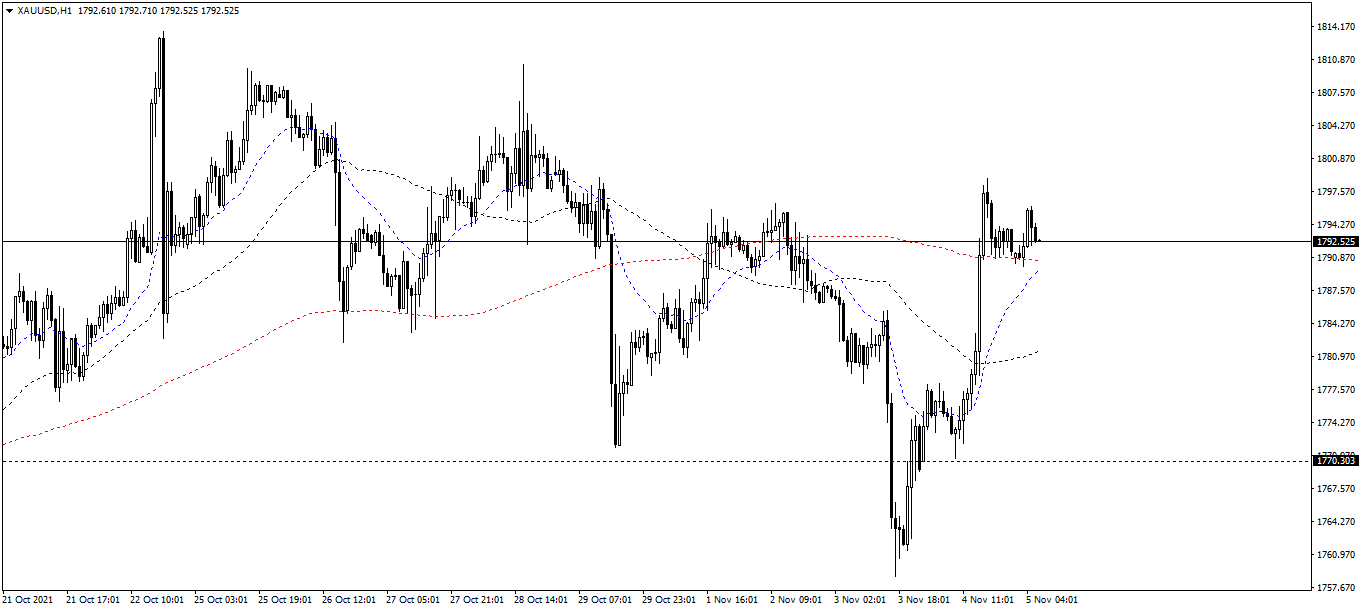
XAU/USD The 1-hour chart

In conclusion, in the long-term, gold might fall down. In the mid-term and the short-term, the bulls is dominating.

Fibonacci analysis

The Fibonacci indicator is measured on the daily chart at 2 levels:

The $1920/oz: This is a double top pattern, which is made in the last 6 months.

The $1680/oz: The strongest support in the past 2 years.

Gold is accumulating at the zone between $1770/oz and $1830/oz, considered as the Fibonacci 61.8 and 78.6. Keep an eye on the Fibonacci 78.6, this is the short-term goal for the bears this week if they want to make a significant impact.
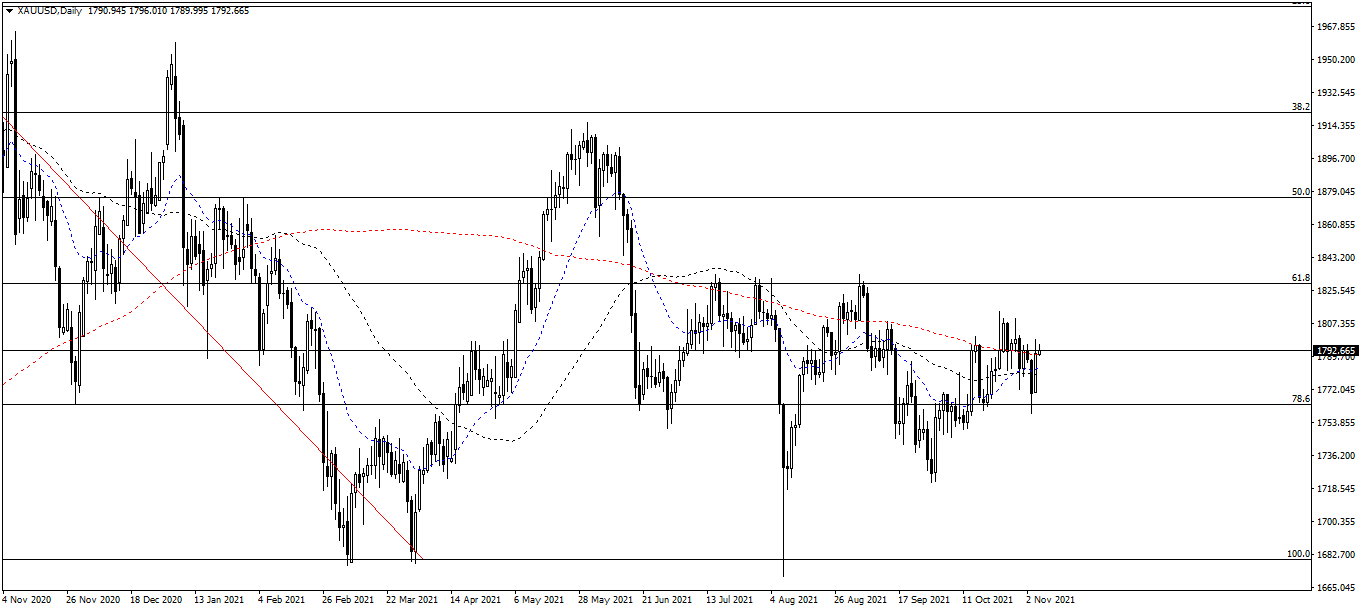
XAU/USD The Fibonacci analysis chart

Support/resistance analysis

The resistances are $1800/oz and $1830/oz.

The supports are $1760/oz and $1740/oz.

Author

Thang Le

Thang Le

Independent Analyst

Thang Le is founder and owner of PSK - a financial community in Vietnam which at: Advising on strategic investment for individuals; Supporting the development of the investment community. He is Financial Analyst at Lion Group Hol


More from Thang Le
Share:

Editor's Picks

GBP/USD bounces off lows, back above 1.3200

After bottoming out near 1.3160, GBP/USD manages to regain a bit of shine and reclaim the 1.3200 mark and beyond at the end of the week. Stronger-than-expected UK Retail Sales data seem to be helping the British Pound limit its losses, while the chaotic UK political environment keeps the bulls at bay for now.

EUR/USD looks consolidative around 1.1460

EUR/USD stages a modest rebound after slipping to a three-month low below 1.1420 at the end of the week. That said, the pair now looks to consolidate humble gains just above 1.1460 despite growing uncertainty surrounding the next round of US-Iran negotiations, which keeps the US Dollar’s downside contained.

Gold slips back to six-day lows, targets $4,100

Gold retreats for the third consecutive day on Friday, eroding gains seen in the first half of the week and approaching the key $4,100 mark per troy ounce. Indeed, the precious metal continues to face headwinds from the Fed's hawkish stance and renewed uncertainty surrounding the next round of US-Iran negotiations.

Breaking: Iran closes the Strait of Hormuz amid ceasefire deal violation
Iran says it is closing the Strait of Hormuz after accusing the United States (US) and Israel of violating the ceasefire. According to Iran, the decision came over the continued Israeli strikes in Lebanon. The Iranian Revolutionary Guard Corps Navy issued a warning to all vessels: "Do not approach the Strait of Hormuz; otherwise, your security will be jeopardized."
The Iran war didn't break the US economy, but what happens next?

Nearly four months after the start of the Iran war, the US economy remains remarkably resilient. While the conflict initially triggered a severe disruption to global energy markets and a sharp rise in Oil prices, recent diplomatic progress between Washington and Tehran has eased concerns about a prolonged supply shock.

Regime change: Inside Kevin Warsh's first move to make the Fed unreadable on purpose

The rate did not move. That was the least interesting thing about Kevin Warsh's first meeting in charge of the Fed. The FOMC held its benchmark at 3.50%-3.75% for the fourth straight meeting, exactly as priced, and then the new chair used his first press conference to dismantle the machinery the market has leaned on for a decade.