GBP/USD Weekly Forecast: Relief rally could fizzle as Fed and BoE take center stage
- GBP/USD booked three straight weekly gains, adding nearly 200 pips this time around.
- US dollar correction and new UK PM Sunak offered new life to GBP/USD.
- BoE, Fed and US Nonfarm Payrolls to kickstart a new month with a bang.

The new UK Prime Minister Rishi Sunak breathed new life into the GBP/USD pair, as the winning streak extended into the third straight week. However, it remains to be seen if the currency pair sustains the relief rally ahead of the critical macro events scheduled in the week ahead. The US Federal Reserve (Fed) and Bank of England (BoE) rate hike decisions will be crucial to influencing cable’s next price direction while the US Nonfarm Payrolls (NFP) will be also closely watched.
What happened last week?
After a brief phase of consolidation, Cable resumed its recovery momentum from multi-decade troughs on 1.0300. The extended upswing in the pair could be mainly attributed to the optimism over the new UK premiership and the country’s new fiscal framework. Additionally, the bearish undertone around the US dollar alongside the Treasury yields, with increasing expectations that the Fed will shift its gear towards a dovish stance amid weak US economic data, supported bullish traders.
The US dollar index extended its correction from over two-decade highs into the second week in a row, as investors continued taking profits off the table, repositioning ahead of the all-important Fed rate hike decision. Although the Fed is on track to raise rates by 75 bps next week on November 2, markets are pricing in about a 60% chance of a 50 bps December lift-off, suggesting that a dovish pivot from the Fed could be in the offing. These hopes laid the ground, as fears over a probable recession gathered steam. The latest US housing data, manufacturing and services surveys pointed to a dwindling US economic recovery. But the US advance Q3 GDP cooled off growth concerns slightly, as the world’s largest economy rebounded 2.6% YoY vs. 2.4% expected and -0.6% previous. The greenback did briefly capitalize on upbeat growth readings but dovish Fed expectations overshadowed.
The data published by the US Breau of Economic Analysis revealed on Friday that annual core inflation in the US, as measured by the Personal Consumption Expenditures (PCE) Price Index, rose to 5.1% in September from 4.9% in August. With this print coming in slightly weaker than the market expectation of 5.2%, the dollar struggled to continue to gather strength ahead of the weekend and helped GBP/USD limit its losses.
On the GBP side of the story, the UK preliminary Manufacturing and Services PMIs contracted more than expected in October and took the wind out of the pound’s recovery at the start of the week. But bulls fought back control after Britain got a new leader in Rishi Sunak, providing hopes of political and financial market stability, at last. Traders also remained expectant of a new fiscal plan after his predecessor’s debacle. Reports floated around in the first half of the week that PM Sunak and Chancellor Jeremy Hunt were exploring tax increases and public spending cuts worth up to GBP50 billion a year, to fill a hole in public finances. With the UK fiscal statement pushed back to November 17, however, cable optimists started to feel the heat heading into the BoE policy announcements. The major eased from six-week highs of 1.1646 but remained notably higher on a weekly basis.
A critical week ahead
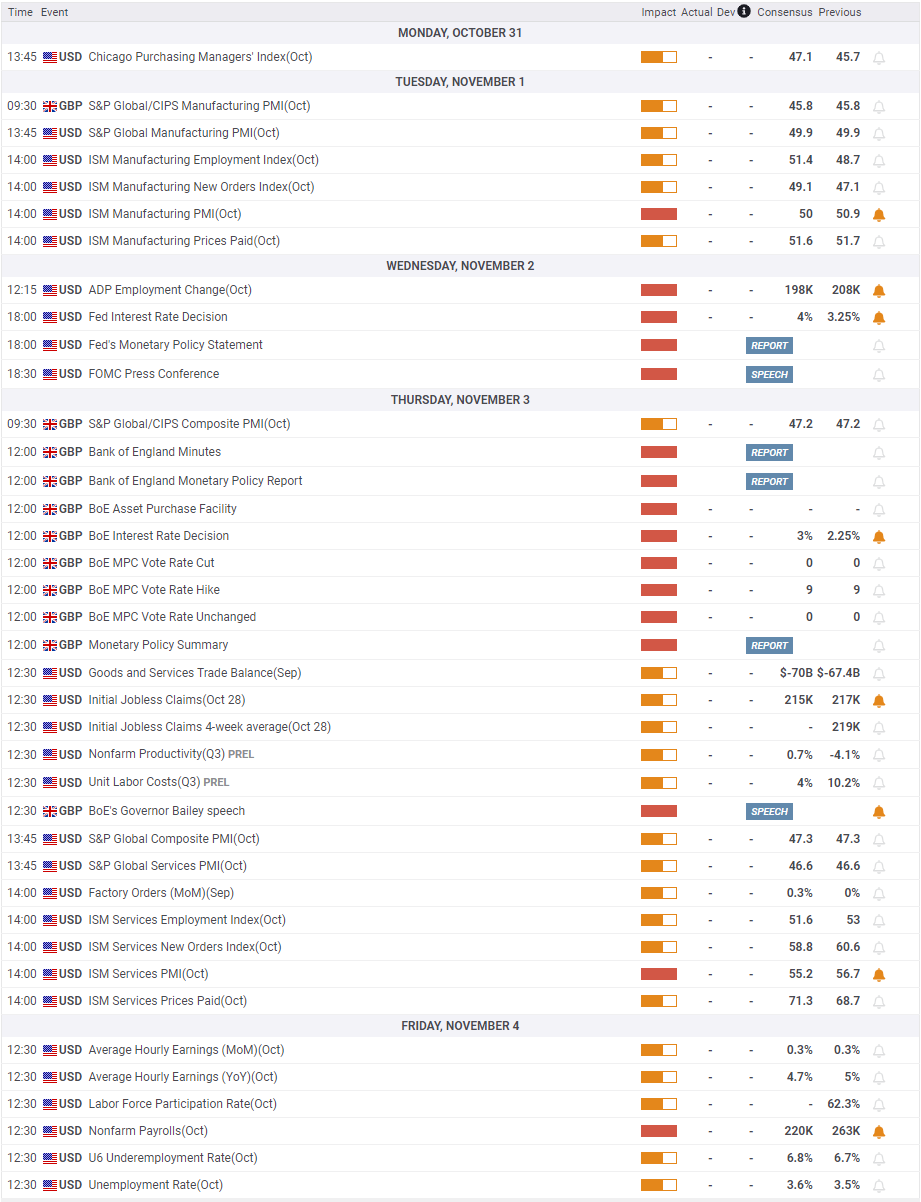
With the Fed, BoE and the US payrolls taking center stage this week, traders brace for a quiet start to an action-packed week. Europe and the UK will shift clocks backward. The American calendar is also devoid of top-tier events on Monday. On Tuesday, the final reading of the UK S&P Global Manufacturing PMI will be published, followed by the US ISM and S&P Global Final Manufacturing PMIs. The US JOLTS Job Openings will also be reported. Recall that a big drop in the gauge for August triggered a sharp US dollar reaction.
Wednesday is Fed day, with a 75 bps rate hike expected. Ahead of the announcement, the US ADP employment data could affect the dollar trades. The Fed policy communication will hold the key, which could trigger some massive volatility across the financial market. A hawkish rate hike will revive the dollar rally over the longer-term timeframe.
In contrast, the BoE on Thursday is likely to stick with its cautious stance while delivering a 50 bps rate hike, as per market expectations. The central bank will announce its economic projections but they are likely to hold little relevance, as the UK government’s fiscal budget is postponed, putting Governor Andrew Bailey in a tough spot. The BoE event is likely to rock GBP markets. Meanwhile, the US ISM and S&P Global Final Services PMI reports will also drop on Thursday, making it an eventful day.
BoE Chief Economist Huw Pill’s speech on Friday will be closely examined after the BoE policy decision a day before. However, the US labor market report will hog the limelight that day. The US employment data will be critical to building up Fed rate hike expectations for the coming months. In September, the headline US NFP beat expectations and rose by 263K.
GBP/USD: Technical analysis
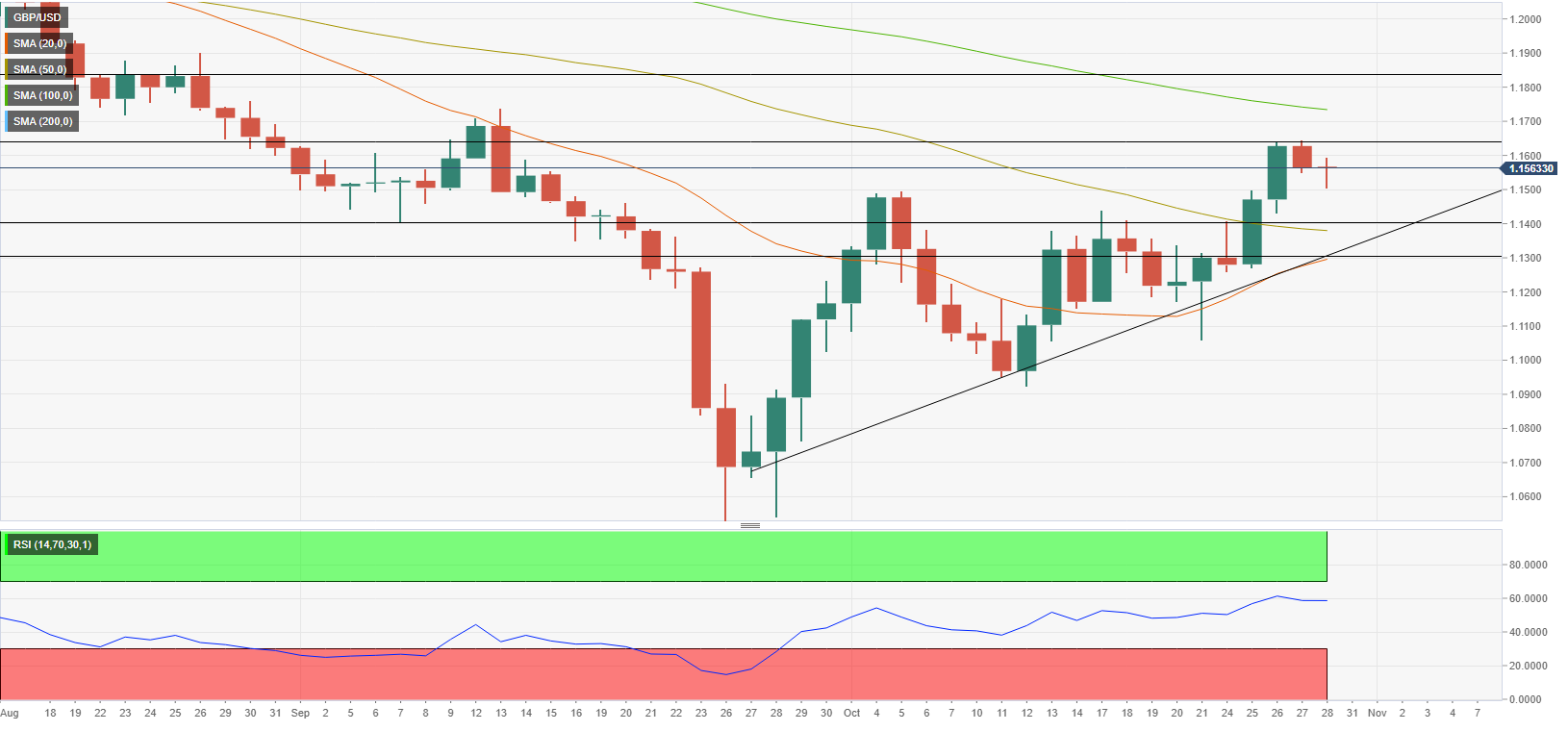
Despite the lacklustre performance seen in the last two days of the week, GBP/USD’s near-term technical outlook points to a bullish bias. The Relative Strength Index (RSI) indicator on the daily chart holds comfortably above 50 and the pair continues to trade above the ascending trend line coming from late September. Additionally, the pair closed the last four days above the 50-day SMA.
On the upside, interim resistance seems to have formed at 1.1650 (weekly high) ahead of 1.1730 (100-day SMA). With a daily close above the latter, additional technical buyers could come into play and open the door for an extended rally toward 1.1840 (static level).
First support aligns at 1.1500 (psychological level static level). In case buyers fail to defend this level, GBP/USD could come under renewed selling pressure and fall toward 1.1400 (50-day SMA) and 1.1300 (20-day SMA, ascending trend line).
GBP/USD: Sentiment poll
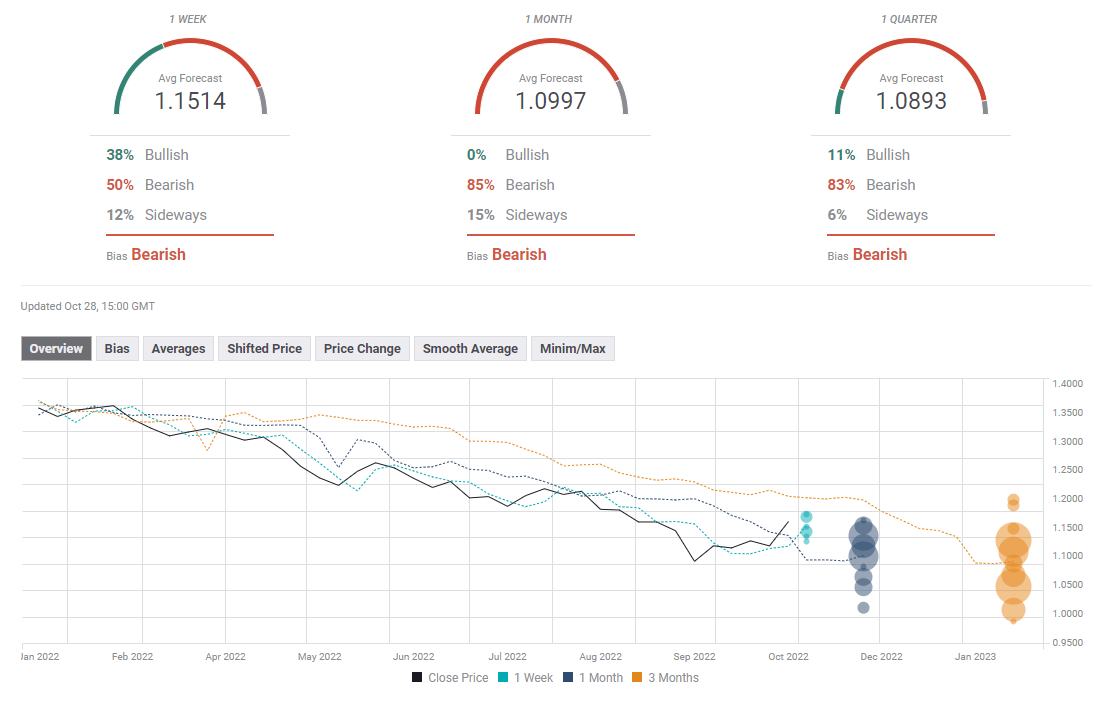
Experts polled by FXStreet seem sceptical about GBP/USD's bullish potential in the medium term with the one-month average target aligning at 1.0997. The one-quarter outlook also paints an overwhelmingly bearish picture with a large number of experts seeing the pair trading below 1.1000 by early 2023.
Premium
You have reached your limit of 3 free articles for this month.
Start your subscription and get access to all our original articles.
Author
Dhwani Mehta
FXStreet
Residing in Mumbai (India), Dhwani is a Senior Analyst and Manager of the Asian session at FXStreet. She has over 10 years of experience in analyzing and covering the global financial markets, with specialization in Forex and commodities markets.