GBP/USD picks up bearish vibes after weak jobs data
- GBP/USD comes under renewed pressure after retreating below 1.3600.
- Short-term bias leans bearish, but confirmation is still required.
- A close below 1.3440–1.3500 would shift the outlook decisively negative.

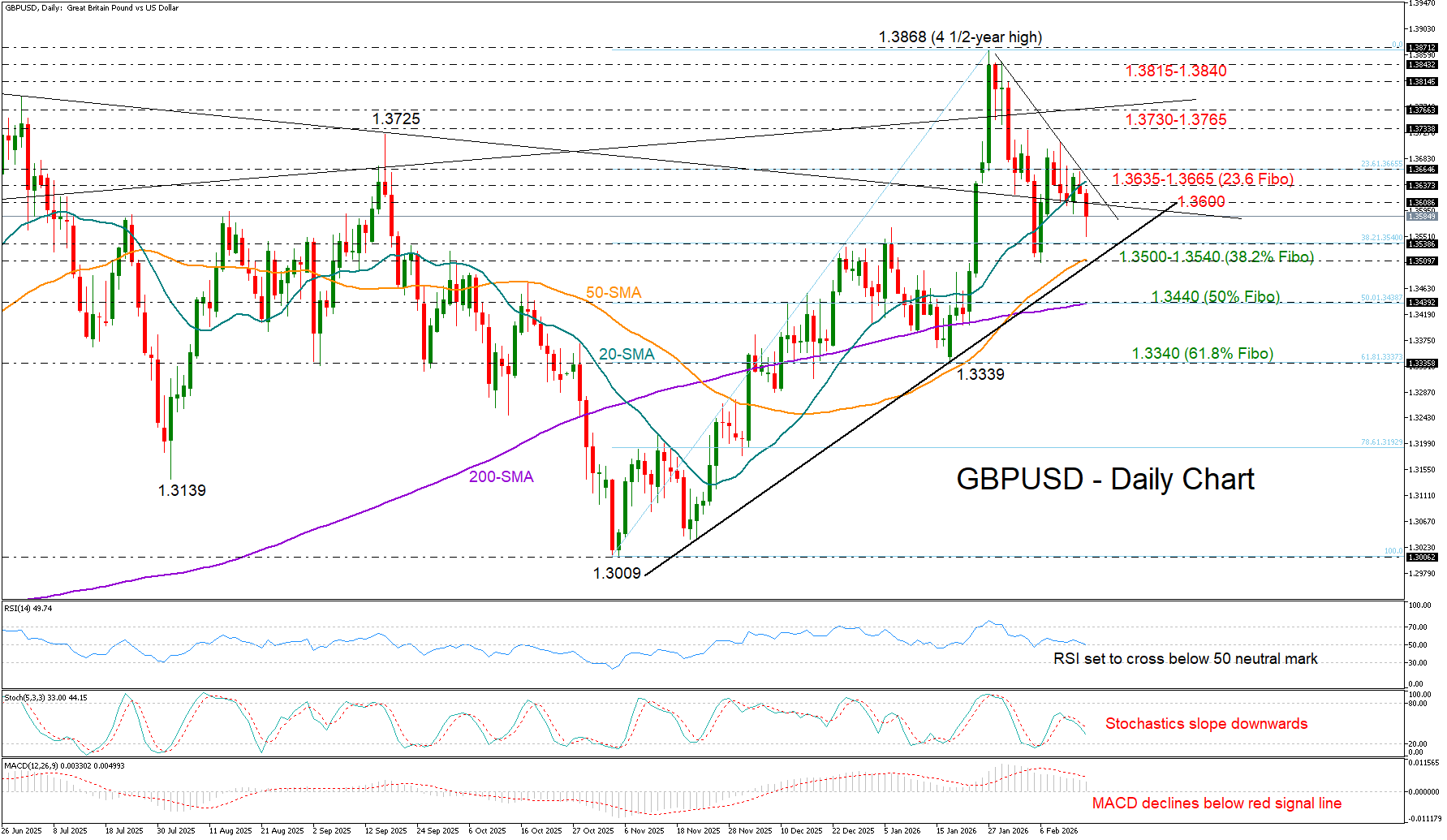
GBP/USD slid to an almost two-week low of 1.3551 early Tuesday after disappointing UK employment data dampened sentiment. The report showed softer job growth, an unchanged unemployment rate at 5.1%, and a sharper slowdown in average weekly earnings in December – reinforcing expectations that the Bank of England could proceed with a 25bps rate cut in March.
The weaker data revived selling pressure after the bulls failed to secure a close above the 20-day simple moving average (SMA) near 1.3635 on Monday. The technical indicators are now tilting lower, reflecting building downside momentum. However, further losses may remain contained unless the pair violates the tentative support trendline drawn from November near 1.3500. The 200-day SMA might also serve as an additional layer of safety near 1.3440 and around the 50% Fibonacci retracement of the November–January rally. However, any declines lower would weaken the short-term structure and likely accelerate declines toward the 61.8% Fibonacci retracement at 1.3340.
On the upside, a sustained move above the 1.3600–1.3665 resistance region would ease immediate downside pressure and shift the bias back to neutral-to-bullish. In that case, buyers could target the 1.3730–1.3765 area, with January’s peak at 1.3815–1.3840 coming back into view.
Overall, GBP/USD is gradually tilting bearish. Still, only a clear breakdown below the 1.3440–1.3500 support zone would confirm a deeper corrective phase, while rebounds above 1.3600 may keep dip-buying strategies in play.
Author

Christina joined Trading Point in May 2017. She holds a master degree in Economics and Business from the Erasmus University Rotterdam with a specialization in International economics.














