GBP/USD Forecast: Pound struggles to turn bullish ahead of Powell
- GBP/USD has managed to recover above 1.1800 on Friday.
- The near-term technical outlook is yet to reveal a buildup of bullish momentum.
- FOMC Chairman Jerome Powell will deliver his remarks at the Jackson Hole Symposium.

GBP/USD has started the last day of the week under bearish pressure but managed to stage a rebound during the European trading hours. The pair faces strong resistance at 1.1870 and it needs to clear that level in order to gather bullish momentum.
Earlier in the day, the British energy regulator, Ofgem, announced that average annual household energy bills will rise by 80% from October to 3,549 pounds. Commenting on this development, “I am working flat out to develop options for further support on energy bills," UK Finance Minister Nadhim Zahawi said but these comments failed to help the British pound find demand.
Nevertheless, the modest selling pressure surrounding the greenback seems to be helping GBP/USD limit its losses.
In the early American session, the US Bureau of Economic Analysis (BEA) will release the Personal Consumption Expenditures (PCE) Price Index, Personal Income and Personal Spending figures for July. In case today's data show that PCE inflation softened in July, similar to the Consumer Price Index (CPI) inflation, the greenback could come under renewed selling pressure. However, the impact of today's data on the dollar's valuation is likely to remain short-lived with investors refraining from committing to large positions ahead of FOMC Chairman Jerome Powell's speech at the Jackson Hole Symposium.
Last week, several Fed policymakers pushed back against the market view of the Fed turning dovish next year and helped the dollar outperform its rivals. Powell is likely to reiterate that message on Friday. In case the chairman's comments suggest that the bank could opt for another 75 basis points in September, GBP/USD could turn south amid a stronger dollar. On the other hand, an optimistic tone inflation outlook should hurt the greenback and help GBP/USD gain traction.
GBP/USD Technical Analysis
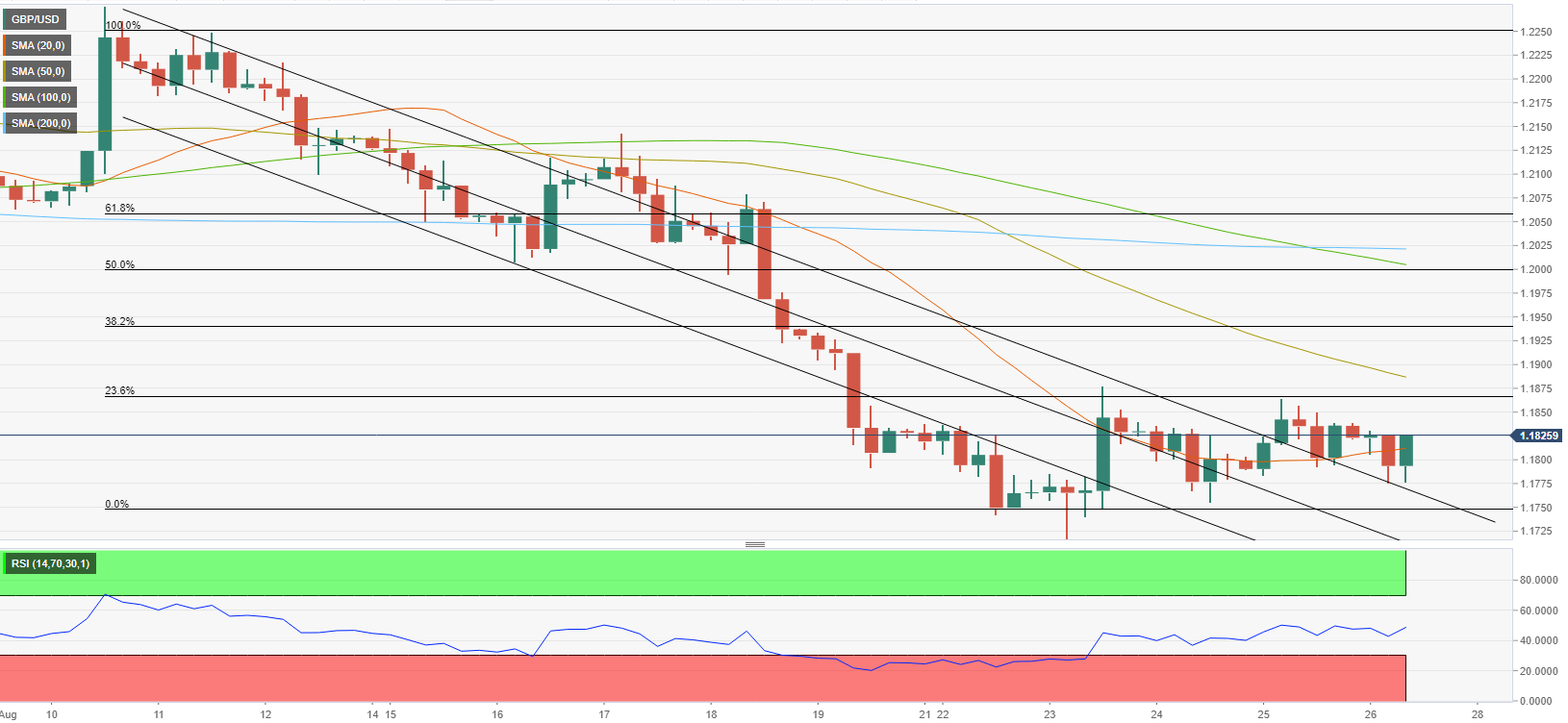
Despite the latest rebound, the Relative Strength Index (RSI) indicator on the four-hour chart is yet to rise above 50. On the upside, the pair faces key resistance at 1.1870, where the Fibonacci 23.6% retracement level of the latest downtrend is located. Above that level, the 50-period SMA forms interim resistance at 1.1900 ahead of 1.1940 (Fibonacci 38.2% retracement).
1.1800 (psychological level, 20-period SMA) aligns as initial support before 1.1750 (static level, end-point of the downtrend) and 1.1720 (Aug. 23 low).
Author

Eren Sengezer
FXStreet
As an economist at heart, Eren Sengezer specializes in the assessment of the short-term and long-term impacts of macroeconomic data, central bank policies and political developments on financial assets.