GBP/USD Forecast: Is it darkest before dawn? Barnier's Brexit blow may create a buy opportunity
- GBP/USD has tumbled down as Brexit talks seem stuck in the mud as the saga continues.
- Vaccine hopes, stimulus speculation and data are eyed.
- Wednesday's four-hour chart is pointing to further gains for the pair.

"Hangs in the balance" – that is the state of Brexit talks, according to reports citing Michel Barnier, the EU's Chief Negotiator. The headline has sent GBP/USD tumbling down nearly 100 pips from the highs, erasing all recent gains. He also reiterated the three contentious topics: fisheries, governance, and the level-playing field.
The French statesman poured cold water on Tuesday's optimism that negotiations were "entering a tunnel" – an EU term referring to off-the-radar intense talks aimed at resulting in a full egal agreement. He added that the next 36 hours are crucial.
Why is there room for optimism and perhaps a buying opportunity on sterling? The Brexit transition period ends in 29 days and time is running out. Both sides may be posturing and playing tough to please local audiences just before making critical concessions that would allow for a deal.
It is also essential to remember Barnier's venue – in front of EU envoys, some of them fearing he would make uncomfortable compromises in talks with London. By remaining tough, he probably aimed to calm them down.
While Brexit has the upper hand in moving the pound, other significant factors are also in play. First and foremost, British regulators have approved the Pfizer/BioNTech coronavirus vaccine for usage – the first such move in the Western world. Brits may get the first jabs as early as next week.
The immunization news both boosts sterling and also weighs on the safe-haven dollar. Investors are also encouraged by a bipartisan attempt to agree on a new fiscal stimulus. Senators unveiled a $908 billion package on Tuesday and other politicians – including outgoing President Donald Trump – are examining it.
The greenback receives support from doubts that an accord could be reached in Washington, especially as Trump still disputes the election results. Another cause for concern for markets comes from President-elect Joe Biden. In an interview with the New York Times, Biden said he would not automatically remove tariffs on China but rather conduct a review on relations and consult allies. Tensions between the world's largest economies are set to continue.
Monetary stimulus is also in the air. Jerome Powell, Chairman of the Federal Reserve, refrained from providing clear hints on the topic in his first day of testimony on Capitol Hill. He speaks again later in the day.
Ahead of Friday's Nonfarm Payrolls, ADP's private-sector jobs report is watched closely on Wednesday with a modest acceleration is on the cards.
See ADP Jobs Preview: Even a minimal beat could trigger a greenback comeback
Overall, Brexit headlines remain the driver's seat, with other factors having an occasional impact on cable.
GBP/USD Technical Analysis
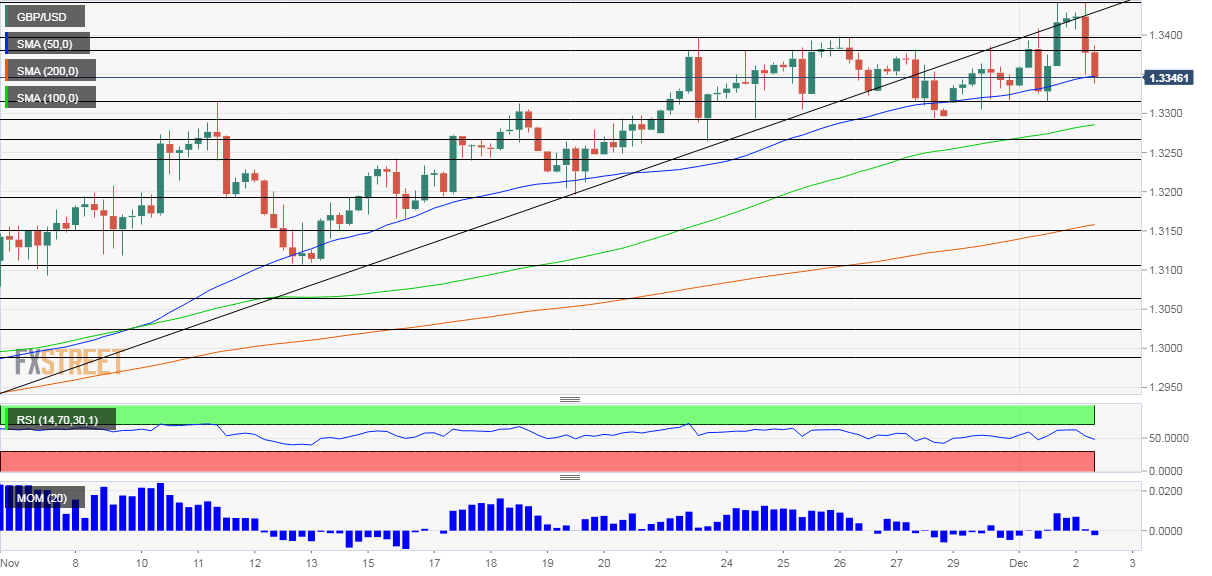
Pound/dollar is struggling to hold onto the 50 Simple Moving Average on the four-hour chart and momentum has turned to the downside. However, the currency pair is still holding above the 100 and 200 SMAs.
Some resistance awaits at 1.3380, a temporary cap last week. It is followed by 1.34, the round number, and by the new peak of 1.3440. The next level to watch is 1.3495.
Support is at 1.3310, which held GBP/USD down in mid-November, and then by 1.3290, a support line from late last week. Further below, 1.3260 and 1.3190 await the pair.
See Three reasons to expect a sustained Santa rally for sterling
Author

Yohay Elam
FXStreet
Yohay is in Forex since 2008 when he founded Forex Crunch, a blog crafted in his free time that turned into a fully-fledged currency website later sold to Finixio.