|

GBP/USD Forecast: Critical support at 1.2820

GBP/USD Current Price: 1.2885

  • Brexit-related concerns and demand for the dollar weighed on the pair.
  • UK economy giving signs of continued improvement but falling short of supporting Pound.
  • GBP/USD at its lowest since November, bearish momentum persists.
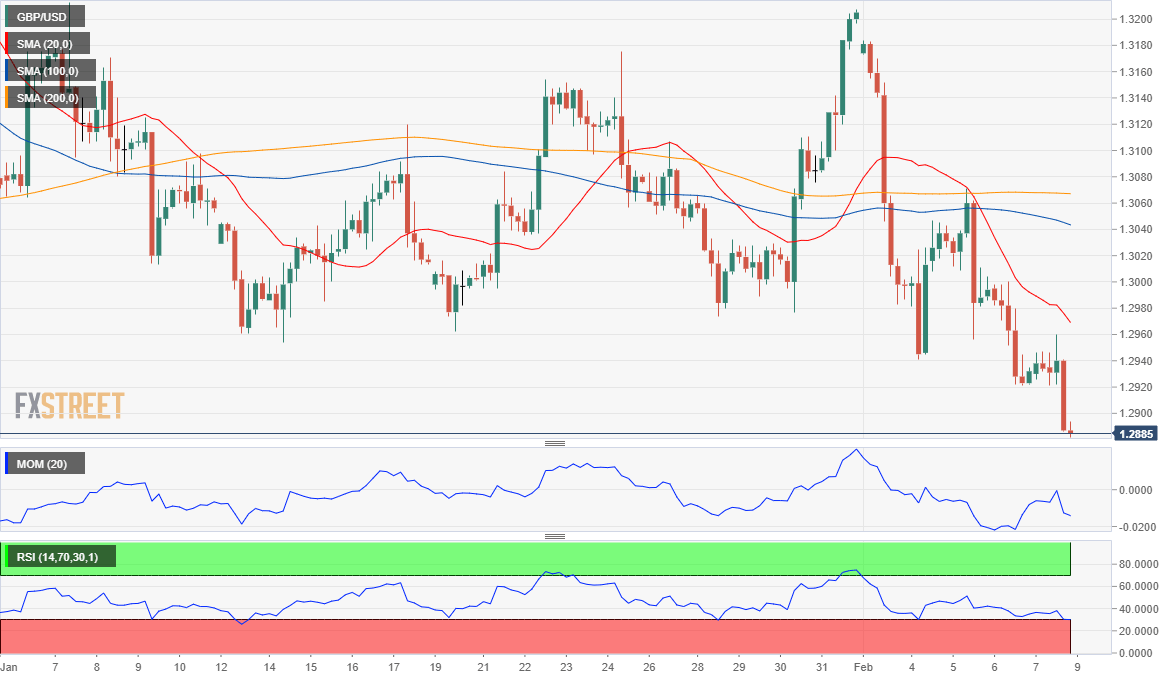
The GBP/USD pair fell for a third consecutive day, to close the week at 1.2885, its lowest since last November. The Pound capitulated to dollar’s demand, in spite of UK data h giving encouraging signs. On Friday, a survey showed that the country’s retailers saw their sales jump to the highest level in six years last month, amid political stability following PM Johnson’s victory. However, the same report shows that the advance may be well due to liquidations amid high stock levels.

Meanwhile, Brexit woes continue to affect Sterling. The UK has officially abandoned the Union, but a deal on the future relationship is still to be done. The UK and the EU seem to be in opposed stances toward how future trade should be conducted, hence triggering concerns an agreement can’t be reached before December. The UK won’t release relevant data this Monday.

GBP/USD short-term technical outlook

The GBP/USD pair is poised to extend its decline, as, in the daily chart, it is developing below a bearish 20 DMA while pressuring a bullish 100DMA. Technical indicators head firmly lower within negative levels, the RSI at its lowest since October. The 4-hour chart shows that the 20 SMA has accelerated its decline below the larger ones and far above the current level. The Momentum indicator bounced from its low, but the RSI keeps heading south, currently at 26. The pair may continue to fall, particularly on a break below 1.2820 a relevant static support level.   

Support levels: 1.2865 1.2820 1.2775

Resistance levels: 1.2920 1.2970 1.3010

View Live Chart for the GBP/USD

Author

Valeria Bednarik

Valeria Bednarik was born and lives in Buenos Aires, Argentina. Her passion for math and numbers pushed her into studying economics in her younger years.


More from Valeria Bednarik
Share:

Editor's Picks

AUD/USD edges higher as hot CPI inflation and hawkish RBA lift rate hike bets

The AUD/USD pair gathers strength to near 0.7035 during the Asian trading hours on Friday. The Australian Dollar edges higher against the US Dollar as hotter Australian CPI inflation data has bolstered expectations of Reserve Bank of Australia rate hikes.

USD/JPY meets support near 157.00

USD/JPY retreats for the third consecutive day on Friday, revisiting the 157.00 region before attempting some recovery as investors continue to assess the latest BoJ meeting, where the central bank left rates unchanged, as widely anticipated.

Gold sinks to fresh yearly lows despite risk-off mood as Fed rate hike bets weigh

Gold slips to fresh year-to-date lows on Friday. The metal struggles despite a risk-off mood across markets, as expectations of further Federal Reserve (Fed) interest rate hikes continue to dominate price action, leaving Gold on track to end the month in negative territory.


Ripple Price Forecast: XRP bulls defend $1.20 as sell-side pressure triggers liquidations
Ripple (XRP) trades around $1.25 on Friday, rising from a short-term support level established at $1.20. This minor upward correction follows a sharp sell-off, triggered amid reports of a hack attack on the Binance exchange that impacted approximately $6.3 billion. The attack drove the broader crypto market on edge, as Binance suspended both deposits and withdrawals to contain the situation.
BoJ recap: A pause for now... but Japan has entered a new inflation phase
The Bank of Japan left its short-term policy rate unchanged at 1.25% but delivered a distinctly hawkish message on the risk of an inflation overshoot. The decision passed by 8-1, with board member Takata dissenting in favour of an increase to 1.5%, while Governor Kazuo Ueda stressed that the Bank would continue adjusting policy as needed.
The 2% inflation target came from a throwaway remark. It now moves trillions
The Federal Reserve's 2% inflation goal grew out of an off-the-cuff remark by a New Zealand politician in 1988. Bond investors still price long-term US debt as if 2% holds, so a change in how the Fed measures inflation would move markets.