GBP/USD: Five scenarios for trading UK Q3 growth figures + technical levels
- The UK is expected to report a quarterly growth rate of 1.5% in Q3, a substantial slowdown.
- Sterling remains highly volatile and vulnerable after the BOE and amid various issues.
- GBP/USD is set to move differently according to five scenarios.

Will the Bank of England raise rates in December? That is a critical question for the pound, and Gross Domestic Product figures for the third quarter could provide a signal. Economists expect an increase of 1.5% after a rapid expansion of 5.5% in the second quarter. Uncertainty is elevated.
Quick Background
Before the pandemic, the UK economy was lucky to grow by 0.6% QoQ, but covid upended many statistics. After busting in 2020, Britain's economy soared back and continued shaking. The more definitive reopening in the spring triggered a robust expansion of 5.5%.
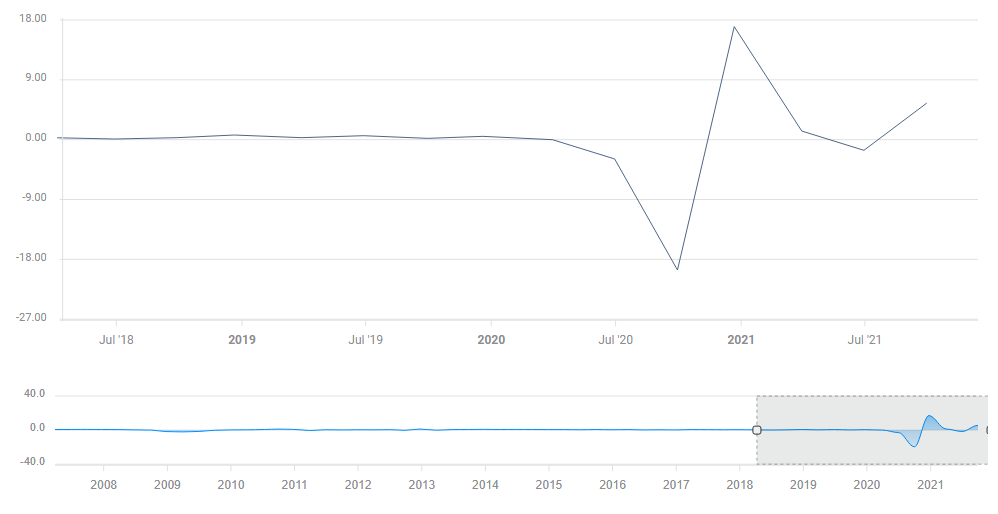
Source: FXStreet
The BOE recently decided to leave its interest rate unchanged in what its governor Andrew Bailey described as a "close call." The postponement of the "lift-off" means that every data point is magnified, making this overview of the economy more important than usual.
Sentiment and Levels
The bias is bearish on GBP/USD due to various factors. First, some dollar strength related to the Federal Reserve's tapering is boosting the greenback. Second, the Bank of England refrained from raising rates, and even though they said it was a "close call," a December hike is not guaranteed.
Sterling is also suffering from two Brexit issues, one related to Northern Ireland and another to fishing rights. Last but not least, covid cases are elevated in Britain and new restrictions cannot be ruled out. Overall, it would not take much to push GBP/USD lower.
Levels to watch: 1.3830, 1.3750, 1.37, 1.36 (critical separator of ranges), 1.3575 (minor recent resistance), 1.3525 (minor recent support), 1.3475, and 1.3425.
-637721406202442378.png)
Five scenarios for GBP/USD
- Within expectations: A growth rate of 1.4% to 1.6% could be considered within range given the relatively significant volatility in growth figures, albeit one that is set to narrow. In such a case, GBP/USD would likely edge lower given the current bias, but probably remain within range.
- Above expectations: Expansion of 1.7% to 1.9% could be considered a substantial beat of expectations, significantly raising the chances of a BOE rate hike in December, and potentially pushing cable above one resistance level.
- Well above expectations: Any quarterly growth rate that has a 2% handle would be tremendous news for the economy and all but seal an interest rate rise. It could send GBP/USD beyond two resistance levels.
- Below expectations: A somewhat slower recovery rate of 1.1-1.3% would already cast another shadow over the chances of a rate hike, albeit leaving the door open for one. It could trigger a loss of one support line in GBP/USD.
- Well below expectations: A quarterly expansion of 1% or lower would already be worrying and could cause investors to price out a move by the BOE. Given its vulnerability, GBP/USD could tumble below two support lines.
Conclusion
UK Q3 GDP is critical for assessing the chances of a rate hike by the BOE, and therefore a substantial market mover for the pound, which is poorly positioned ahead of the release.
Author

Yohay Elam
FXStreet
Yohay is in Forex since 2008 when he founded Forex Crunch, a blog crafted in his free time that turned into a fully-fledged currency website later sold to Finixio.

















