|

GBP/USD analysis: waiting for Brexit definitions

GBP/USD Current price: 1.2731

  • UK Parliament to vote on Brexit plan next Tuesday.
  • Multiple UK macroeconomic releases this week to be overshadowed by Brexit headlines.
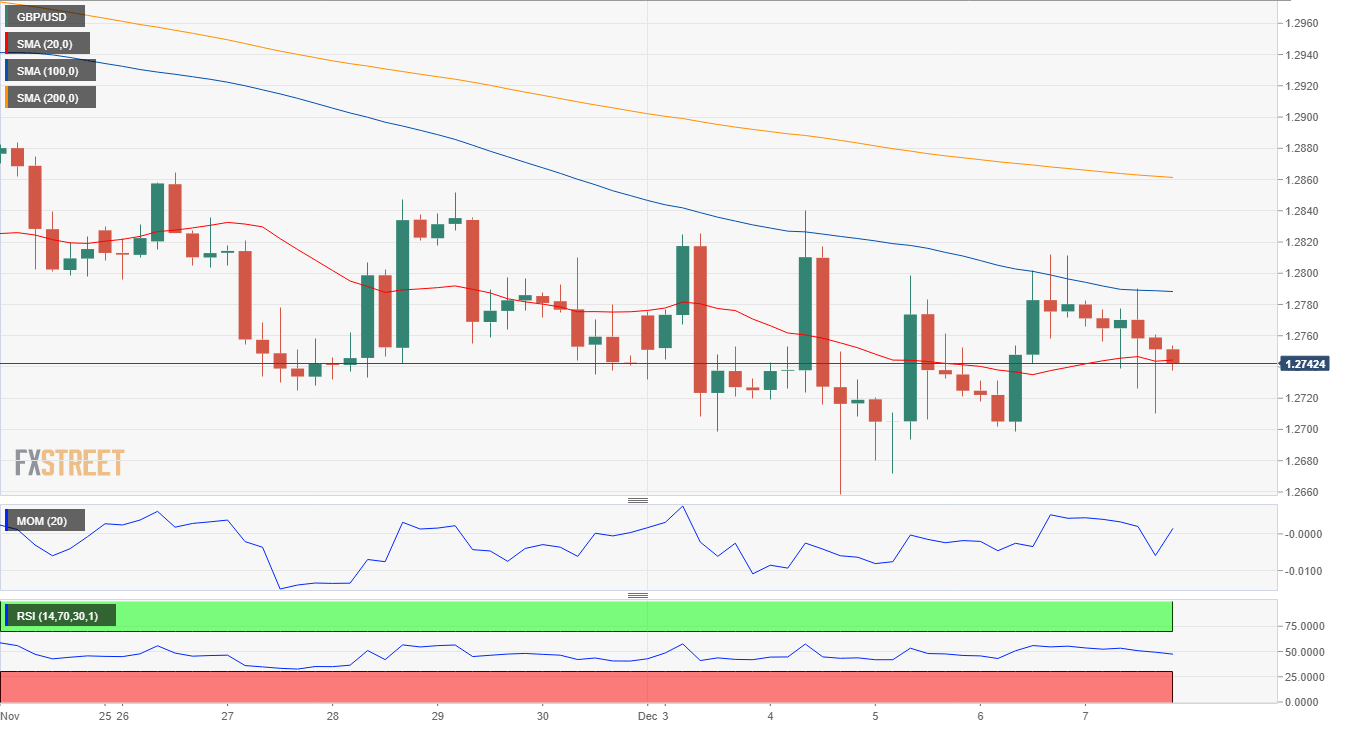
The GBP/USD pair closed the week unchanged near yearly lows, having been ignored by market participants throughout the week, ahead of the critical UK Parliament vote on Brexit next Tuesday.  The Parliament has started its debate last week, and multiple votes against PM May's will have fueled speculation that MPs won't approve the deal as it is, bringing negotiations to square one four months ahead of the divorce date. PM May, through its spokesman, have repeated several times that there's no alternative to the signed deal and that there's no intention of extending Article 50. The UK is having quite a busy macroeconomic calendar also, starting Monday with October Industrial Production, Trade Balance and monthly GDP.

The pair hit this week 1.2657, surpassing its previous 2018 low by a couple of pips and a level last seen in June 2017. Spikes through 1.2800 were quickly reverted, with the weekly high having been established at 1.2839. The daily chart shows that it broke the daily descendant trend line coming from November high through lateralization, invalidating the relevance of the break. In the mentioned chart, a bearish 20 SMA has rejected advances, while technical indicators resumed their declines within negative ground, keeping the risk skewed to the downside. Shorter term, and according to the 4 hours chart, the pair offers a neutral-to-bearish stance, as it closed a few pips below a flat 20 SMA, as technical indicators maintain downward slopes below their midlines.

Support levels: 1.2695 1.2660 1.2620

Resistance levels: 1.2775 1.2805 1.2840

View Live Chart for the GBP/USD

Author

Valeria Bednarik

Valeria Bednarik was born and lives in Buenos Aires, Argentina. Her passion for math and numbers pushed her into studying economics in her younger years.


More from Valeria Bednarik
Share:

Editor's Picks

British Pound eases to 1.3450 area following downwardly revised Manufacturing PMI data

The British Pound is trimming previous gains against the US Dollar on Monday, returning to the mid-range of the 1.3400s down from fresh seven-week highs, above 1.3500 earlier on the day. Weaker-than-expected UK manufacturing data added pressure on the Pound, which rallied at the Asian session opening, amid news of a halt to the hostilities in Iran.

EUR/USD challenges 1.1500 on Dollar’s recovery

EUR/USD now accelerates its downtrend and comes closer to the 1.1500 level on Monday. The pair’s correction follows the decent improvement in the US Dollar amid solid data US releases and easing concerns on the geopolitical front.

Gold: The $4,000 mark holds the downside for now

Gold adds to Friday’s pullback, although it remains well underpinned by the key $4,000 threshold per troy ounce on Monday. The US Dollar’s inconclusive price action seems enough to cap the yellow metal’s potential upside, although renewed hopes for a US-Iran peace deal and fading expectations of a Fed rate hike could limit the Greenback’s recovery.

Week ahead: US payrolls report and AI earnings to keep investors on edge

After the Fed decision, NFP report awaited for more rate hike clues. Employment also on the agenda in Canada and New Zealand. Chinese trade and Japanese wage data to be watched too. But Iran and AI headlines to remain in driver’s seat for risk sentiment.

The Bitcoin futures yield collapse: Once over 20%, now less than Treasury notes
Once a goldmine for carry traders, Bitcoin futures have flipped, consistently underperforming plain‑vanilla U.S. Treasuries every month since February. Carry trades consistently yielded 20% or more across regulated and unregulated crypto exchanges during the 2021 bull market. The strategy involved shorting Bitcoin futures while simultaneously buying a spot exchange-traded fund (ETF).
9-3: Is the Federal Reserve’s vote tally Warsh's new forward guidance?
The rate did not move. Neither did the statement, and that’s the more interesting fact. Set the July 29 Federal Open Market Committee (FOMC) statement beside the one issued on June 17, and the two documents are identical apart from a single verb and a paragraph at the bottom naming three dissenters.