|

GBP/USD analysis: at fresh post-Brexit referendum's highs

GBP/USD Current price: 1.3887

  • Pound benefits from an unattractive dollar.
  • UK calendar has little to offer until next Friday, US housing figures up next.
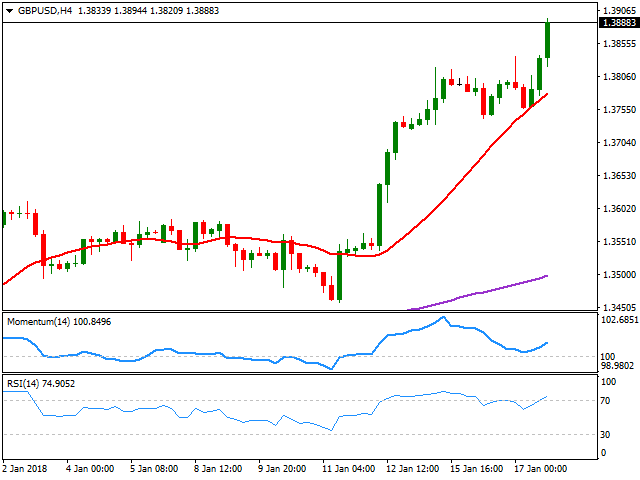
The Pound is among the best performers across the FX board this Wednesday, jumping to a fresh post-Brexit referendum high of 1.3894, despite US positive data released just ahead of the advance. It has been long since traders have been paying little attention to US macroeconomic releases when trading GBP/USD. There was no certain catalyst behind Pound's appreciation, beyond dollar's persistent weakness, and a bout of demand for higher risk assets ahead of London's fix. The UK has nothing to offer this Thursday, with the kingdom next relevant figure being Retail Sales, to be released on Friday. The short-term picture for the pair is bullish, as in the 4 hours chart, the price bounced sharply after struggling with a bullish 20 SMA, holding near the mentioned high by the end of the US session. Technical indicators in the mentioned chart, are also supporting additional gains ahead with the RSI indicator heading higher within overbought territory and the Momentum also regaining the upside bouncing from its 100 level. Speculative interest seems determinate to test the 1.4000 threshold a possible bullish target for the upcoming session, should the greenback remain under pressure.

Support levels: 1.3835 1.3800 1.3770  

Resistance levels: 1.3895 1.3920 1.3960

View Live Chart for the GBP/USD

Author

Valeria Bednarik

Valeria Bednarik was born and lives in Buenos Aires, Argentina. Her passion for math and numbers pushed her into studying economics in her younger years.


More from Valeria Bednarik
Share:

Editor's Picks

GBP/USD rebounds above 1.3300 ahead of UK Retail Sales data

The GBP/USD pair recovers some lost ground to near 1.3325, snapping the five-day losing streak during the Asian trading hours on Friday. However, the potential upside might be limited amid heightened military tensions in the Middle East. Traders brace for the release of the UK Retail Sales data, which will be published later on Friday. 


EUR/USD rises as US Dollar weakens despite rising Middle East tensions

EUR/USD gains ground after posting modest losses in the previous day, trading around 1.1380 during the Asian hours on Friday. However, the potential upside for the pair could be limited as the US Dollar may regain strength, largely driven by escalating conflicts in the Middle East that threaten to push crude oil prices higher. 

Gold extends slide as inflation fears lift Fed hike bets amid Trump's tariffs

Gold attracts sellers for the second straight day, and weakens further below the $4,050 level during the Asian session. Escalating US-Iran tensions remain supportive of elevated crude oil prices, fueling inflation fears and bolstering expectations of higher-for-longer US interest rates. This helps the US Dollar to preserve its strong weekly gains to a nearly one-month high, and turns out to be a key factor undermining the non-yielding bullion.

Ethereum: Derivatives interest in ETH improves, but signs of caution remain

Ethereum is hovering slightly below the $1,900 level, down 3% on Thursday following a slight expansion in derivatives interest. The top altcoin's open interest has increased to 14.60 million ETH, marking a 600K ETH increase over the past two days and its highest level since June 7.

Crypto Market Overview: Bitcoin tests 50-day EMA support – Pi Network and Sky lead losses

The broader cryptocurrency market faces headwinds with rising tensions between the US and Iran, pushing Bitcoin down to its 50-day Exponential Moving Average support around $65,135 on Friday. Under pressure, Pi Network and Sky emerge as the worst-performing crypto assets over the last 24 hours.

US Dollar mid-year outlook: Exceptional currency, exceptional risks?
The US Dollar enters the second half of 2026 in a markedly different position from a year ago. The King currency has recovered, reflecting persistent US inflation, changing expectations for Fed policy, geopolitical tensions and renewed demand for defensive assets.