GBP: Trading Article 50 Brexit Trigger & Dollar Turn
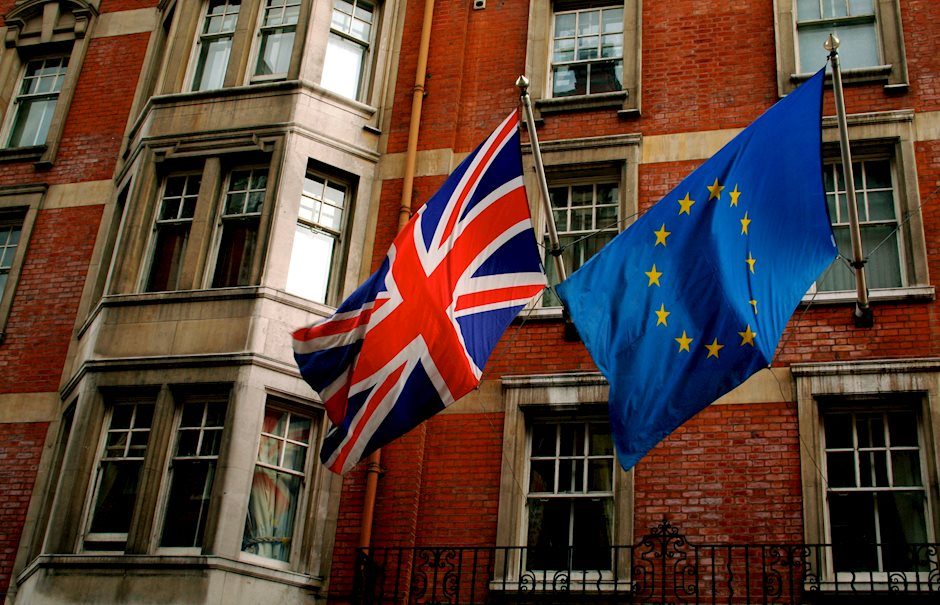

Will tomorrow's Brexit Article 50 trigger be much ado about nothing for the British pound?
Judging from the recent price action of sterling, many FX traders believe that invoking Article 50 of the Lisbon Treaty is an inevitable formality. Prime Minister May's decision to pre-announce the date of the trigger helped to reduce market volatility ahead of the event although we have seen some profit taking in the hours before the official announcement. Very few news agencies are reporting a specific time for the trigger which should take place between 11 GMT and 12:30 GMT - typically these announcements are made shortly after the working day begins. Trading the Brexit trigger won't be easy and while it could be a nonevent for GBP/USD we doubt it will be given the historical significance of the event.
Thanks to stronger than expected economic data and a hawkish dissent at the last Bank of England monetary policy meeting, there's been growing complacency surrounding Brexit. True, the economy did not contract as much as economists had anticipated in the wake of the historic vote but the process has yet to begin and we still don't know how conciliatory the European Union will be. We could still see protectionist barriers and capital controls with many multi-national businesses moving their operations to the mainland. So the trigger of Article 50 brings more questions not answers.
With that in mind, what our readers care about is how trade the Brexit trigger. The first way is to sell sterling ahead of the event in anticipation of profit taking. If you are in deep profits, you could hold through the event on the premise that the knee jerk move will be lower in GBP/USD. But profits should be taken quickly as a reversal could be swift and aggressive. The second is to wait for the market to settle after the initial move and buy GBP/USD for a brief recovery as some economists and traders are likely to argue that the final exit is 18 months away. The third option is to hold off a bit longer, an hour or two, let the market digest the announcement and ride the trend that transpires as it is likely to have continuation throughout the NY and Asian trading session. It is important to remember that GBP/USD can be a very trending currency pair after a big event with moves that can last for days so the smartest trade may be to wait.
It was turnaround Tuesday for the U.S. dollar, which reversed all of its earlier losses to end the day higher against most of major currencies. While better than expected data stabilized the greenback the recovery did not begin until an hour before the London close. Yields started to turn positive and extended their gains on the back of comments from the Fed. Fed Chair Janet Yellen did not talk about monetary policy but she said the U.S. economy overall is recovering and the job market improved substantially since recession. Fed Vice Chair Fischer on the other hand did touch on policy, saying that two more hikes to be seems to be about right while FOMC voter Kaplan wants gradual removal of accommodation. None of these comments were a surprise but with 3 days before quarter end, the oversold dollar found an excuse for a bounce. Consumer confidence also rose to its highest level in 16 years, house prices increased and the trade deficit narrowed. Yesterday we outlined 3 reasons why USD/JPY could hold 110 in the near term. The first was optimism from the Fed, which we saw today. The second was the completion of Japanese year end repatriation and the third was the significance of the 110 level. The single most important driver of the currencies are interest rate differentials and today's nearly 4bp increase in 10 year yields singlehandedly took the dollar higher.
While euro ended the day lower against the dollar, it is holding 1.08 for the time being. The selloff in EUR/USD was driven largely by the reversal in the greenback but euro traders are also nervous about the repercussions of the U.K.'s Article 50 trigger. The head of the DIHK, Eric Schweitzer said he expects Brexit to significantly impact businesses in the coming months. He expects to see a decline in trade and an overall decline in investments, with 1 in 10 firms more than likely to cut UK investments. More ECB officials came out today to tow the company line. ECB's Makuch made comments similar to his peers who noted that current monetary policy needed to be maintained until inflation has further stabilized. There are no market moving Eurozone economic reports tomorrow so the Euro will most definitely take cues from the movement of the Pound and other majors as Brexit begins.
There was very little consistency in the performance of the commodity currencies today. The Australian dollar traded higher while the New Zealand dollar fell and the Canadian dollar ended the day unchanged. Outside of comments from Bank of Canada Governor Poloz, there was little to explain the divergent moves. Canada's Governor said the country could grow faster because it is behind the U.S. but downside risk are still on the table and he's more worried about downside risks. On policy, he said raising rates prematurely would cause recession. Oil prices also rose 1.3% on the back of political and military disruptions at one of Libya's largest oil fields. Production at the western Libyan fields of Sharara and Wafa has been blocked by armed factions, which resulted in a halt in output from the country. The western fields in this region produces about one third of the country's oil supplies. In addition, Iranian oil minister Bijan Zanganeh said today that the OPEC deal struck last year was likely to be extended beyond June. Non-OPEC member Azerbaijan also said it was ready to join an extension of the deal. AUD was supported a rebound in iron ore and copper prices while NZD was dragged lower by AUDNZD demand.
Author
Kathy Lien
BKTraders and Prop Traders Edge

















