FX daily: Mapping the next trade
- The dollar remains the market’s truth serum. A softer payrolls print did not break it, which says the dovish Fed story has not yet earned full market conviction.
- We remain in the no-hike camp, but that is not a clean short-dollar trade. The gap between “the Fed probably will not hike” and “the Fed is ready to ease” is still wide.
- USD/JPY retains the higher path of least resistance, but intervention risk has shifted from a headline trade to a real-risk event. Respect the direction, but do not get careless at the highs.
- The next FX opportunity may come when the market finally has to choose: either inflation and growth soften enough to validate a dovish pivot, or the dollar exposes that narrative as another crowded summer trade.

Mapping the next trade
The bigger question now is where the next trade sits.
Last week’s intervention bluff in USD/JPY was tradable, it worked, and it is now in the bank. But the market is moving into one of those quieter summer stretches where the obvious trades have largely played out, volatility is compressed, and the next opportunity may come less from chasing momentum than from watching where the macro narrative starts to crack.
There are certainly higher-volatility trades out there. AI, equities, commodities and the broader momentum complex are offering plenty of noise. But for FX traders, it remains important to keep one eye firmly on the dollar.
The dollar is still the truth serum.
It is the cleanest way to judge whether the market is genuinely shifting toward a dovish Fed view, or whether investors are simply trying to will one into existence because easier policy would make everything else easier to own. In that sense, the greenback is becoming an increasingly useful early-warning barometer. If the market really begins to believe the Fed is done, the dollar should eventually tell us. If it does not, then the supposedly dovish macro story is probably not yet strong enough.
We remain in the no-hike camp. But that should not be confused with becoming outright bearish on the dollar.
Those are two very different trades.
The case against another hike this year still rests on the data. Last week’s nonfarm payrolls report did not suggest an economy suddenly rolling over, but it did give the Fed room for patience. Growth is losing a little altitude, the labour market no longer looks quite as bulletproof as it did earlier in the year, and the inflation path may end up softer than the FOMC currently projects.
Our inflation forecast remains notably below the Fed’s median projection, and there is still an underappreciated risk that methodological revisions to PCE inflation lower the official inflation profile. That may sound like a technical footnote, but markets are often moved by technical footnotes when those footnotes alter the policy narrative.
If the inflation path comes down more quickly than expected, the Fed will not need to keep reaching for the rate-hike hammer simply because it still has one in the toolbox.
That said, the dollar does not need the Fed to hike in order to remain supported.
It merely needs the market to stop expecting an imminent pivot.
That is where the current setup becomes more interesting. The softer jobs report did surprisingly little damage to the dollar. Short-dated US yields have held onto much of their rise since April, and money markets are still pricing roughly 31bp of tightening this year. That is down from the late-June peak near 43bp, but it remains a long way from a market pricing rate cuts, easier financial conditions and a collapsing dollar.
The message is straightforward: traders have trimmed some of the most hawkish excess, but they have not abandoned the higher-for-longer framework.
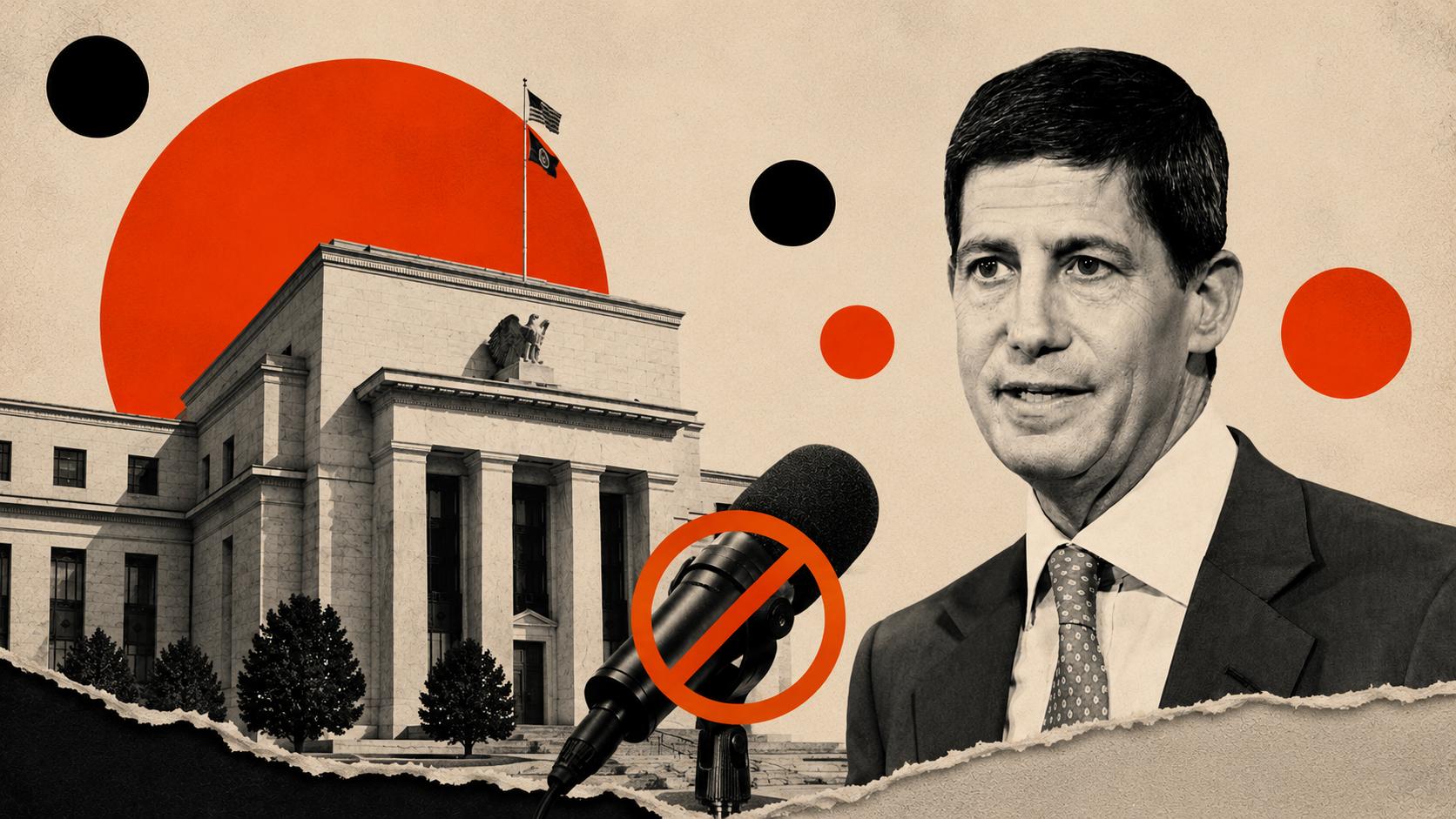
Wednesday’s FOMC minutes should help clarify whether that framing still has legs. These will be the first minutes released under Chair Kevin Warsh’s leadership, and they may come in a more stripped-back format than markets are used to. But the underlying message is unlikely to be soft.
The Fed has missed its inflation target for years. It knows that credibility is not rebuilt by declaring victory too early. There may be members who still see the next policy move as a hike, particularly if inflation proves sticky or financial conditions loosen too quickly. With a thin US data calendar this week, the minutes may have more influence than they normally would.
That is why the dollar still has upside risk.
The other part of the story is AI.
The capex boom is much clearer, earlier and larger in the US than in Europe. Data centres, power demand, chips, network equipment and skilled labour are all pulling investment forward. That matters because AI is not simply a productivity story. At least not yet.
In the short run, AI is also an investment boom, and investment booms can be inflationary at the margin.
There may be pockets of pressure in power, semiconductors, construction, engineering talent and high-end equipment. But “chipflation” does not fundamentally change our broader inflation outlook. It may create bottlenecks and price pressure in specific areas, yet it does not automatically mean the entire economy is entering a new inflation spiral.
More importantly, the popular argument that AI will be broadly disinflationary and therefore force lower policy rates needs to be re-examined. Productivity gains are real, but they take time to diffuse. The spending comes first. The capacity constraints come first. The wage competition comes first. Markets may be getting ahead of themselves in assuming AI is a shortcut to easier policy.
For now, USD/JPY remains the most important expression of the dollar story.
The pair has already climbed back toward 162 after Tokyo failed to intervene during holiday-thinned conditions last week. That no-show was important. The market had spent days treating the threat of intervention as if it were intervention itself. But Japanese authorities ultimately chose not to pull the trigger.
That tells us something.
Tokyo knows reserves are finite. It knows intervention works best when it is used selectively. And it knows that stepping into a dollar market supported by rate differentials, carry demand and a still-hawkish Fed is not the same thing as leaning against a purely speculative move.
The market fell for the bluff once. It may be less willing to do so again without actual yen buying.
That leaves USD/JPY with a higher path of least resistance, even as intervention risk remains elevated. The next credible intervention window may be around July 16–17, ahead of Japan’s next public holiday. But timing intervention is a dangerous game. The old rule still applies: never pick up nickels in front of intervention.
USD/JPY may grind higher, but that does not mean traders should get comfortable leaning into it at the highs. The better trade may be to respect the broader direction while keeping risk tight enough to survive the inevitable official headline.
Elsewhere, EUR/USD remains stuck between a softer European growth story and a Fed that has not yet given the market permission to sell the dollar aggressively.
The pair is consolidating above 1.1400, but the upside is beginning to look heavy. A September ECB hike is now priced at less than a 50% probability, yet it is still too early for the ECB to sound the all-clear on inflation. Core inflation risks have not disappeared, and this week’s heavy speaker calendar, led by uber hawk Isabel Schnabel and Philip Lane, should reinforce that point.
The ECB may be less hawkish than it was, but it is not yet dovish enough to create a clean EUR/USD downside trade.
For now, top-side resistance near 1.1480 looks important. And I suspect the pair can remain offered until there is clearer evidence that the Fed does not need to hike after all. That conclusion may not be available until later in the quarter, which means EUR/USD could spend the next few weeks drifting rather than breaking.
For today, the US ISM services report is the main event. Activity should remain consistent with an economy growing around 2%, while the prices-paid component may finally come off its four-year high. A softer prices reading would help reinforce the no-hike argument, but unless the report is materially weak, it may not be enough to derail the dollar.
DXY support around 100.50 should hold for now, leaving the market with a modest upward drift rather than a full-blown breakout.
The next FX trade may not come from a dramatic policy surprise. It may come from the market slowly realizing that the dollar has not broken because the dovish story has not yet earned the right to break it.
That is the signal worth watching.
Author

Stephen Innes
SPI Asset Management
With more than 25 years of experience, Stephen has a deep-seated knowledge of G10 and Asian currency markets as well as precious metal and oil markets.