EUR/USD declines after the strong US NFP data
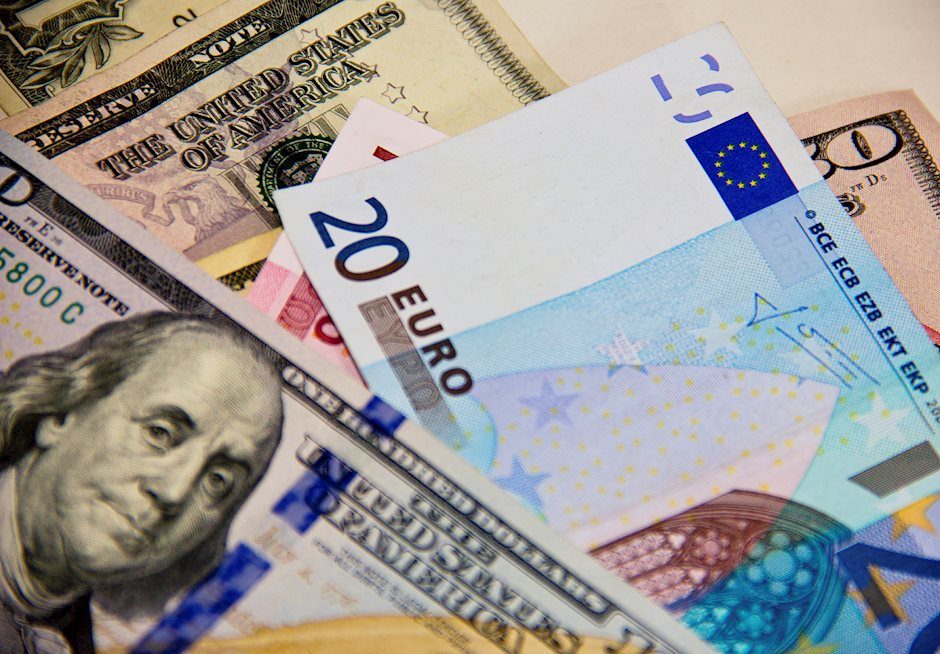

The British pound was little changed after strong UK house price data. According to Halifax, house prices rose by 0.4% in July, adding about 1,222 pounds after falling in June. The average price rose to 261,00 pounds, which is 18,500 pounds higher than a year ago. Still, there are signs that house prices are retreating after the government returned the stamp duty. According to Halifax, June was the busiest month for mortgage completions in decades. Meanwhile, UK retail sales eased stalled in July, according to the British Retail Consortium. Footfall was still 28% below the same month in 2019. At the same time, the country’s inflation is set to rise as electricity prices rise. According to Ofgem, prices for 11 million people will rise by 139 pounds in September.
The euro declined after relatively weak German industrial production data. According to the country’s statistics agency, production declined by 1.3% in June than in May. The total output was 6.8% below where it was before the pandemic. This decline was mostly because of capital goods like cars. The auto sector has weakened because of the overall supply shortage. Other Eurozone countries are also seeing uneven recovery. For example, the French, Italian, and Spanish GDP figures missed consensus estimates. Also, Spain’s industrial production declined from 25% to 11.1%.
The USDCAD pair rose after the latest jobs numbers from the US and Canada. In the US, data showed that the economy added 943k jobs in July after adding 850k in the previous month. As a result, the unemployment rate declined from 5.9% to 5.4%. The participation rate rose from 61.6% in June to 61.7%. These numbers show that the labour market is still strong. Still, the country is yet to fill millions of jobs that were lost during the pandemic. Elsewhere, in Canada, the economy added more than 94k jobs in July after adding 230k jobs in June. The unemployment rate declined from 7.8% to 7.5%.
EUR/GBP
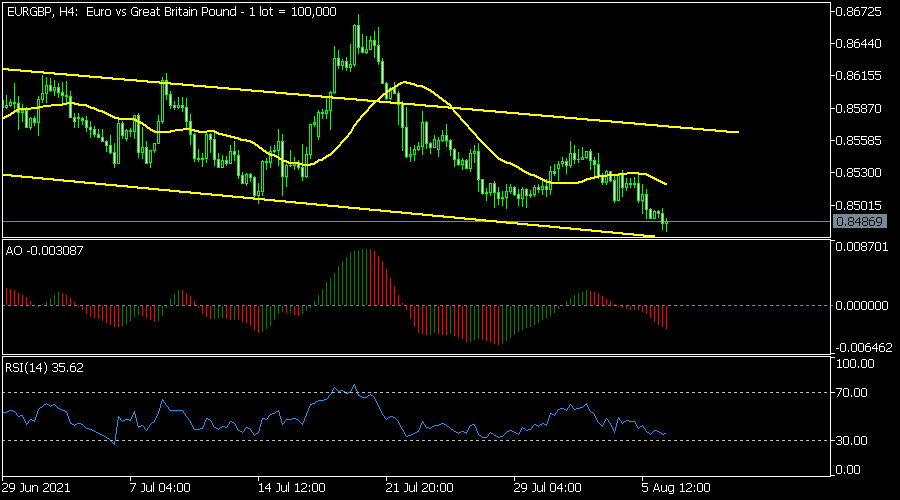
The EURGBP pair has been in a strong downward trend recently. The pair has fallen from the July high of 0.8668 to a low of 0.8485. It has moved below the 25-day and 15-day moving averages. Also, it has moved below the neckline of the head and shoulders pattern at 0.8500. On the four-hour chart, it is also approaching the lower side of the descending channel shown in yellow. The awesome oscillator and the Relative Strength Index (RSI) have also declined. Therefore, the pair may keep falling, with the next key target being at 0.8400.
EUR/USD
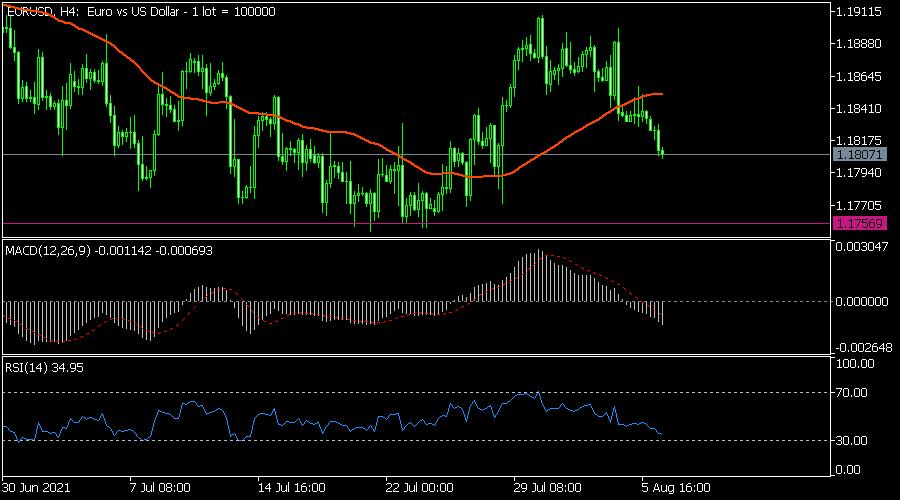
The EURUSD declined to 1.1810 after the latest US jobs numbers. The pair dropped below the 25-day moving average while the MACD has declined below the neutral line. It has also formed a double-top pattern, which is usually a bearish sign. Therefore, the pair will likely keep falling, with the next key target being at 1.1756, which was the lowest level in July.
USD/CAD
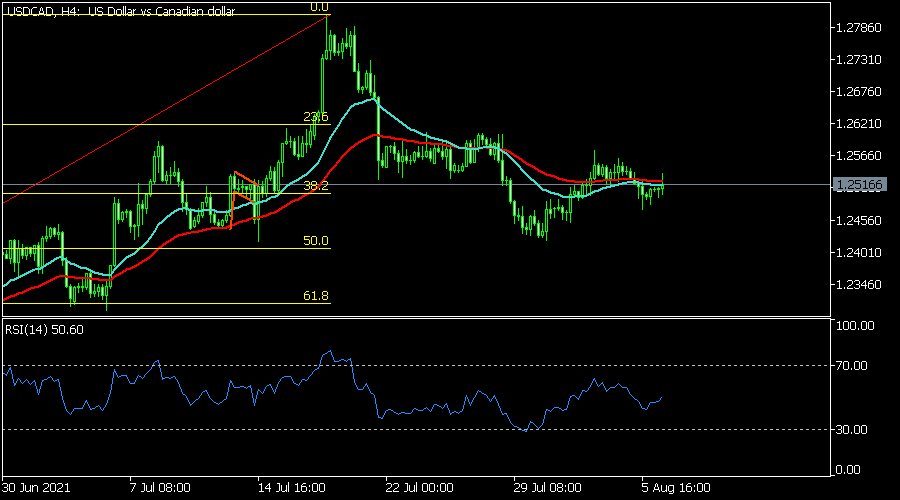
The USDCAD pair rose after the impressive jobs data from the US. The pair rose to 1.2520, which was slightly above the 61.8% Fibonacci retracement level. It also moved above the 25-day moving average while the Relative Strength Index (RSI) rose to 52. The pair seems to be forming a head and shoulders pattern, meaning that it will likely break out lower in the near term.
Author
OctaFx Analyst Team
OctaFX
OctaFX is a market-leading forex broker, providing personalised forex brokerage services to customers in over 100 countries worldwide.

















