EUR/USD Forecast: Euro could extend correction ahead of key data
- EUR/USD fluctuates below 1.1050 on the first trading day of 2024.
- The near-term technical outlook points to a build-up of bearish momentum.
- The economic calendar will offer several high-tier data releases this week.

EUR/USD stays on the back foot and trades modestly lower on the day below 1.1050 in the first European session of 2024. The near-term technical outlook suggests that the pair could extend its downward correction. Investors, however, could refrain from taking large positions ahead of this week's important macroeconomic data releases.
EUR/USD rose more than 1% in December and registered gains for the second consecutive month as the US Dollar (USD) struggled to find demand, with investors anticipating a Federal Reserve (Fed) rate cut as early as March. On the other hand, European Central Bank (ECB) policymakers made it clear that it was too early for them to think about a policy pivot.
Later in the session, S&P Global will release revisions to December Manufacturing PMI for Germany, the Euro area and the US.
On Wednesday, ISM Manufacturing PMI and JOLTS Job Openings data will be featured in the US economic docket. Later in the day, the Fed will release the minutes of the December policy meeting. Inflation data from Germany and the Eurozone and the US jobs report could trigger big reactions in EUR/USD in the second half of the week.
EUR/USD Technical Analysis
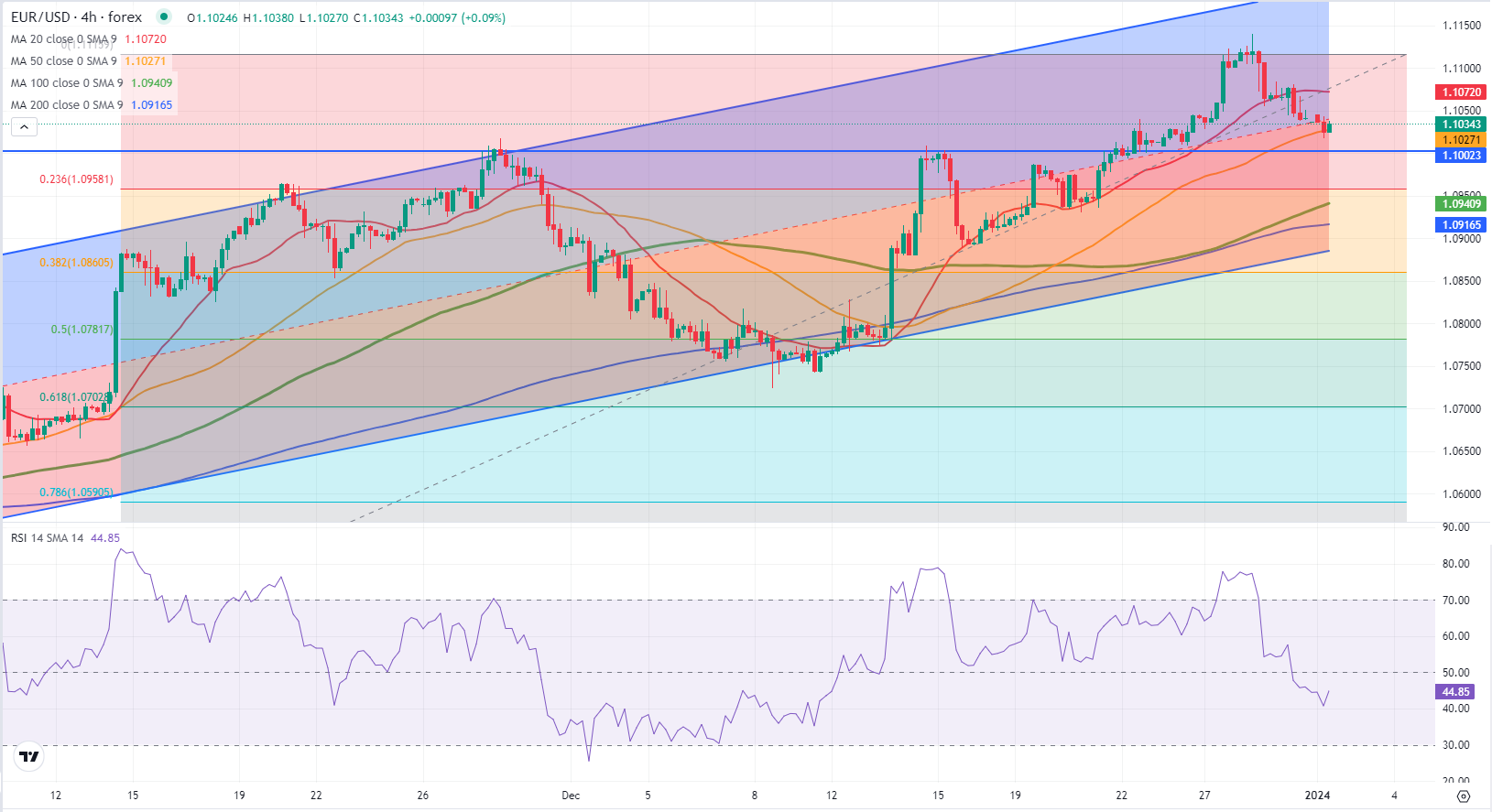
EUR/USD stays below the mid-point of the ascending regression trend channel, currently located near 1.1050. Additionally, the Relative Strength Index (RSI) indicator on the 4-hour chart declined below 50, reflecting a lack of buyer interest.
In case 1.1050 stays intact as resistance, EUR/USD could stretch lower toward 1.1000 (psychological level, static level) and 1.0950 (Fibonacci 23.6% retracement of the latest uptrend).
On the upside, 1.1070 (20-period Simple Moving Average) aligns as interim resistance before 1.1100 (psychological level, static level) and 1.1140 (December 28 high).
Author

Eren Sengezer
FXStreet
As an economist at heart, Eren Sengezer specializes in the assessment of the short-term and long-term impacts of macroeconomic data, central bank policies and political developments on financial assets.