EUR/USD Forecast: Euro closes in on key support level
- EUR/USD came under bearish pressure and declined below 1.0850.
- The US Dollar benefits from risk aversion early Friday.
- Technical sellers could take action if the pair drops below 1.0800.

After closing in negative territory on Thursday, EUR/USD extended its slide and touched its lowest level since mid-December below 1.0850. The near-term technical outlook points to a build-up of bearish momentum and additional losses could be seen if 1.0800 support fails.
The European Central Bank (ECB) left key rates unchanged as expected following the January policy meeting and didn't make any significant changes to the statement language. During the post-meeting press conference, ECB President Christine Lagarde refrained from commenting on the possible timing of a policy pivot and repeated that policymakers agreed that it was still premature to talk about rate cuts. Lagarde, however, noted that the wage growth was already declining and added that they were expecting inflation to continue to ease over the course of 2024.
Although the Euro stood relatively resilient in the immediate aftermath of the ECB event, it failed to attract buyers later in the day. Meanwhile, the risk-averse market atmosphere, as reflected by the sharp decline seen in US stock index futures early Friday, provided a boost to the USD and further weighed on the pair.
The US Bureau of Economic Analysis (BEA) will release Personal Consumption Expenditures (PCE) Price Index data for December later in the day. On Thursday, the BEA reported that the PCE Price Index rose 2% on a quarterly basis in the fourth quarter. This reading matched the third quarter's increase and came in line with the market expectation. Hence, the market reaction to December PCE inflation figures is likely to be muted.
Other data from the US showed that the Gross Domestic Product (GDP) expanded at an annual rate of 3.3%, beating analysts' estimate for a 2% growth by a wide margin and further supporting the USD.
In case safe-haven flows dominate the action in financial markets in the second half of the day, EUR/USD could have a difficult time staging a rebound ahead of the weekend.
EUR/USD Technical Analysis
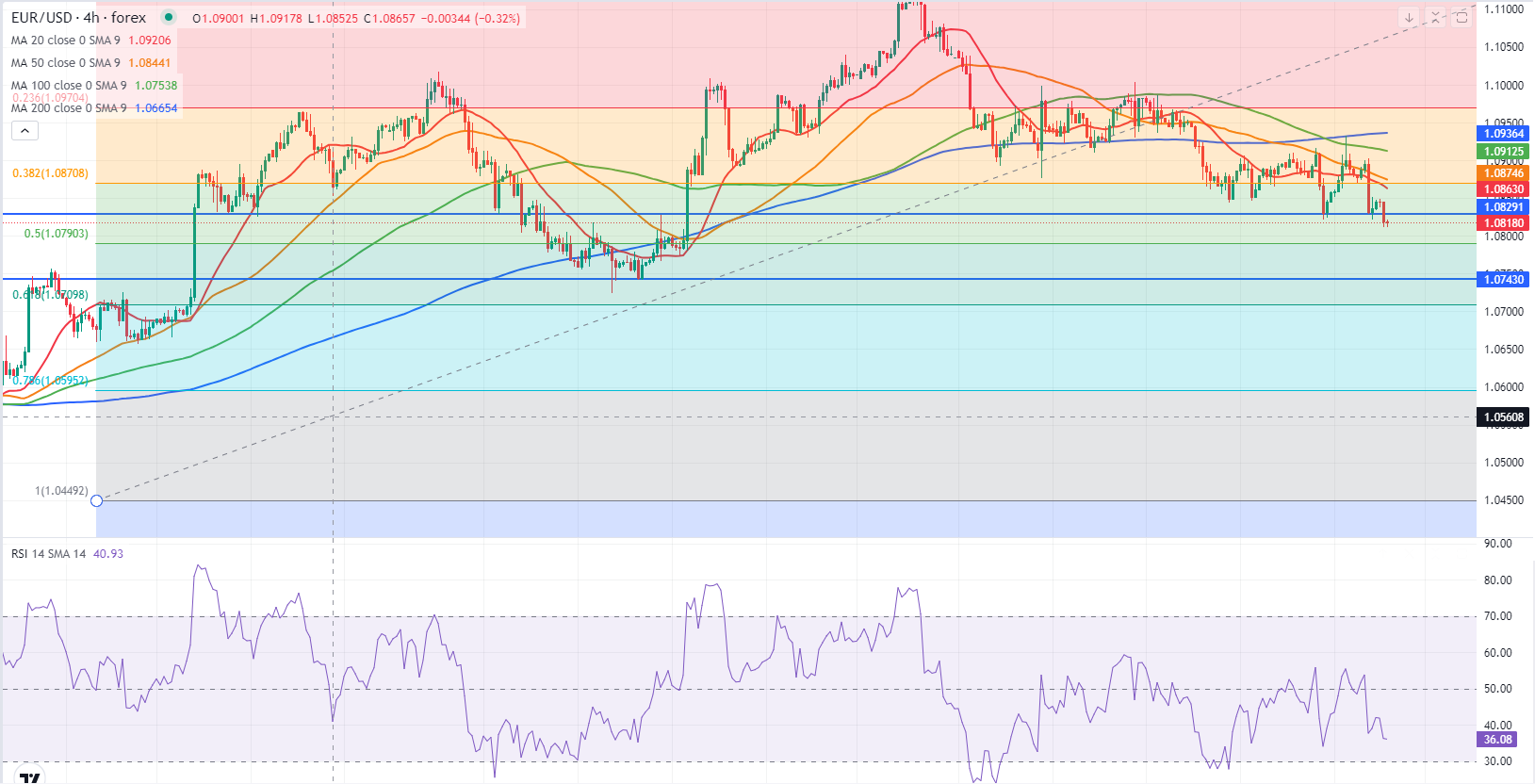
The Fibonacci 50% retracement level of the October-December uptrend aligns as critical support near 1.0800. If EUR/USD falls below that level and starts using it as resistance, 1.0740 (static level) could be seen as interim support before 1.0700 (psychological level, Fibonacci 61.8% retracement).
On the upside, 1.0830 (former support, static level) aligns as immediate resistance before 1.0865 (Fibonacci 38.2% retracement) and 1.0900 (psychological level, static level).
Author

Eren Sengezer
FXStreet
As an economist at heart, Eren Sengezer specializes in the assessment of the short-term and long-term impacts of macroeconomic data, central bank policies and political developments on financial assets.
















