EUR/USD Forecast: Breaking double-bottom looks near as bulls yield ground, inflation eyed
- EUR/USD has been struggling as higher US yields boost the dollar.
- US inflation, coronavirus headlines, and the ongoing US fiscal impasse are in play.
- Wednesday's four-hour chart is showing bears are gaining strength.

Too much of a good thing – Investors seemed to have an insatiable appetite for scooping up US debt, but that may have reached its limits. Uncle Sam is issuing a record amount of bonds this week, and this time, yields have been on the rise. In turn, that is supporting the dollar across the board.
President Donald Trump's suggestion of slashing capital tax gains would create a bigger hole in America's finance, requiring further funding.
US inflation figures for July due out later in the day, are set to show steady gains, potentially lifting yields and impacting the dollar.
See US CPI July Preview: Inflation loses its cachet
Another reason for the greenback's rise is safe-haven flows stemming from several concerns. Republicans and Democrats have yet to make headway in fiscal stimulus talks, which both sides describe as "stalemated."
After broad criticism, the White House waived its requirement from states to add $100/week in special unemployment benefits, leaving only Washington's $300/week – half the previous payment. In the meantime, it is unclear if executive orders on that topic and others have legal standing and how long it will take to roll them out.
The economy may suffer a consumption cliff as millions of unemployed have less cash in their pockets.
Sino-American tensions remain elevated with the focus shifting from Hong Kong – where media mogul Jimmy Lai was released – to Taiwan. Beijing reiterated that the island nation is an indispensable part of China after sending a fighter jet closer to Taiwan earlier this week.
Coronavirus cases are also worrying – with the US recording the highest daily deaths since May. That may be a one-off, with the broader trend showing a decline in infections and mortalities. Nevertheless, the improvement is slow and Texas decided to prolong restrictions despite its better situation.
Russia announced that it registered the world's first coronavirus vaccine – a declaration that received a lukewarm response. President Vladimir Putin said his daughter was inoculated, but could not explain why his country skipped the all-important Phase 3 trial.
The global race continues, with Massachusets-based Moderna receiving a pre-order of 100 million doses from the Trump administration. Hopes for developing rapid immunization may turn the tables against the dollar.
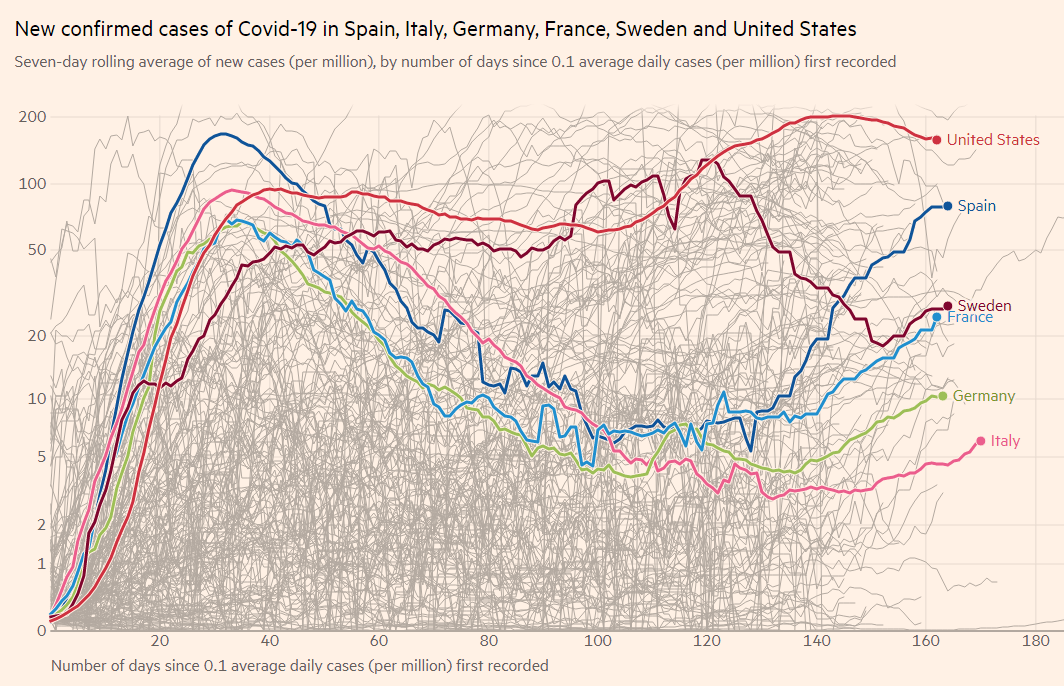
Europe's COVID-19 infections continue rising, with concerns growing in Germany and around new regions in Spain. So far, the US situation is worse, but Europe's coronavirus advantage is not set in stone.
Source: FT
Overall, most factors play in favor of the dollar and against the euro, at least for now.
EUR/USD Technical Analysis
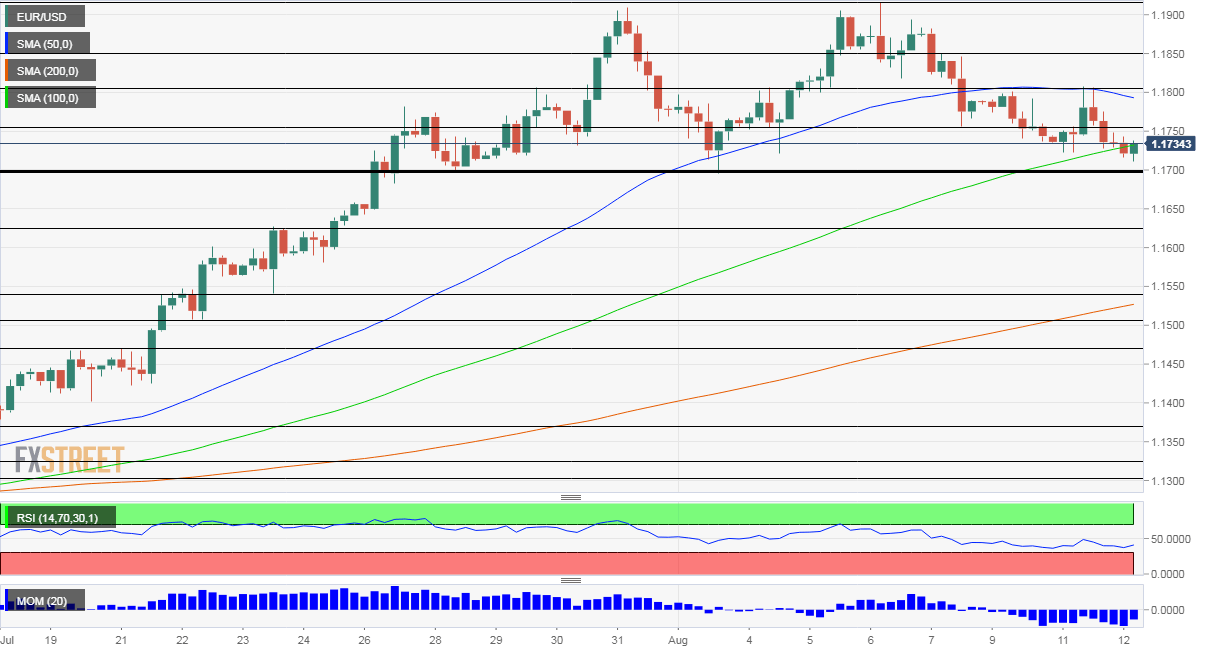
Euro/dollar has dropped below the 100 Simple Moving Average on the four-hour chart, another bearish sign, joining the loss of the 50 SMA. Momentum remains to the downside and the Relative Strength Index is above 30, outside oversold conditions.
Critical support awaits at the double-bottom of 1.17, recorded in recent weeks. Beyond that line, 1.1625 was a stepping stone on the way up, 1.1540 was a swing low and 1.1510 provided support in mid-July.
Resistance is at 1.1750, which provided support last week, followed by 1.1805, which capped EUR/USD on Tuesday. Next, 1.1850 and 1.1915 await the currency pair.
More Market players don't believe the US Congress will fail to get a second “stimulus” spending package
Author

Yohay Elam
FXStreet
Yohay is in Forex since 2008 when he founded Forex Crunch, a blog crafted in his free time that turned into a fully-fledged currency website later sold to Finixio.
















