|

EUR/USD challenging key 50% fibonacci support zone at 1.1825

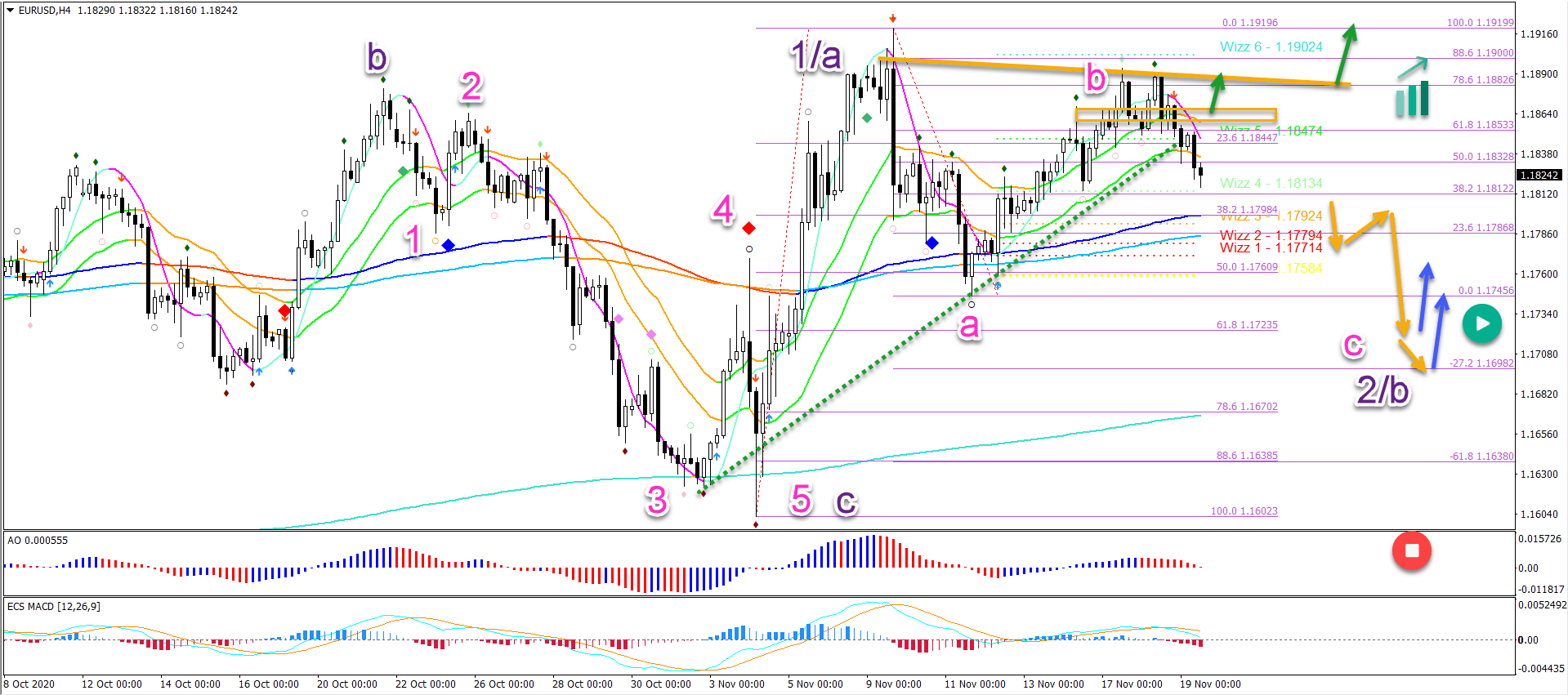
  • EUR/USD has been unable to break above the previous top. Price action is now testing the bottom of the 21 ema zone. This is a key decision zone for a bounce or breakout.

  • The EUR/USD break below the 144 ema confirms the end of the wave B (pink) and the bearish decline within wave C (pink).

EURUSD

Price Charts and Technical Analysis

The EUR/USD break below the 144 ema confirms the end of the wave B (pink) and the bearish decline within wave C (pink).

  • The main targets for the bears are the 61.8% and 78.6% Fibonacci retracement levels and the -27.2% target.

  • A bounce at the Fibs (blue arrow) could confirm the bullish wave pattern (purple).

  • A bearish breakout below the previous bottom at 1.1602 invalidates (red circle) the bullish wave 1/a and 2/b pattern (purple).

A bullish breakout above the resistance could indicate a surprise turn for an immediate upside (green arrows).

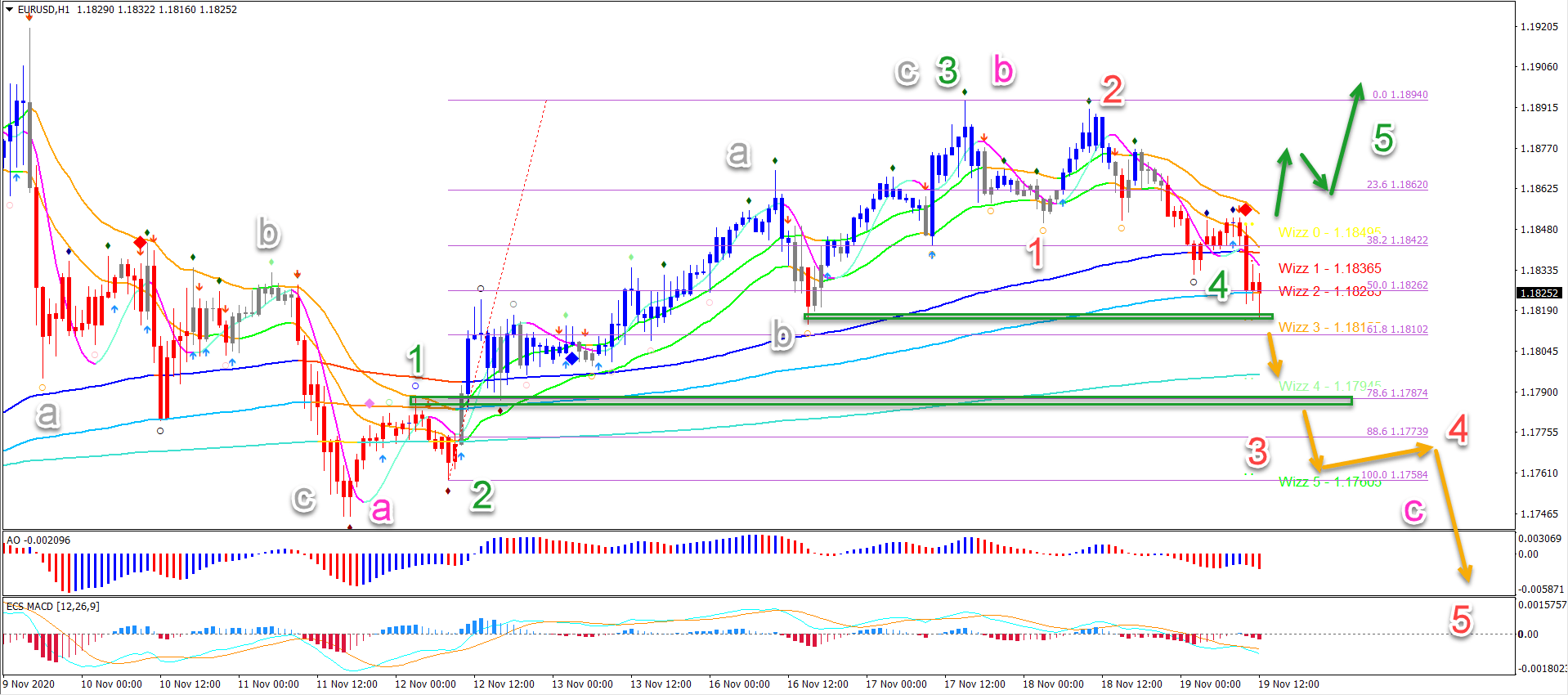
On the 1 hour chart, price action seems to be breaking below the 50% Fibonacci level.

  • If price pushes below this Fib level and the top of wave 1 (green box), then the 5 wave pattern (green) is invalid.

  • In that case, a bearish 5 wave (red) pattern is likely to take price action lower within wave C (pink).

  • A bullish bounce at these Fibs without breaking support (green box) and then followed by a bullish breakout could indicate a wave 5 (green arrows).
EURUSD

The analysis has been done with the ecs.SWAT method and ebook.

Author

Chris Svorcik

Chris Svorcik

FS method

Chris Svorcik is a trader, analyst, and educator with over 15 years of experience in financial markets, specializing in moving averages, market structure, and price patterns.


More from Chris Svorcik
Share:

Editor's Picks

USD/JPY eyes August swing low, near 155.20 ahead of US NFP

USD/JPY retests the August monthly swing low during the Asian session on Friday as a more hawkish repricing of BoJ rate-hike bets and a suspected intervention continue to underpin the Japanese Yen. Meanwhile, the US Dollar is seen consolidating the previous day's heavy losses amid soft US bond yields, further weighing on the currency pair as traders keenly await the US NFP report.

AUD/USD consolidates above 0.7200; US NFP awaited

AUD/USD holds steady above 0.7200, near its highest level since mid-May, as bulls await the US NFP report for more cues on the Fed's policy path before placing fresh bets. Meanwhile, the recent decline in US bond yields keeps the US Dollar depressed near its lowest level in over a week and acts as a tailwind for the Aussie amid the RBA's hawkish tilt.

Gold holds steady below $4,500; looks to US NFP for fresh impetus

Gold consolidates its strong gains recorded over the past two days and trades below $4,500 during the Asian session on Friday, awaiting the US NFP report for cues about the Fed's policy path amid reduced September rate-hike bets. In the meantime, the recent fall in US bond yields keeps the US Dollar depressed and acts as a tailwind for the non-yielding bullion.

Bitcoin and Gold Outlook: BTC and XAU recover as US ISM Services PMI edges higher in August
Bitcoin (BTC) strongly rises to trade above the pivotal $80,000 level on Thursday. The Crypto King is rallying alongside broader cryptocurrency prices following the release of the United States (US) Services PMI. Gold (XAU/USD) is similarly bullish, trading at $4,500 at the time of writing. The metal is up over 2% on the day, signaling the return of bulls as market sentiment improves.
Canada's 6.4% unemployment rate: Why Friday's jobs print puts the BoC's slack story on trial
The Bank of Canada (BoC) held at 2.25% on Wednesday for a seventh straight meeting and rewrote the one paragraph that still argues against a hike. In July, the BoC’s statement called the labour market soft and pinned the unemployment rate inside a 6.5%-7% range it had held since the end of 2024. July's Labour Force Survey (LFS) then printed 6.4%.
Diesel’s record $100 warning: The oil shock hiding in plain sight

The Oil market may look calmer than it did a few months ago, but diesel is sending a very different message. The US diesel crack spread, the premium of ultra-low sulphur diesel futures over WTI, recently surged above $100 per barrel for the first time, reaching an intraday record of just over $102.00.