|

ECB rate outlook is clouded by Lagarde’s early departure, markets face uncertainty
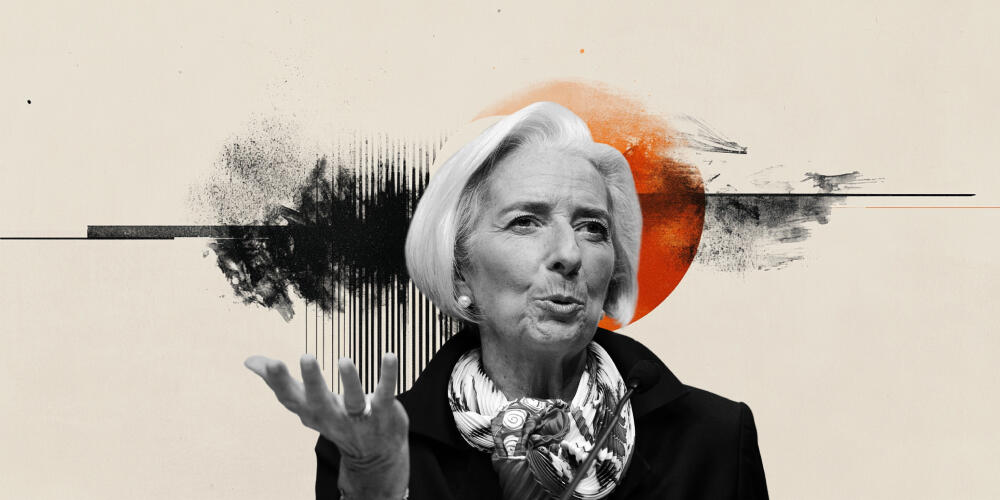
As expected, the ECB kept rates steady on Thursday, hours after news broke that Christine Lagarde will step down early from her post as president.

The hold was expected. Lagarde said the Governing Council debated a hike, which is unexpected in of itself, but that tighter financial conditions tipped the balance towards waiting - a clear nod to the recent spike in French yields. She flagged upside inflation risks from energy but saw no second-round effects beyond what the projections already assume.

A December remains very much ‘live’ and our call, though we remain unconvinced at the need for further tightening in 2027, even if markets continue to price in around 70 basis points of hikes in the next twelve months.

The other big news was the announcement that Lagarde would stand down as president in February - a full nine months sooner than planned. The timing is far from ideal. Her departure comes mid-way through a rate-hiking cycle, with French bond yields under pressure, and only months after she insisted that “the captain does not leave the ship” while clouds remained on the horizon.

We are critical of the decision, as stepping down on political grounds sets a poor precedent for an institution whose credibility rests on its independence.

The impact of a new president on ECB rates should be minimal, though a drawn-out succession could inject volatility into markets at an already fragile moment, so the sooner a successor is named, the better.

Author

Matthew Ryan, CFA

Matthew is Global Head of Market Strategy at FX specialist Ebury, where he has been part of the strategy team since 2014. He provides fundamental FX analysis for a wide range of G10 and emerging market currencies.


More from Matthew Ryan, CFA
Share:

Editor's Picks

AUD/USD edges higher as hot CPI inflation and hawkish RBA lift rate hike bets

The AUD/USD pair gathers strength to near 0.7035 during the Asian trading hours on Friday. The Australian Dollar edges higher against the US Dollar as hotter Australian CPI inflation data has bolstered expectations of Reserve Bank of Australia rate hikes.

Japanese Yen stays resilient after BoJ maintains status quo

The Japanese Yen stays resilient against its major rivals on Friday, with USD/JPY trading in negative territory below 157.50. The Bank of Japan (BoJ) decided to leave monetary policy settings unchanged at the October meeting, as expected. In the post-meeting press conference, BoJ Governor Ueda reiterated that they will continue to raise the policy rate and adjust the degree of monetary easing in reponse to economic activity and prices.

Gold bears retain control below $4,000 as hawkish Fed bets back further losses

Gold extends its intraday breakdown momentum below the $4,000 psychological mark through the early European session on Friday, eyeing the monthly swing low amid hawkish US Federal Reserve expectations. US macro data on Thursday pointed to resilient economic growth and persistent price pressures, solidifying bets of an imminent Fed rate hike in December. This is seen as undermining the non-yielding bullion for the second straight day and backing the case for further depreciation.

The hawkish Fed can't lift the US Dollar anymore
About three more Federal Reserve hikes are already priced in, and the central banks behind the Euro, Pound, Yen and Loonie are raising rates or about to. That leaves the US Dollar Index with little to gain if the Fed keeps leaning toward higher rates.
Binance hack shakes crypto, but XRP pullback may not be so bearish
Crypto markets were hit by a big headline overnight. Binance confirmed a security incident in which a compromised engineer's laptop led to unauthorized withdrawals, with an estimated impact of around $6.3 billion. About $3 billion has been frozen so far, Binance says it will cover the losses, and withdrawals were paused while security checks are completed.
A hot US economy is supposed to sink Gold. It didn't. Here's why
Gold (XAU/USD) remains under pressure near $4,000, as stronger-than-expected United States (US) economic data reinforce expectations of another Federal Reserve (Fed) interest rate hike in December. Economic growth is accelerating, inflation remains elevated, and borrowing costs could rise further.