A hot US economy is supposed to sink Gold. It didn't. Here's why

Gold (XAU/USD) remains under pressure near $4,000, as stronger-than-expected United States (US) economic data reinforce expectations of another Federal Reserve (Fed) interest rate hike in December. Economic growth is accelerating, inflation remains elevated, and borrowing costs could rise further. Under normal circumstances, this combination should trigger a more pronounced sell-off in the non-yielding precious metal.
Yet, despite falling around 1% on Thursday and correcting more than 25% from its January record high, Gold continues to defend the $4,000 region. This relative resilience reflects a growing divergence between short-term monetary pressures and longer-term investment demand, while expectations of a potentially less restrictive Fed in 2027 continue to support the broader bullish outlook.
Strong US growth and stubborn inflation put Gold under pressure
The latest US economic figures strengthen the case for further monetary tightening. According to the Bureau of Economic Analysis (BEA), US Gross Domestic Product (GDP) expanded at an annualized rate of 3.4% in the third quarter, accelerating from 2.2% and above expectations of 3.2%. Meanwhile, the Personal Consumption Expenditures (PCE) Price Index, the Fed's preferred inflation gauge, rose 3.6% YoY in September, up from 3.4% in August. Core inflation reached 3.1%, remaining well above the central bank's 2% target.
These figures followed the Fed’s Wednesday decision to maintain interest rates at 3.75%-4.00%, with two policymakers voting for a 25-basis-point increase. Markets now assign an approximately 79% chance to another rate hike in December, according to the CME FedWatch tool.
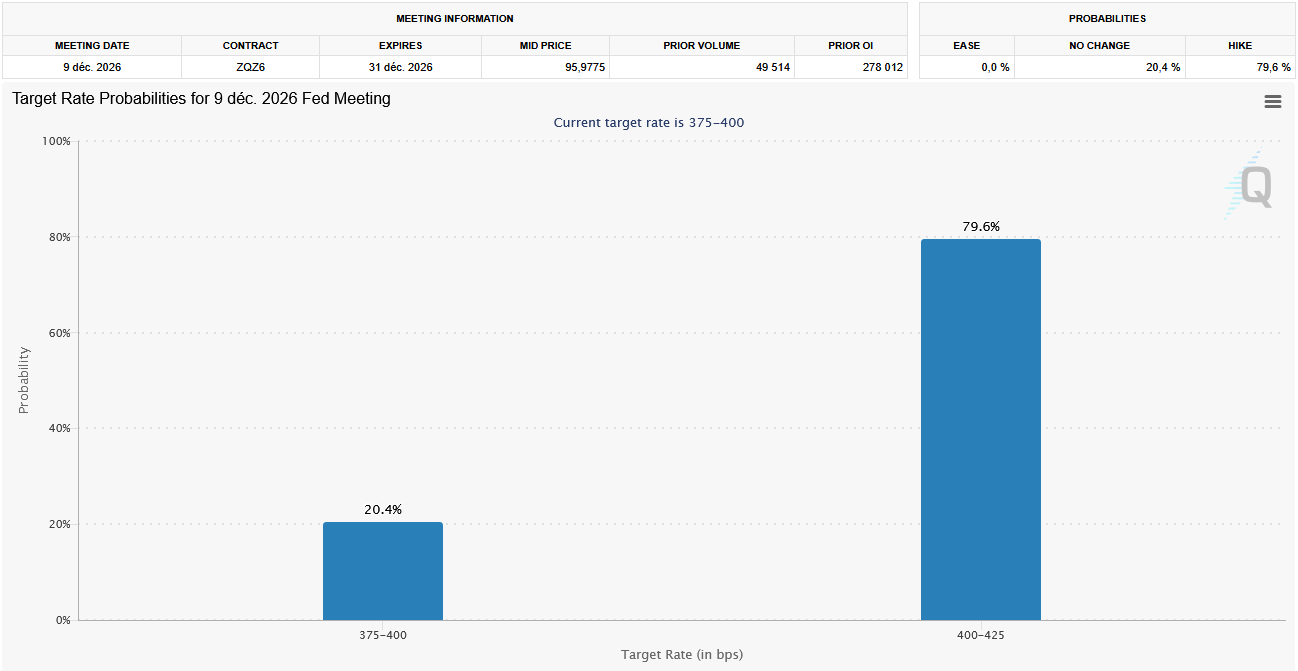
Higher interest rates increase the opportunity cost of holding Gold, which generates no interest income, making government bonds relatively more attractive. High Ridge Futures Director of Metals Trading David Meger explained to Reuters: “A stubbornly high inflationary outlook that continues to run hotter than Fed targets is paving the way for thoughts that the Fed will raise rates at the December meeting. That’s the main drag on the Gold market right now, and today’s PCE report did nothing to allay that fear.”
Why isn't Gold falling further despite the strong US economy?
The apparent contradiction partly reflects the fact that financial markets anticipate economic developments rather than simply react to them. Although US growth exceeded expectations, September's PCE inflation figures broadly matched forecasts. Investors had also largely anticipated the Fed's decision to hold rates in October and were already pricing in another potential increase in December. Consequently, the latest figures reinforce an existing scenario rather than forcing a fundamental reassessment of monetary policy expectations.
Another important factor is the behavior of US real Treasury yields, which broadly represent nominal bond yields adjusted for expected inflation. When inflation expectations increase faster than nominal yields, real yields can decline even as monetary policy remains restrictive.
Despite expectations of additional tightening, US Treasury yields remain under pressure, while the US Dollar (USD) struggles to extend its gains. These developments help limit the negative impact on Gold, although they have not been sufficient to trigger a sustained recovery.
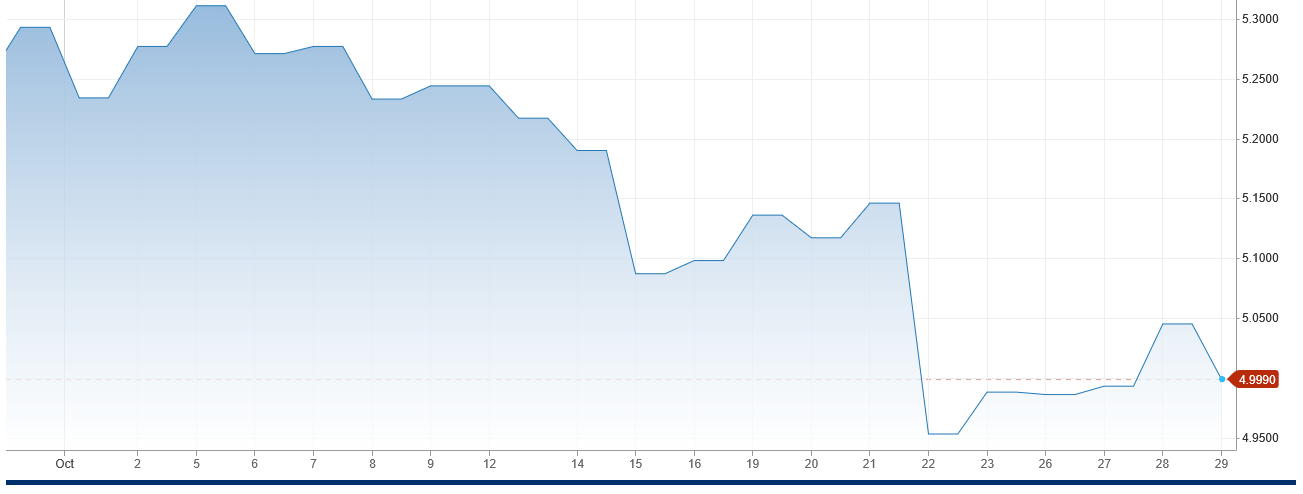
Geopolitical uncertainty also supports safe-haven demand, even as higher energy prices complicate the inflation outlook and reinforce expectations of further Fed tightening.
Could the Fed become less hawkish in 2027?
One of the strongest arguments supporting Gold's medium-term outlook may paradoxically come from the Fed itself. Fed Chair Kevin Warsh acknowledged on Wednesday that monetary tightening is showing signs of working, although he questioned whether financial conditions are sufficiently restrictive.
This distinction matters because monetary policy operates with a lag. The full effects of previous interest rate increases on consumer spending, investment and inflation may only become apparent over the coming quarters. A December rate hike could therefore coexist with expectations of a less restrictive monetary environment in 2027, particularly if inflation gradually moderates.
For Gold, the crucial question is not simply whether the Fed raises rates again, but how long borrowing costs will remain elevated. An anticipated shift toward monetary neutrality, accompanied by declining real yields, could provide support for the precious metal.
Long-term investors keep buying Gold
Another explanation for Gold's resilience lies in the divergence between speculative positioning and structural investment demand. The World Gold Council (WGC) reported that global physically backed Gold Exchange-Traded Funds (ETFs) attracted $10 billion in September, bringing third-quarter inflows to a record $31 billion. Total holdings reached 4,256 tonnes.
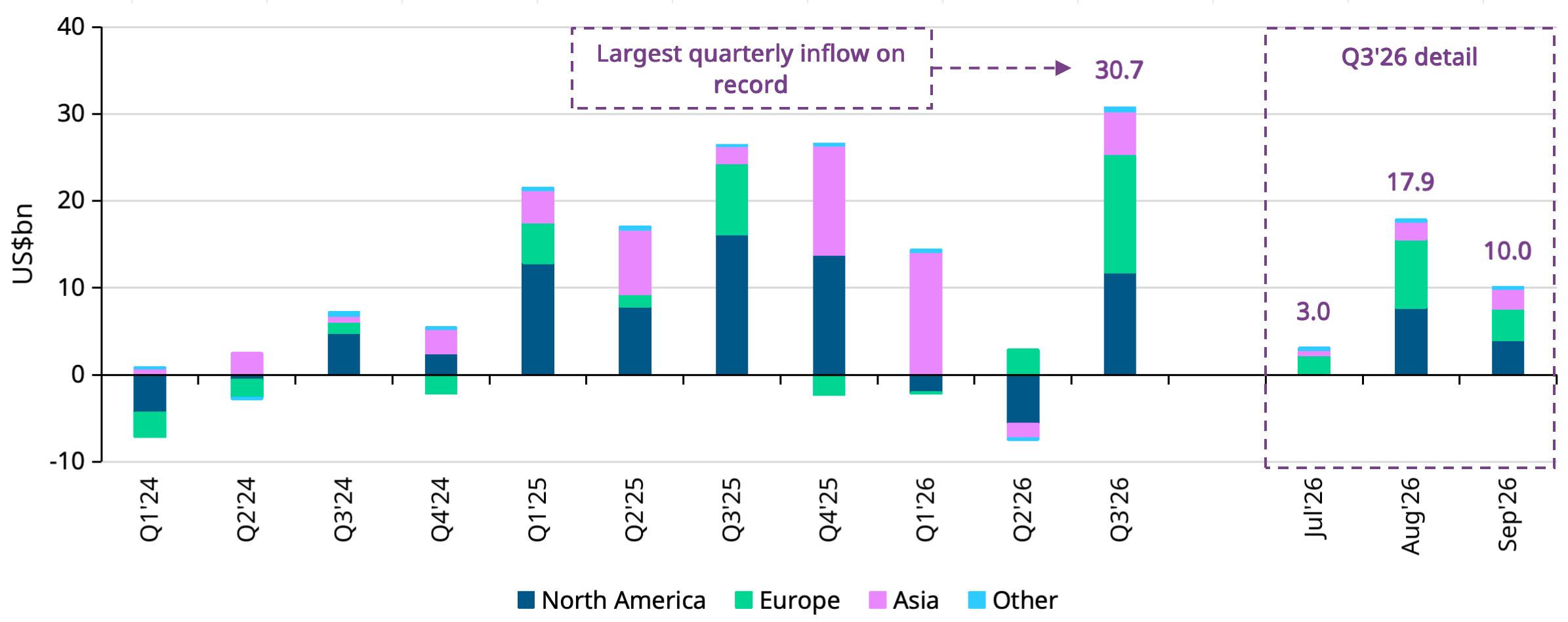
Central banks also continue accumulating Gold. Goldman Sachs estimated that official institutions purchased approximately 79 tonnes in August, compared with a monthly average of just 17 tonnes before 2022.
Saxo Bank Head of Commodity Strategy Ole Sloth Hansen highlighted this divergence in comments reported by Bloomberg: “Having rebounded from key technical support around US$3,970, the tug of war between short-term momentum sellers and longer-term accumulators continues.” These strategic purchases can help absorb speculative selling pressure, although they do not guarantee an immediate price recovery.
Can Gold recover in 2027, or is another sell-off coming?
In the near term, Gold remains vulnerable to persistent inflation, further Fed tightening and potentially higher real yields. The broad $4,100-$3,940 support region remains important for assessing buyers' resilience, with a sustained break below its lower boundary potentially triggering additional selling.
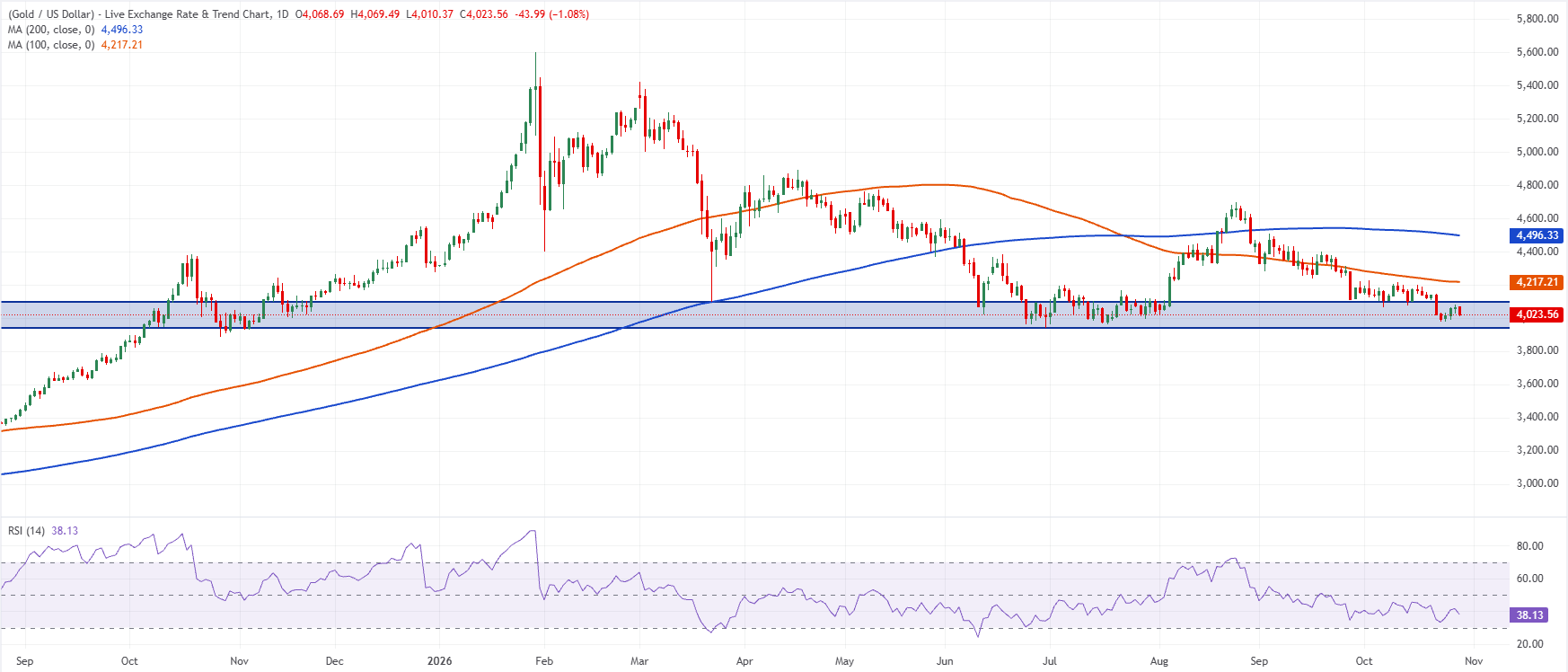
Nevertheless, longer-term prospects remain constructive. Goldman Sachs maintains a Gold price target of $5,400 by the end of 2027, supported by expectations of continued central bank purchases.
Gold therefore faces two opposing forces: a strong US economy and high inflation justifying restrictive monetary policy today on one hand, and the possibility that the delayed effects of tightening will create more favorable conditions in 2027 on the other.
This explains why strong US economic figures have not triggered a more dramatic collapse. While speculative investors focus on the next Fed decision, longer-term buyers are positioning for a future shift in monetary policy and continued structural demand.
For Gold, the biggest risk may not be the US economy’s strength today, but how long that strength can persist under restrictive financial conditions.
Author

Ghiles Guezout
FXStreet
Ghiles Guezout is a Market Analyst with a strong background in stock market investments, trading, and cryptocurrencies. He combines fundamental and technical analysis skills to identify market opportunities.