ECB Preview: Lagarde may trigger a “buy the dip” opportunity by trying to talk down the euro
- The ECB is set to leave its policy unchanged in January but may paint a gloomy picture.
- President Lagarde could express concern about the strong euro and its contribution to low inflation.
- Unless the bank threatens lower rates, EUR/USD may resume its rises, based on dollar weakness.

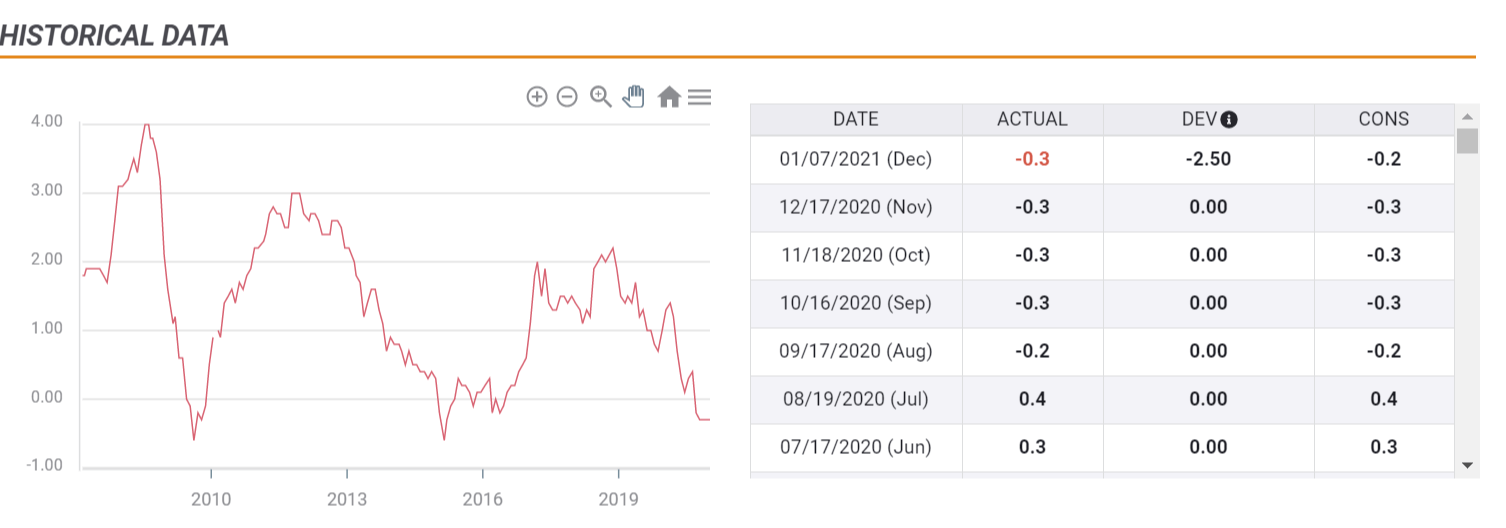
Missing the target for over two years – and moving further away from it– cannot be called a success. The European Central Bank has only one job, keeping inflation "at, or close to 2%" and the current level of -0.3% is undoubtedly an issue.
The COVID-19 pandemic is the main culprit, causing harsh economic pain and lowering demand. A change in German VAT also contributed to pushing the Consumer Price Index lower, but even when that effect fades away – inflation remains depressed. Core CPI, at a positive 0.2% is also dismal.
Source: FXStreet
Another issue is the high exchange rate of the euro, which pushes prices of imported prices lower, and makes European exports less attractive. EUR/USD shot higher amid falling demand for the safe-haven dollar which is the result of the decisive US elections and more importantly, the breakthroughs in coronavirus vaccines. Europe's harsh winter covid wave failed to push the common currency lower.
Christine Lagarde, President of the ECB, expressed some discontent with the high exchange rate of the euro and may take another step in the upcoming meeting. Back in December, the bank announced the expansion of its Pandemic Emergency Purchase Program by around €500 billion.
Contrary to the pre-coronavirus era, printing euros benefit the currency. Instead of seeing the creation of new funds as devaluing existing ones, investors observe lowering borrowing costs for governments, which can boost expenditure and support the economies of the currency bloc.
Rate cut? Not so fast
The only tool that the Frankfurt-based institution can deploy to hit the euro is cutting its deposit rate – which is already at -0.50%, in deep-freeze territory, like the Pfizer/BioNTech vaccine's storage requirements. Further punishing banks for parking money with the bank would be hard. It is also essential to remember that members from Germany and other northern members are not keen on looser monetary policy.
The ECB is unlikely to announce new measures at its first meeting of 2021, in which it does not publish new staff forecasts. However, Lagarde may dedicate more time and use starker language to warn about the damage of the high exchange rate to the economy and to inflation.
Will she succeed? Investors may be taken aback and algorithms may shoot sell orders, pushing EUR/USD lower in response to new language. Nevertheless, without slashing borrowing costs, markets may realize that Lagarde's threats are not credible, and return to trading the currency pair to the tune of moves across the pond.
Timing
The ECB announces its decisions less than 24 hours after Joe Biden is inaugurated as US President. The incoming occupant of the White House is set to push his $1.9 trillion stimulus bill and also sign Executive Orders that may have an economic impact. Will his moves improve the market mood and weigh on the dollar or rather send US Treasury yields higher and boost it? That remains an open question.
Six days after the ECB's decision, her piers across the pond make their announcement. Jerome Powell, Chairman of the Federal Reserve, put an end to speculation about the early tapering of bond buying. Will he take the extra step and expand the Quantitive Easing program? Also here, there is room for speculation.
Conclusion
The ECB is set to leave its policy unchanged but may try to talk down the euro. Without the credible threat of cutting interest rates, any EUR/USD could prove a "buy-the-dip" opportunity.
See EUR/USD Price Forecast 2021: Euro-dollar long-term bullish breakout points to 1.2750
Author

Yohay Elam
FXStreet
Yohay is in Forex since 2008 when he founded Forex Crunch, a blog crafted in his free time that turned into a fully-fledged currency website later sold to Finixio.