ECB Preview: between a rock and a hard place
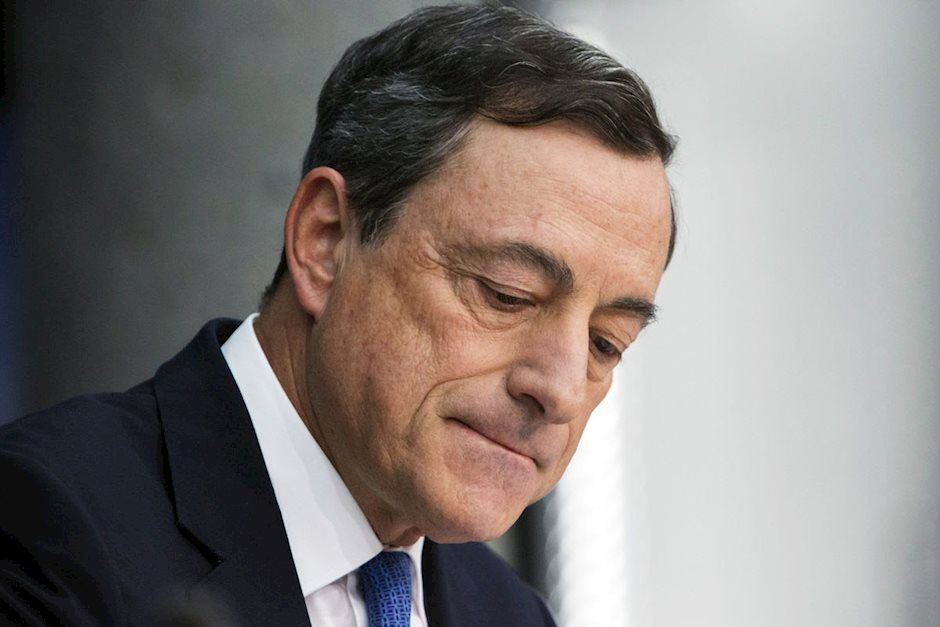

After launching QE back in March 2015, ECB's head, Mario Draghi, faces a new challenge as the dead-line of the program is just around the corner. Having started with a €60 billion in asset purchases per month, later extended to of €80 billion per month, in April this year the Governing Council has said that the program will run until March 2017, or "as long as required" ever since day one. With inflation running well below the ECB's just-under-2% target, and despite the rumors of tapering heard earlier this year, Draghi has not much of a choice but to extend the ongoing stimulus program. The general consensus suggests six months, to September 2017.
He can also opt to extend it for longer and reduce the amount of monthly purchases, but that seems a risky move, as it will tight financial conditions and suggest that the ECB is getting ready to retrieve easing, resulting therefore in a more expensive EUR, something local economies won't be able to handle.
Another option will be cutting rates, but Draghi has been reluctant to send the interest rate below 0.0%. The deposit rate is currently at -0.4%, but chances of cutting then further into negative territory are pretty much null. Also, the Central Bank can change it self-imposed rules on which bonds are eligible for purchase, but buying junk bonds seems not the correct answer.
The truth is that the bank is running out of options, but that the progress achieved so far is too tiny to even think on retrieving QE.
Another issue is economic growth. Despite data has been encouraging, the EU is still far from an optimal situation, not to mention the political risks the EU is facing and will have to face all through the upcoming 2017.
Bottom line, QE will be extended, and for how long and for how much will determinate EUR's trend. Less than six months with a reduced amount of monthly purchases will be EUR bullish, while for longer, and for more than €80 billion per month, will end up pushing it back lower.
EUR/USD levels to watch

The EUR/USD pair has seen a nice comeback from the fresh yearly low posted this week at 1.0504, but the recovery stalled a few pips short from the 38.2% retracement of the latest daily decline at 1.0806, the first resistance for the pair. A critical one, however, is the 1.0840/60 region, where the pair bottomed for most of 2015 and current 2016, as moves below the level have proved short-lived. Should the price regain such level, the risk of an upward extension towards 1.0900/50 would increase.
The immediate support, on the other hand, is the 1.0690 level, the 23.6% retracement of the same decline. Below it, the pair will likely resume its bearish trend, furthermore, as market's attention will flip towards the FED's meeting next week with 1.0640 and 1.0570 as the next supports to consider.
Author
Valeria Bednarik
FXStreet
Valeria Bednarik was born and lives in Buenos Aires, Argentina. Her passion for math and numbers pushed her into studying economics in her younger years.

















