ECB – Draghi confirms current stance

Eurozone – January manufacturing PMI data expected
Brexit – May targets ‘hard' Brexit
ECB – Draghi confirms current stance
Eurozone – Manufacturing PMI data for January expected, commodity prices continue to rise in early 2017
Next week (24.01), manufacturing PMI data for January for the Eurozone, Germany and France will be released. This is the first important economic data point for 1Q17. In December 2016, industry sentiment climbed to a 51/2-year high. Even in France and Italy, sentiment improved in December quite markedly as well.
Due to the strong sentiment data in December, we at best expect a stabilization of sentiment in January at this high level or a slight dip. The global economic environment remains positive, despite all political risks. The broad-based commodity price index CRB has already risen 2.5% since the start of this year, thus confirming the ongoing cyclical upswing. Furthermore, next week, a flash estimate of consumer sentiment is going to be released as well. We expect a further slight improvement, in line with the general positive economic market environment. Overall, we expect an unchanged slight acceleration of GDP growth for the Eurozone in 1Q17 to 1.8% y/y.
UK – May targets ‘hard' Brexit; FX markets show positive first reaction
This week, UK PM Theresa May for the first time outlined details on the UK's intentions for the Brexit negotiations (the UK is expected to deliver its withdrawal request by the end of March). In general, May wants a clear cut and intends to leave the EU and the single market, in line with the will of the majority of the people, without any ifs or buts. Interestingly, May declared that the UK intends to leave the EU customs union as well (the customs union is a preliminary stage to the single market). This creates additional leeway for the UK, but the biggest drawback would be that Britain would lose access to all 56 free trade agreements the EU has already in place. The advantage for the UK is that it can now negotiate free trade deals (for example with the US) that perfectly fit the individual needs of the UK economy. May intends to negotiate a comprehensive free trade deal with the EU as well. Under these circumstances, the Norwegian or Swiss model can be ruled out. May plans to submit the negotiated package for a final vote to the Parliament.
From the capital markets' perspective, it is good that May has shed some light on the fundamental intentions of the British government, which brings more clarity, which is always welcome on markets.
Immediately after May gave her speech, the British pound gained vs. the USD and euro. We expect that the economic consequences will only become visible gradually. For the time being, consumer and industrial sentiment in the UK are on the rise – similarly to the EU. There is thus currently no reason to expect a fall in economic activity in the UK, which is also good news for the EU economy. The companies and value chains, however, will have to adapt to the changing circumstances during the coming quarters and years. Particularly for the finance industry, which is of crucial importance for the UK economy, leaving the EU's single market would have far reaching consequences, due to the regulatory environment (keyword: ‘EU Passport'). Politically, the first resistance is coming from Scotland (people there largely voted for Britain to remain in the EU). According to media reports, Scotland's Prime Minister Nicola Sturgeon already stated that, based on the recent statements from May, the likelihood of a second independence referendum for Scotland has risen. Another independence referendum could cause uncertainty, which in turn could weigh on the British economy.
ECB should stick to current course for most of 2017
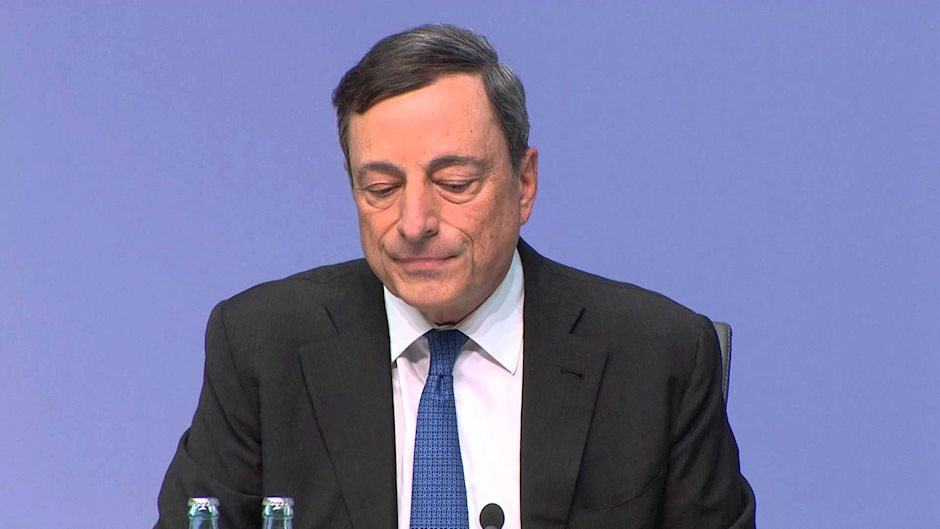
In an attempt to counter any speculation, the ECB president made it very clear in his prepared introductory statement that the recent somewhat stronger than expected inflation numbers did not change the current policy stance. He stated that the increase of the inflation rate was "largely owing to base effects in energy prices, but underlying inflation pressures remained subdued". The ECB Council will continue to look through inflation developments, which it viewed as transient, and these will not impact the mid-term outlook for price stability. In summary, Draghi made it clear that inflation still had a long way to go before the ECB would consider reducing or halting its asset purchases.
With these statements, Draghi made it quite clear to the markets that they should not bet on an early end/reduction of the ECB's asset purchases. We confirm our forecast for the ECB to keep its course unchanged until far into the second half of this year. Towards the end of the year, the ECB should communicate plans on how it will proceed in 2018.
Author
Erste Bank Research Team
Erste Bank
At Erste Group we greatly value transparency. Our Investor Relations team strives to provide comprehensive information with frequent updates to ensure that the details on these pages are always current.

















