|

Don’t get too bullish on the DXY

Those who’ve been long the US dollar index (DXY) since the middle of last year have done well for themselves. The DXY has gained 12% from its January 2021 swing low of 89.21 to trade close to 99.75 at the time of writing. Making similar gains from current levels will undoubtedly prove more challenging. Traders should be factoring this into their risk-reward assessments going forward for several reasons.

First and foremost, as the DXY moves higher it’s likely to meet fierce resistance between the 100-103 range. In March 2020, dollar sellers were quick to step into the market when price attempted to breach the 103 level. Buyers may meet similar selling pressure on any re-attempt at these levels. Even more selling pressure is likely to arise toward the 103.8 level.
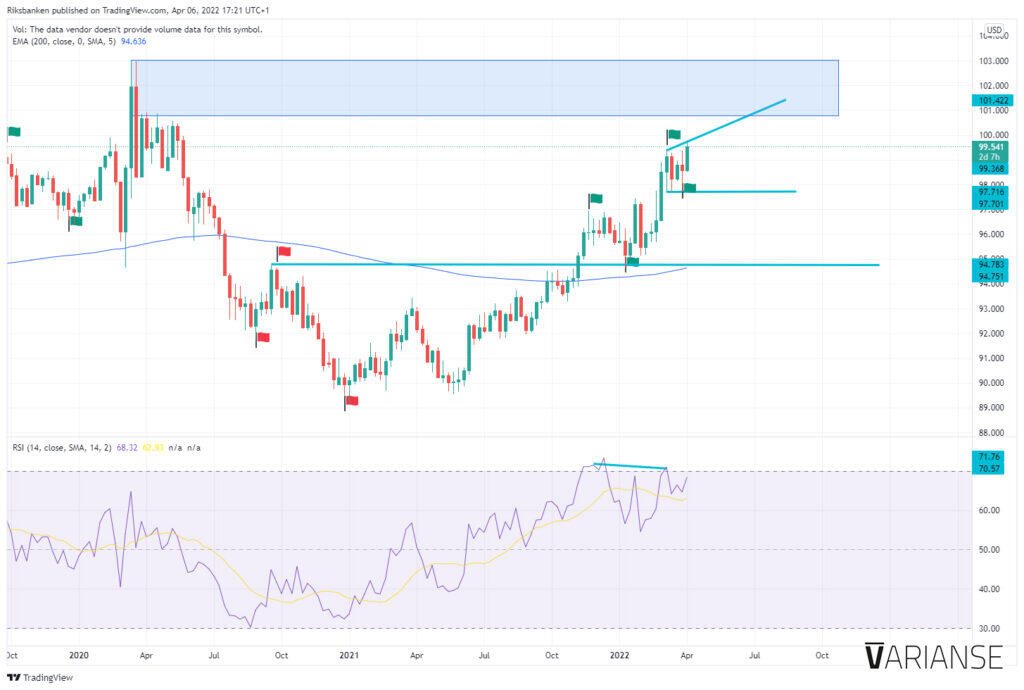
Secondly, from a market structure perspective the uptrend in the DXY is a lot more recent than appears to the naked eye. The 94.74 September 2020 swing high of the previous downtrend was only breached in November last year. This alone would not be concerning if it weren’t for a bit of RSI divergence between the latest two swing highs raises questions about further momentum.

Lastly, if indeed 99.418 represents the last true previous swing high and 97.685 the low in March, then traders are potentially facing a right-angled ascending broadening wedge pattern. Such a pattern adds a bit of ambiguity about further direction.
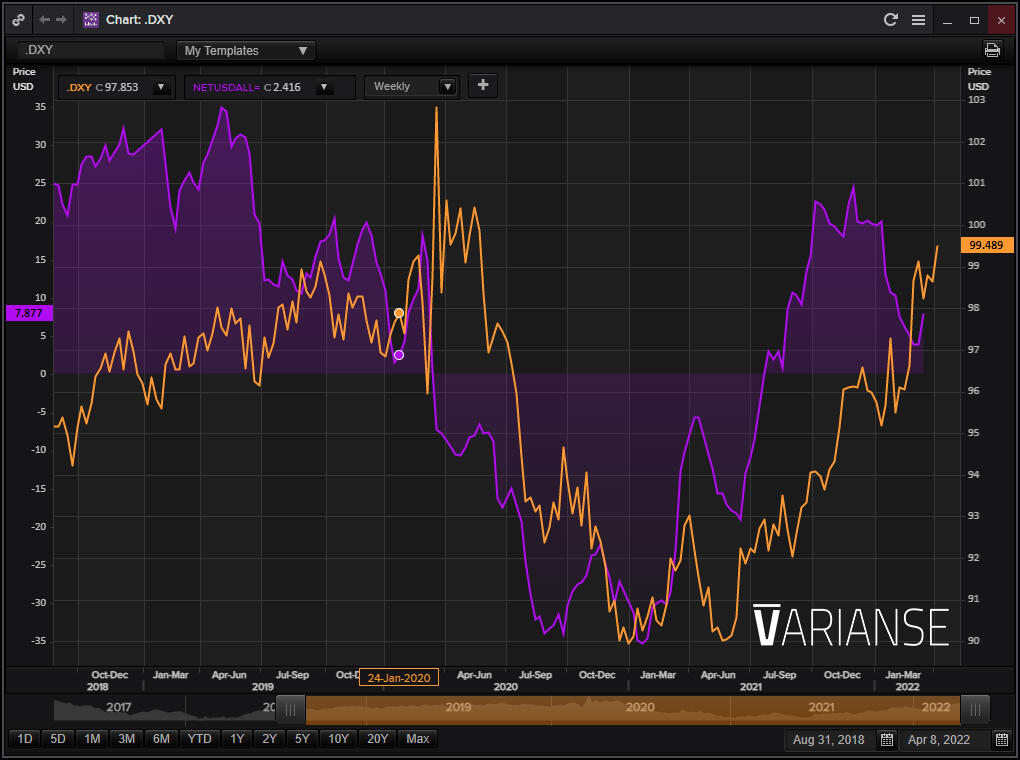
All that said, the DXY is clearly in an uptrend and the long US dollar positioning that drove the DXY higher earlier in the year has faded. So, there is still scope for a further rise in price. Nevertheless, traders should certainly be taking note of some of the red flags being thrown by the latest leg higher in the DXY.

Author

Carl Paraskevas

Carl Paraskevas has over twenty years’ experience in finance and banking, primarily in research related roles at several institutions.


More from Carl Paraskevas
Share:

Markets move fast. We move first.

Orange Juice Newsletter brings you expert driven insights - not headlines. Every day on your inbox.

By subscribing you agree to our Terms and conditions.

Editor's Picks

EUR/USD rebounds after falling toward 1.1700

EUR/USD gains traction and trades above 1.1730 in the American session, looking to end the week virtually unchanged. The bullish opening in Wall Street makes it difficult for the US Dollar to preserve its recovery momentum and helps the pair rebound heading into the weekend.

GBP/USD steadies below 1.3400 as traders assess BoE policy outlook

Following Thursday's volatile session, GBP/USD moves sideways below 1.3400 on Friday. Investors reassess the Bank of England's policy oıtlook after the MPC decided to cut the interest rate by 25 bps by a slim margin. Meanwhile, the improving risk mood helps the pair hold its ground.

Gold stays below $4,350, looks to post small weekly gains

Gold struggles to gather recovery momentum and stays below $4,350 in the second half of the day on Friday, as the benchmark 10-year US Treasury bond yield edges higher. Nevertheless, the precious metal remains on track to end the week with modest gains as markets gear up for the holiday season.

Crypto Today: Bitcoin, Ethereum, XRP rebound amid bearish market conditions

Bitcoin (BTC) is edging higher, trading above $88,000 at the time of writing on Monday. Altcoins, including Ethereum (ETH) and Ripple (XRP), are following in BTC’s footsteps, experiencing relief rebounds following a volatile week.

How much can one month of soft inflation change the Fed’s mind?

One month of softer inflation data is rarely enough to shift Federal Reserve policy on its own, but in a market highly sensitive to every data point, even a single reading can reshape expectations. November’s inflation report offered a welcome sign of cooling price pressures. 

XRP rebounds amid ETF inflows and declining retail demand demand

XRP rebounds as bulls target a short-term breakout above $2.00 on Friday. XRP ETFs record the highest inflow since December 8, signaling growing institutional appetite.















