Trend-followers start tearing their hair out

Outlook: Data today will be critical to the dollar. We get the personal-consumption expenditures price index, where the core is forecast up 0.2% m/m in August and 3.9% y/y. Remember that last time, it went up instead of down. We also get actual consumer spending and personal income for August, forecast up 0.4%. Later it’s the University of Michigan consumer sentiment index.
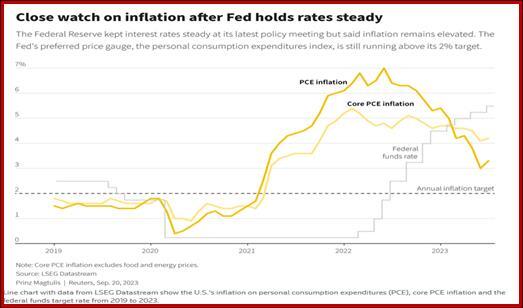
The point of all this data is to inform sentiment. We tend to forget that data itself is not sentiment. Sentiment takes in a broader environmental perspective and context. This time the context is a near certain government shutdown this weekend that could last weeks, considering the dreadful conduct of the clowns we elected to the House. We also have the auto workers’ strike, the resumption of student loan payments, and a few other issues.
Some of the Feds are seizing the opportunity to waffle on the interest rate outlook. Richmond Fed Barkin says "It would be hard to figure out what's actually happening in the economy without the jobs data," meaning the month-end nonfarm payrolls that is normally due on Friday.
As noted above, nobody ever knows how long a corrective move will last but this one began with a loud bang. We trend-followers start tearing our hair out—go with the countertrend move or just find better entries to stay with the trend? Various broken rules, including the ATR, channel and B band lines, even the 5-10-20 day moving average lines—have yet to confirm this correction is going to be a big one. In other words, it can be a false breakout.
But given the deeply overbought condition of the dollar and the tension caused by record high yields, the new move is like a fever breaking. We need to watch the yields to see where they stabilize. There is a possibility that softer US inflation and other factors, including the shutdown, could take the Q4 rate hike off the table.
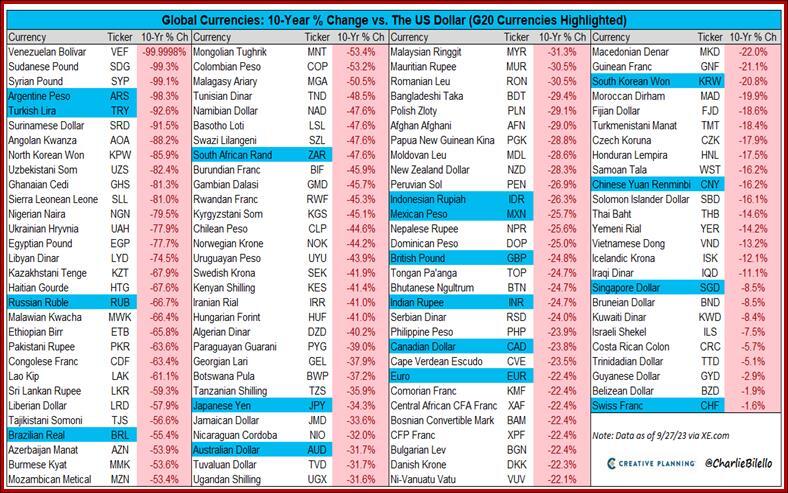
Forecast: Our advice to pare positions was right (this time). In case you question the indicators that show the dollar overbought, see the table below that an eagle-eyed Reader sent to us. The dollar is not only overpriced against the majors, but everything else, too, on the long-term basis. This is more fun than useful, but still—the dollar rally is of long-standing. We don’t expect a full reversal to some number like 1.2000 against the euro, but near-term, red resistance lies at about 1.0736 and that is well within a realistic possible range.
This is an excerpt from “The Rockefeller Morning Briefing,” which is far larger (about 10 pages). The Briefing has been published every day for over 25 years and represents experienced analysis and insight. The report offers deep background and is not intended to guide FX trading. Rockefeller produces other reports (in spot and futures) for trading purposes.
To get a two-week trial of the full reports plus traders advice for only $3.95. Click here!
This is an excerpt from “The Rockefeller Morning Briefing,” which is far larger (about 10 pages). The Briefing has been published every day for over 25 years and represents experienced analysis and insight. The report offers deep background and is not intended to guide FX trading. Rockefeller produces other reports (in spot and futures) for trading purposes.
To get a two-week trial of the full reports plus traders advice for only $3.95. Click here!
Author

Barbara Rockefeller
Rockefeller Treasury Services, Inc.
Experience Before founding Rockefeller Treasury, Barbara worked at Citibank and other banks as a risk manager, new product developer (Cititrend), FX trader, advisor and loan officer. Miss Rockefeller is engaged to perform FX-relat