Conference Board Consumer Confidence Preview: Strength through adversity
- American consumer confidence predicted to moderate further in January
- Fallout over the partial US government shutdown
- Confidence in 2018 was the strongest in 18 years

The Conference Board will release its Consumer Confidence Index at 10:00 am EST 15:00 GMT Tuesday January 29th
Forecast: Consumer confidence to remain robust
The Consumer Confidence Index from the business organization the Conference Board is expected to decline to 124.9 in January from 128.1 in December. Even at the projected level for January confidence will remain higher than at any point in the16 years prior to February 2017.
The US economy remains in good condition despite the recent drop in consumer confidence from the almost two decade high of 137.9 reading in October and 136.4 in November. Job creation is plentiful, wages are expansive and unemployment is at a 50 year low.
The most likely reason for the 10 point drop from October to December was the well publicized partial closure of the federal government during the budget dispute between President Trump and the House Democrats led by Nancy Pelosi. The two sides have since agreed to a three week continuing resolution that will fund the government through February 15th.
The Present Situation Index had declined to 171.6 in December from 172.7 the prior month. The Expectation Index fell to 99.1 in December from 112.3 in November.
The drop in expectations was “reflective of an increasing concern that the pace of economic growth will begin moderating in the first half of 2019,” according to the December Conference Board release.
The Conference Board Consumer Confidence Survey is a survey of the attitudes of the US consumer which began in 1967 and is conducted by Nielsen for the New York based non-profit business membership and research organization.
Conference Board Consumer Confidence Index
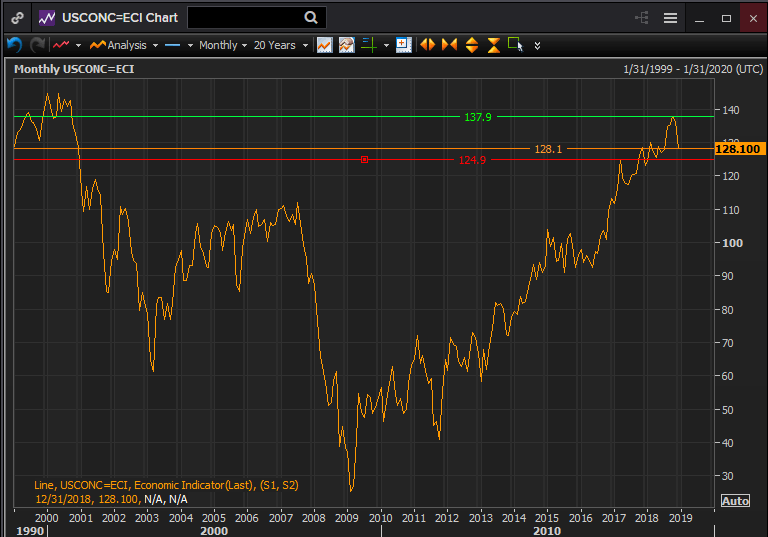
Chart: Reuters
Author

Joseph Trevisani
FXStreet
Joseph Trevisani began his thirty-year career in the financial markets at Credit Suisse in New York and Singapore where he worked for 12 years as an interbank currency trader and trading desk manager.
















