Chinese manufacturing slows, WHO rings the alarm bell, but markets recover, UK exits the EU
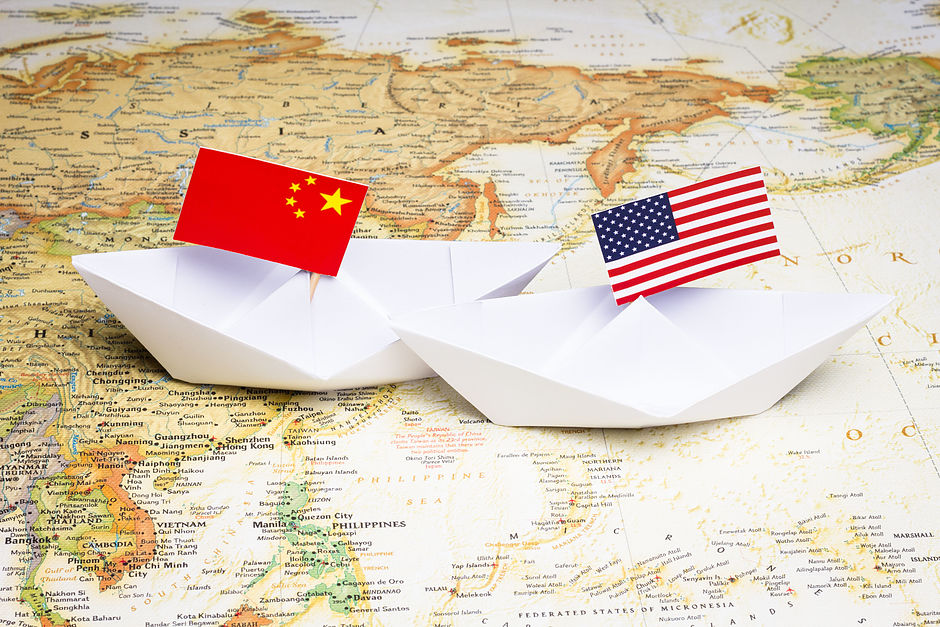

The Chinese manufacturing PMI data was good and bad news at the same time. The January figure fell to 50.0 amid the Chinese New Year holiday and the coronavirus breakout take a toll on the activity as the year began but showed no contraction. Production rose the least in three months; factories were apparently struggling even before the virus hit the streets. Then the outbreak only helped worsening the situation. Given the limited activity and extended CNY break to contain the virus, the worst may yet to come.
The World Health Organization issued global emergency as the death toll in China rose to 213.
Stay on top of the markets with Swissquote’s News & Analysis
But stocks in New York closed Thursday's session on a positive note and most stocks in Asia followed up on the US session gains. Nikkei bounced 1.15%, Taiwan recovered 0.93%, Hang Seng gained 0.38% and ASX 200 advanced 0.13%, while Kospi (-0.47%) traded on the back foot.
WTI crude stepped above the $53 a barrel after yesterday's fall below the $52 mark. Gold eased to $1570 per oz on improved risk appetite.
The pound bounced off the 1.30 mark on Thursday as the Bank of England (BoE) maintained its benchmark rate unchanged at 0.75% with only two votes in favour of a rate cut versus three expected by analysts. Hence, the more hawkish than expected status quo decision sent the pound rallying past 1.31 against the US dollar.
Today is the day Britain finally steps out of the European Union. It is also the beginning of a probably long and bumpy road for both the UK and the European Union. UK Prime Minister Boris Johnson has a very aggressive agenda for 2020 to ink bilateral deals with the EU nations. To us, the year-end objective is far too optimistic considering that it took more than three-and-a-half years to trigger the Article 50. Realistically, it may take at least half a decade or more to reach a certain stability in terms of bilateral agreements involving goods, services and people circulation. With Brexit uncertainties lingering, the BoE's decision to hold fire was probably the right one; British policymakers may need to pull out the heavy artillery when it is more needed.
For now, we do not expect a kneejerk market reaction to the UK's official exit from the European Union. Asset prices already broadly factor in the divorce.
The FTSE futures (+0.38%) point at a positive open in London. BP and Shell could recover a part of yesterday's heavy losses which sent their stock prices 2.26% and 4.36% lower respectively.
In Europe, the EURUSD shortly fell below the 1.10 mark on Thursday yet better-than-expected German employment data put a floor under the sell-off. Due today, a deluge of economic data across the Eurozone should shake the euro. The fourth quarter GDP growth in the Eurozone may have eased to 1.1% year-on-year from 1.2% printed a month earlier. The headline inflation is seen higher at 1.4% in January versus 1.3% printed a month earlier, but the core inflation may have slowed to 1.2% from 1.3%. A mix of good and bad data could keep the single currency near the 1.10 mark against the greenback or send it below this level, given that the market tends to give a stronger reaction to negative data.
Finally, in the US, the economy expanded at the stable pace of 2.1% in the fourth quarter in line with analyst expectations. The GDP growth summed up to 2.3% in 2019, the lowest since 2016 and well below Donald Trump's 3% target. Meanwhile the stock markets hit record after record over the same period, painting quite a puzzling picture when it comes to the sustainability of stock prices at the current levels. But this is the US election year, and Donald Trump will do whatever is in his power to keep the stock rally in place.
Author
Ipek Ozkardeskaya
Swissquote Bank Ltd
Ipek Ozkardeskaya began her financial career in 2010 in the structured products desk of the Swiss Banque Cantonale Vaudoise. She worked in HSBC Private Bank in Geneva in relation to high and ultra-high-net-worth clients.