|

Chart of The Week: Gold meets long-term resistance structure around $1,700

  • Gold bulls have been back in control to test 1700 handle.
  • While below the 1700 handle, profit-taking could trigger a flush out of speculative bids.
  • Correction territory opens a retracement to 1620s below 1640s.

Gold prices are on the rise, making a huge comeback since Mid-March lows. In futures, for example, gold settled at $1,477.90 an ounce on March 18, their lowest finish year to date, before eventually moving up to an intraday high of $1,754.50 on Thursday—the highest intraday mark since November 2012.

We have seen a shakeout of weak hands by the looks of things and year to date gold is now up more than 15%, versus a more than 14% decline in the S&P 500 index. Gold is now the strongest and at all-time highs against all currencies except for the US dollar at this point. 

After settling at $1,752.80 on Thursday, prices now trade at about $171 an ounce away from the all-time intraday high of $1,923.70 on Sept. 6, 2011. Given the current spot resistance around $1,703, the following is a look at the various structures from the monthly chart time-frame and downside correction opportunities. 

Monthly resistance
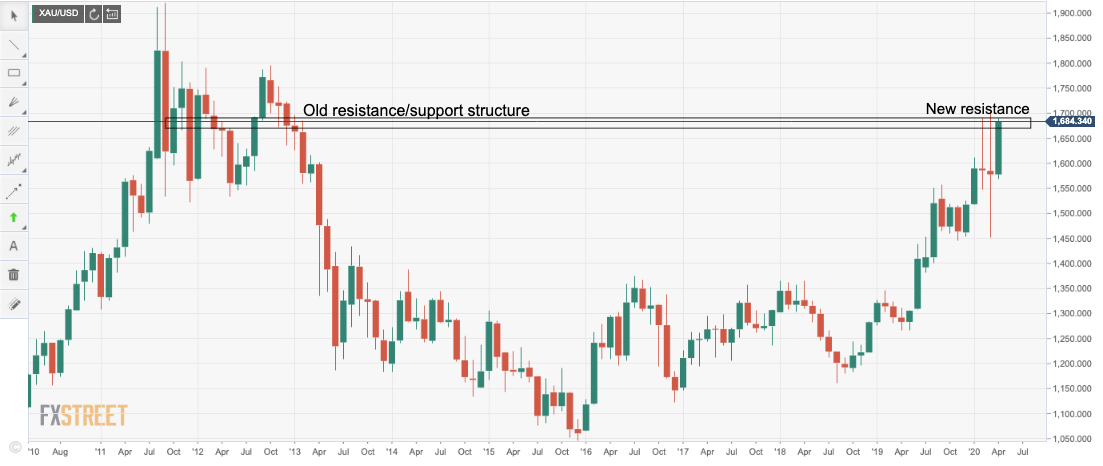
Monthly resistance and Fibonacci retracement targets
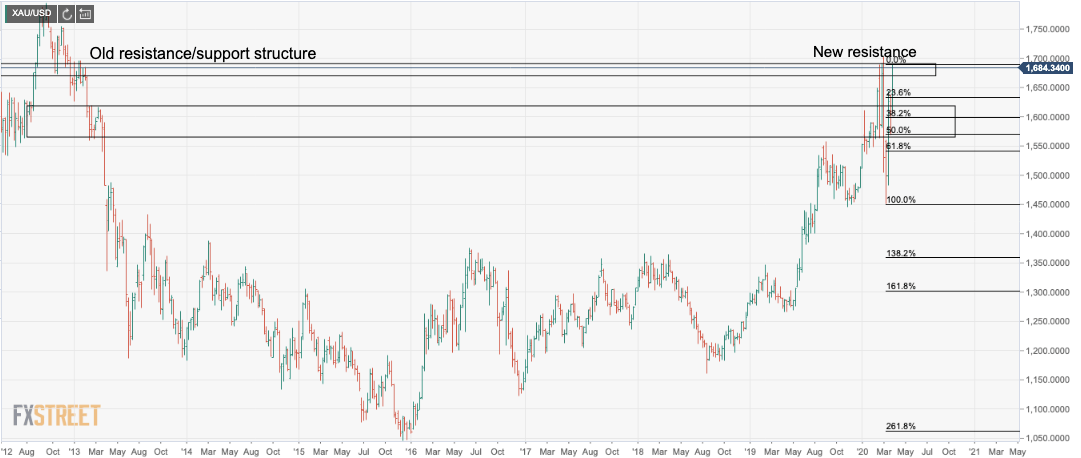
Daily Fibonacci retracement targets with 50 and 20-day moving average cluster/confluence
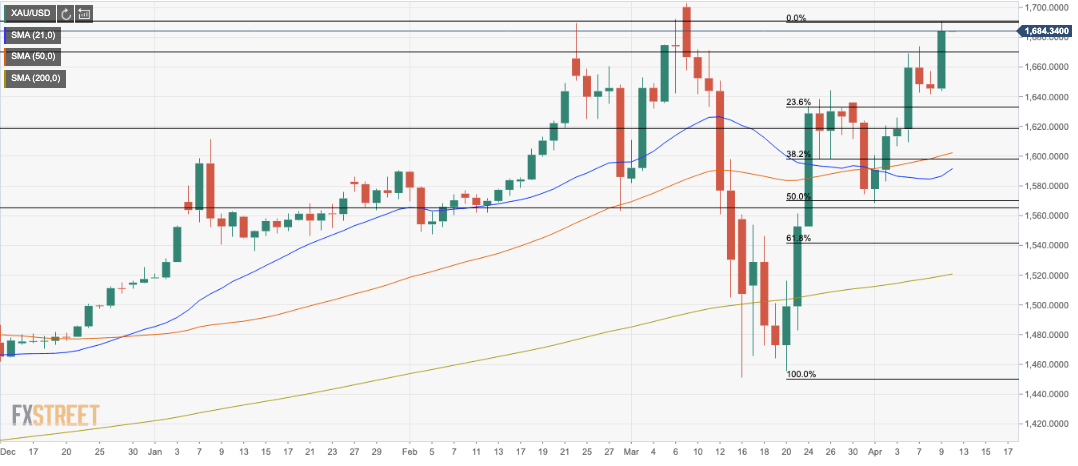
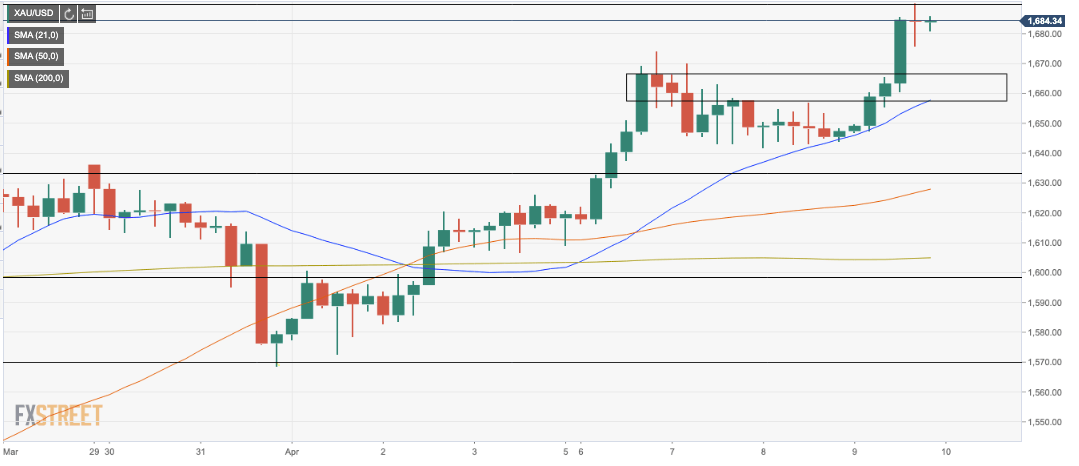
4-HR support structure
Bearish conclusion

While below the monthly resistance, as can be seen, there is room for a test of the 1620 level that guars the 38.2% and 20/50 daily moving averages, although a 4-HR support structure of between 1671 and the 20 4-HR MA at 1665 and then 1640 would need to give first. 

Author

Ross J Burland

Ross J Burland, born in England, UK, is a sportsman at heart. He played Rugby and Judo for his county, Kent and the South East of England Rugby team.


More from Ross J Burland
Share:

Editor's Picks

GBP/USD extends the drop to 1.3360

GBP/USD builds on Monday’s decline and briefly clinches five-day lows near 1.3360 on Tuesday. Cable’s extra pullback follows the better tone in the Greenback as uncertainty in the Middle East prompts investors to adopt a cautious stance. Meanwhile, an apathetic UK labour market report also collaborates with the selling pressure on the British Pound.

EUR/USD holds gains above 1.1400 on hawkish ECB expectations despite US-Iran tensions

The EUR/USD pair trades with mild gains around 1.1405 during the early Asian session on Wednesday. A hawkish tone from the European Central Bank provides some support to the Euro against the US Dollar. Traders await the upcoming ECB interest rate decision on Thursday. 

Gold hits two-week highs above $4,100 despite widening Mideast conflict

Gold hits two-week highs above $4,100 in the Asian session on Wednesday. The bright metal seems to ride the optimistic wave that diplomatic efforts are underway. However, concerns about energy-driven inflation risks continue to fuel Fed rate-hike bets. They could act as a tailwind for the US Dollar amid widening US-Iran tensions, which, in turn, could cap the bullion.

The market runs back into AI despite higher Oil and yields
World stocks surged as traders made a spirited return to the market’s commanding centre of gravity, piling back into semiconductors, AI leaders and momentum, with the enthusiasm of a crowd rushing through the one door it still trusts. The Nasdaq led Wall Street higher, semiconductor shares jumped more than 5%, and momentum staged its strongest rebound in years.
The Iranian war has again risen
The Iranian war has again risen to the top of the economics factor list. There is no end in sight. Intelligence experts say the current level of offense/retaliation will not change minds in Tehran, while in Washington, Trump fears all-out war, which would mean boots on the ground.
US Dollar mid-year outlook: Exceptional currency, exceptional risks?
The US Dollar enters the second half of 2026 in a markedly different position from a year ago. The King currency has recovered, reflecting persistent US inflation, changing expectations for Fed policy, geopolitical tensions and renewed demand for defensive assets.