Cash is king and the dollar is king of cash
- US Treasury rates climb as investors sell bonds anticipating supply.
- Dollar soars as markets trade for safe-haven.
- 10-year bond yield trades above 1%.
- Thursday’s initial jobless claims may be the first indication of economic impact.

Treasury yields
Yields on US Treasuries, considered the safest of all investments, have climbed sharply as investors sold bonds taking advantage of record prices and expecting large new supplies in the weeks ahead as the government prepares an economic stimulus package that could top $1 trillion.
The return on the benchmark 10-year bond touched 1.226% on Wednesday, 73 basis points above its all- time low on March 9th at 0.498%, before dropping back to 1.10%.
10-year Treasury yield
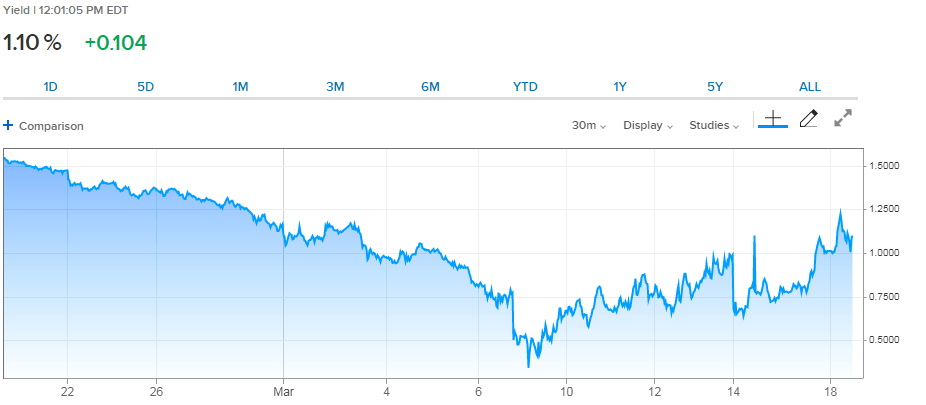
On Tuesday the yield had added 30 points as the Treasury Secretary Steven Mnuchin detailed plans that the administration was formulating with Congress for a massive economic support package that would likely include direct payments to Americans.
US dollar
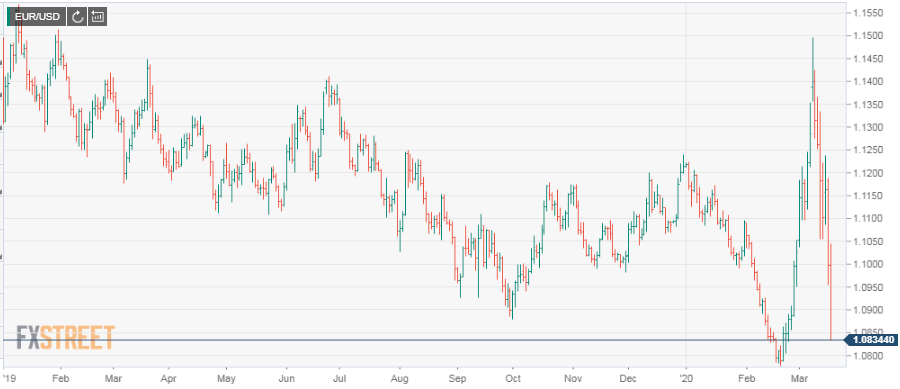
The US dollar has resumed its first choice safety status reaching multi-year highs against the Canadian dollar, the kiwi and the Australian dollar and rising sharply versus the yen and the euro. Foreign central banks have also been large buyer of the US currency.
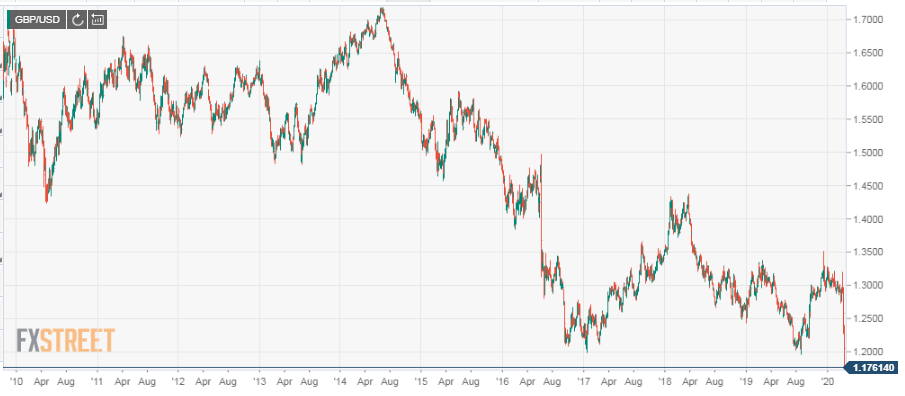
The sterling fell below 1.1800 a level not seen for more than a generation.
Initial jobless claims
Markets are positioning for a recession of unknown length probably starting in the second quarter as many employees are working from home, furloughed or otherwise less productive.
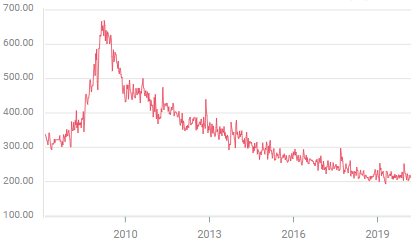
One key metric to watch will be the initial jobless claims figure, released every Thursday by the Labor Department. The number for the March 13 week, issued tomorrow, should begin to rise if business cutbacks and closures are putting people out of work.
Initial jobless claims
The administration expects to begin sending checks to Americans within the next two weeks. The stimulus package, which requires Congressional approval, will include $500 to $550 billion in individual aid or tax cuts, $200 to $300 billion in small business assistance and $50 to $100 billion to industries heavily affected such as airlines, travel and others.
Author

Joseph Trevisani
FXStreet
Joseph Trevisani began his thirty-year career in the financial markets at Credit Suisse in New York and Singapore where he worked for 12 years as an interbank currency trader and trading desk manager.
















