British Pound retreats after recent rally

The GBP/USD pair is undergoing a correction, moving towards 1.3377 on Friday, marking its lowest level since 23 June this year.
Strong US jobs data puts pressure on the Pound
The pound came under renewed pressure after the release of a strong US employment report, which boosted demand for the US dollar.
Earlier in the session, the pound received support from Prime Minister Keir Starmer’s announcement confirming that Chancellor Rachel Reeves would remain in office for the foreseeable future. This eased fears of changes to economic policy and reduced concerns about increased fiscal stimulus through further borrowing.
The market continues to factor in expectations of monetary policy easing, with the possibility of a Bank of England rate cut as early as August.
BoE Governor Andrew Bailey stated it was too early to assess the inflationary impact of trade tariffs but confirmed that interest rates are moving downwards. Meanwhile, MPC member Alan Taylor called for faster rate cuts, warning of the risk of a hard landing for the UK economy.
Technical analysis of GBP/USD
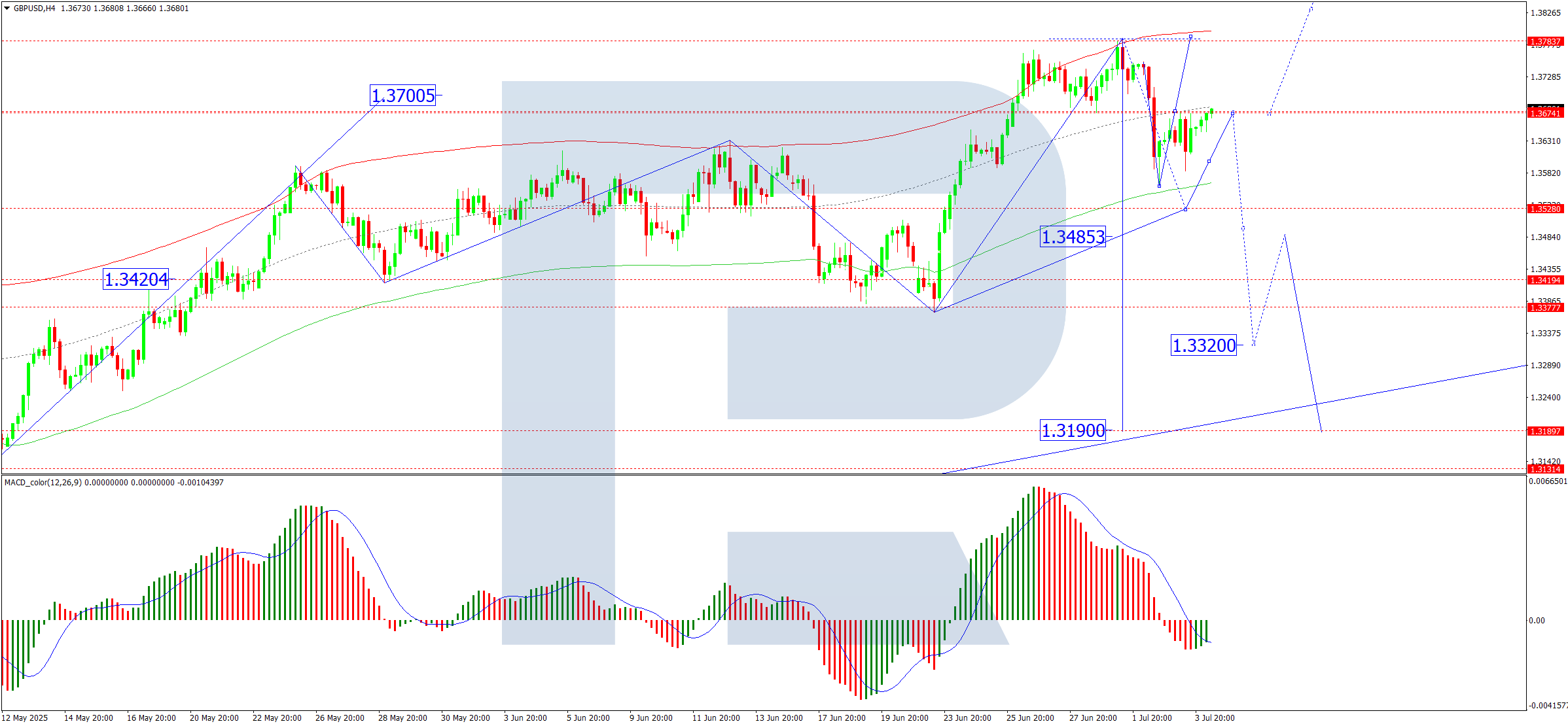
On the H4 chart, GBP/USD completed a decline to 1.3562, followed by a growth link to 1.3675. Today, another downward move to 1.3528 is possible, followed by growth back to 1.3675. The market is likely to continue forming a broad consolidation range around 1.3675. A breakout upwards would open the way for the trend to continue towards 1.4000, while a breakdown below would signal continuation of the downward wave to 1.3485. The MACD indicator confirms this scenario, with its signal line below zero and pointing firmly downwards, indicating that the bearish momentum remains.
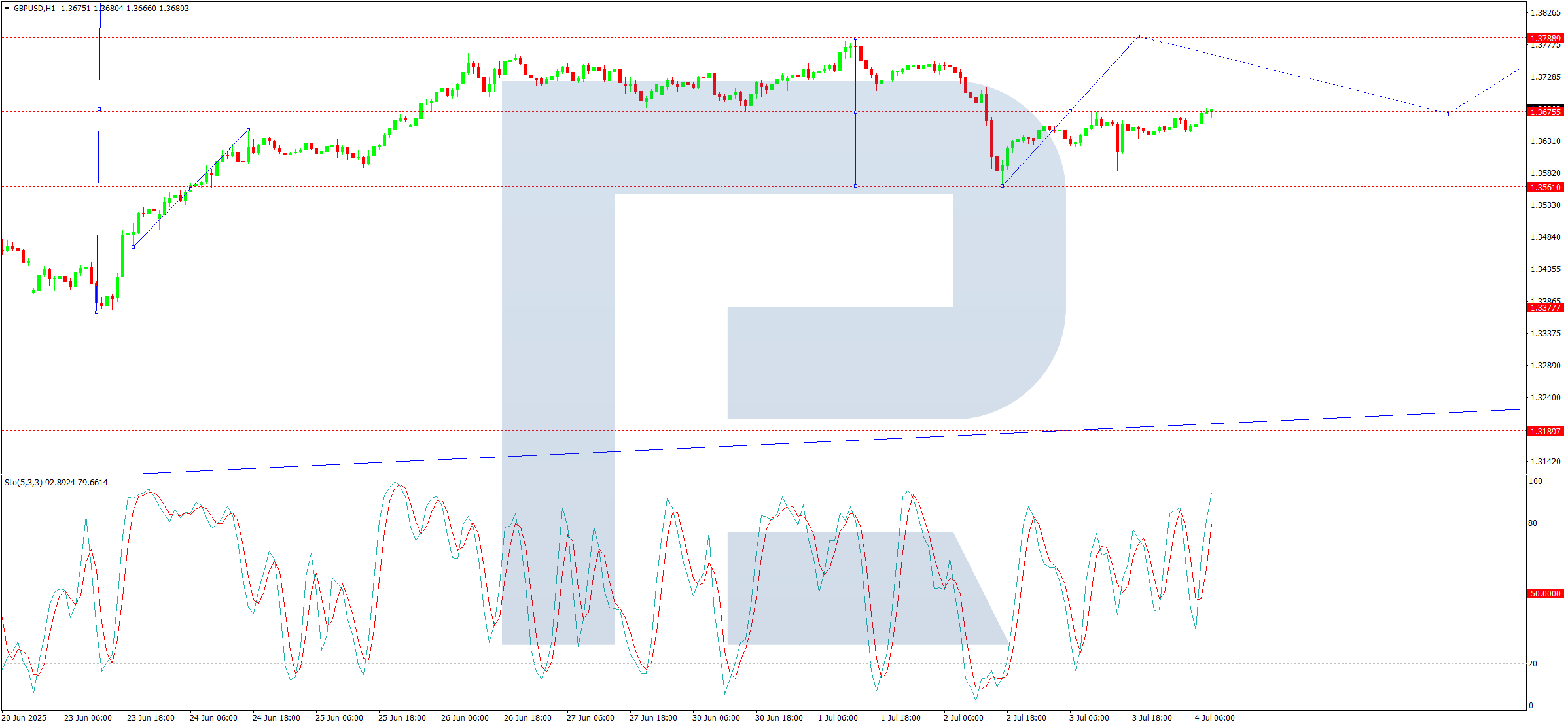
On the H1 chart, GBP/USD completed a correction to 1.3565 and a growth wave to 1.3675, marking the boundaries of the consolidation range around this level. An upward breakout would suggest a move to 1.3788, while a downward breakout would open potential for a decline to 1.3485. The Stochastic oscillator confirms this setup, with its signal line below 80 and pointing sharply downwards towards 20, indicating building downward pressure.
Conclusion
GBP/USD is correcting after its recent rally, with near-term support at 1.3528-1.3485 and resistance at 1.3675-1.3788. Market sentiment remains driven by the strength of the US dollar, BoE policy expectations, and evolving UK fiscal outlooks, with technical indicators pointing to potential further downside in the short term.
Author

Andrey Goilov
RoboForex
Higher economic education. Andrey Goilov has been working on the Forex market since 2005. A financial analyst and successful trader. Preference in trading is highly volatile instruments.
















