British PM May announces snap elections

The British Prime Minister Theresa May who stepped into the shoes after David Cameron resigned following the June 2016 Brexit referendum verdict announced on Tuesday last week that she would call on the parliament to approve snap elections in June.
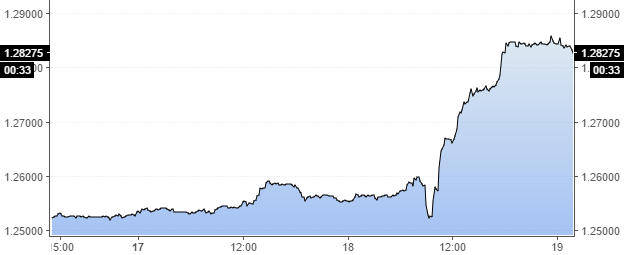
The announcement came as a surprise to the market as was seen by the reaction in the British pound. GBPUSD briefly fell to session lows of 1.2517 before surging higher on the day.
By Tuesday's close, GBPUSD closed the day with 2.22% gains.
The British elections in June add to the list of elections in the EU. The French elections are due on April 28th followed by the second round of elections in early May. Germany is slated to hold the general elections in September this year.
Elections expected to strengthen PM May’s hold
The call for snap elections comes at a time after the UK government managed to invoke Article 50 of the Lisbon Treaty, but has met with a lot of opposition from other parties. The lack of a clear majority by May's conservative party was seen as one of the reasons for the snap elections.
The British Prime Minister was however criticized as it marked a complete reversal from her previous stand. Mrs. May had previously reiterated that she wouldn't go down this road for calling for fresh elections, but it is said that opinion polls strongly favor the conservative party to win a majority which is needed if the government wants to expect some kind of a smooth transition in exiting the EU.
The conservative party currently holds a majority of 17 but had to fall back on support from the UKIP members during passing of the Brexit bill.
Some critics however expect that while the elections could help Mrs. May to consolidate her position domestically, it will not change anything as far as the Brexit negotiations are concerned. Experts point that the real issue will be with the EU itself, which will need the approval of all the member states when it comes to new trade deals.
The most recent example of difficult the talks can be were seen with the EU – Canada deal which fell apart merely because of the regional government in Belgium disapproving the terms of the deal.
The call for elections was also well received by the EU, with an official from Brussels stating that the chances of a good outcome on the Brexit negotiations increased “tremendously.”
IMF Upgrades U.K. 2017, 2018 Growth Forecast
Meanwhile, the International Monetary Fund upgraded the growth forecasts for the UK. The IMF said that the nation proved to be more resilient than initially anticipated following the Brexit vote in June.
While cautioning that it expects to see a subdued pace of growth in Britain in the years ahead, the growth forecasts comes at a time when the UK is going through a political transition as well.
The IMF says that no matter what, the decision to leave the EU will weigh on trade and investment in the UK. However, the negative effects are expected to be stretched out than previously thought.
The IMF said that it expects weaker consumer spending from a weaker exchange rate and higher barriers to trade following the exit from the EU's single market. Some of Britain's financial services are already looking to move operations to the EU.
The forecasts were upgraded to show a 2.0% growth in 2017, higher than 1.5% growth that is forecast in January. For 2018, the IMF said that it expects the economy to expand at a pace of 1.5%, a slight upward revision from 1.4%.
Author
Orbex Team
Orbex

















