Brexit Update
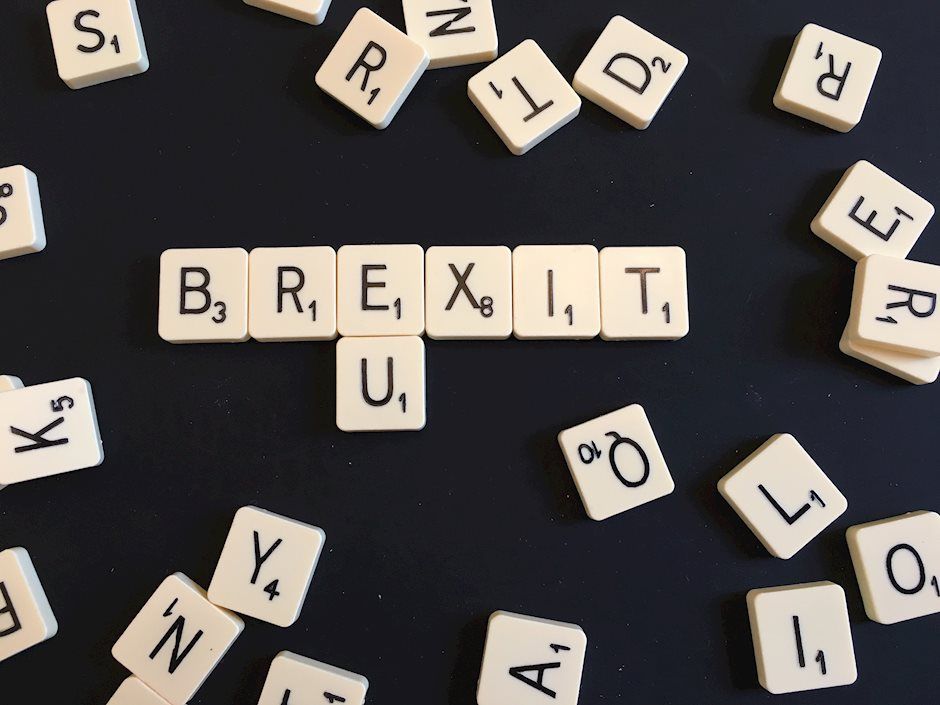

The October 31 deadline for the UK to leave the EU is less than 100 days away. The new Prime Minister is beginning to convince others that that UK will, in fact, leave at the end of October. PredictIt.Org shows the odds of the UK leaving has risen to almost 50% from about a 33% chance a month ago. Here is a summary of where the situation stands and some key dates going forward.
1. Boris Johnson handily won the Tory Party leadership challenge and succeeded May. He quickly gave key ministerial posts to those favoring leaving without an agreement rather than accept the Withdrawal Agreement. The new government has adopted a confrontational approach to the EU, and it has yet to be proved whether this will have greater success than the previous government.
2. There are three important players in this macabre dance. First is the government that is dominated by the hardline-wing of the Conservative Party. The moderate and Remain wing is on the backbenches now. Parliament is the second key player. It has taken steps to try to frustrate the government's effort to leave the EU without an agreement. The third power is the European Commission, which has made it clear that there will be no dilution of the backstop.
3. Not much will likely take place in August. Given Johnson's preconditions, namely that the Withdrawal Agreement, which was the product of extensive negotiations is not workable. It ought to be re-drafted with the backstop for Irish border jettisoned entirely. Otherwise, he says, there is nothing to negotiate. The August 24 G7 summit in France may be a venue for talks. Meanwhile, Tory moderates will work with other parties to find other means to prevent a no-deal exit. The Tory's two-seat working majority in the House of Commons will likely fall to one after the August 1 byelection in a Welsh constituency. The Bank of England also meets on August 1, and in recognition of the economic paralysis caused by the uncertainty over Brexit, it will likely give up its tightening bias for a neutral stance.
4. Tensions will ratchet up beginning in September. Parliament's new session starts on September 3. The government is likely to face a confidence motion. At the end of the month (September 29), the Conservative Party holds its annual conference. There is an EU Summit for October 17-18, and that would be seen as the last fail-safe date.
5. UK Attorney General Cox authoritatively opined recently that Johnson can legally lead the UK out of the EU on October 31 without a deal even if he loses a vote of confidence, the government falls, and a general election is planned. The latest polls show the Tory Party around 10 percentage points ahead of Labour.
6. Sterling has been trending lower since the end of Q1 when the exit was pushed back to October 31. It is off about 4% here in July against the US dollar, the largest monthly loss since the flash crash in October 2016 (~5.6%) and the referendum in June 2016 (~-8.1%). Assuming that sterling does not stage a significant recovery in the next two sessions, this will be the 13th consecutive week that sterling has fallen against the euro. Sterling's decline will impact inflation expectations (higher), which saps the purchasing power of consumers. It will boost the earnings of the global companies that are headquartered in the UK. The FTSE 100, weighted toward such companies, has been an outperformer over the past three months (up ~2.7% vs. -1.6% for the Dow Jones Stoxx 600).
7. Implied volatility has trended higher as sterling has fallen to levels not seen in more than two years. Three-month volatility is a benchmark, and it is now near 11%. It began the month below 7%. The 100-day moving average is a little above 8%. The uncertainty is palpable and lingers. The one-year implied vol is a bit below 10%, and its 100-day moving average is near 9%.
8. In the event of a no-deal Brexit, there is speculation that the Bank of England would cut interest rates, even if sterling is weak, and would likely resume its assets purchases. The government is preparing for a no-deal Brexit, and this may boost spending and inventory accumulation over the next couple of months.
9. With spot around $1.2185, indicative pricing puts the three-month forward near $1.2240. The median forecast in the Bloomberg survey puts sterling near $1.26 in three-months. Given the current volatility, the implied range is about $1.1520-$1.2960.
10: Calendar
Aug 1 BOE meeting, byelection in Brecon Radnorshire
Aug 9 UK Q2 GDP
Aug 24 G7 summit in France
Sept 3 Parliament reconvenes
Sept 12 ECB meeting
Sept 18 FOMC meeting
Sept 19 BOE meeting
Sept 29 Conservative Party Conference
Oct 4 ECB meeting
Oct 17-18 EU Summit
Oct 30 FOMC meeting
Oct 31 Brexit
Author
Marc Chandler
Marc to Market
Experience Marc Chandler's first job out of school was with a newswire and he covered currency futures and Eurodollar and Tbill futures.

















