Brent Crude Oil experiences sharp price decline

Brent crude oil prices have significantly decreased, reaching 71.46 USD per barrel on Tuesday. Prices fell nearly 6% earlier in the week, marking the most prominent daily drop in two years. The price reduction reflects the market’s reaction to developments in the Middle East, where the escalation of tensions has somewhat subsided.
Over the weekend, Israel’s measured response to Iran, which notably avoided impacting oil facilities and nuclear sites, substantially lowered the risk premium associated with potential disruptions in oil supplies from the region. Furthermore, Israeli officials expressed willingness to consider a temporary ceasefire in the Gaza Strip in exchange for the release of hostages, which has helped reduce some geopolitical risks that were previously inflating oil prices.
With the immediate threats in the Middle East receding, market focus has shifted back to the underlying weak economic data from China and the ongoing production levels from OPEC members. Additionally, upcoming US employment data will be closely monitored as it may provide further clues about the Federal Reserve’s forthcoming rate decisions. The prevailing expectation is two more rate cuts of 25 basis points each before the year ends, a scenario generally supportive of the energy sector. However, much of this has already been priced into the market.
Technical analysis of Brent
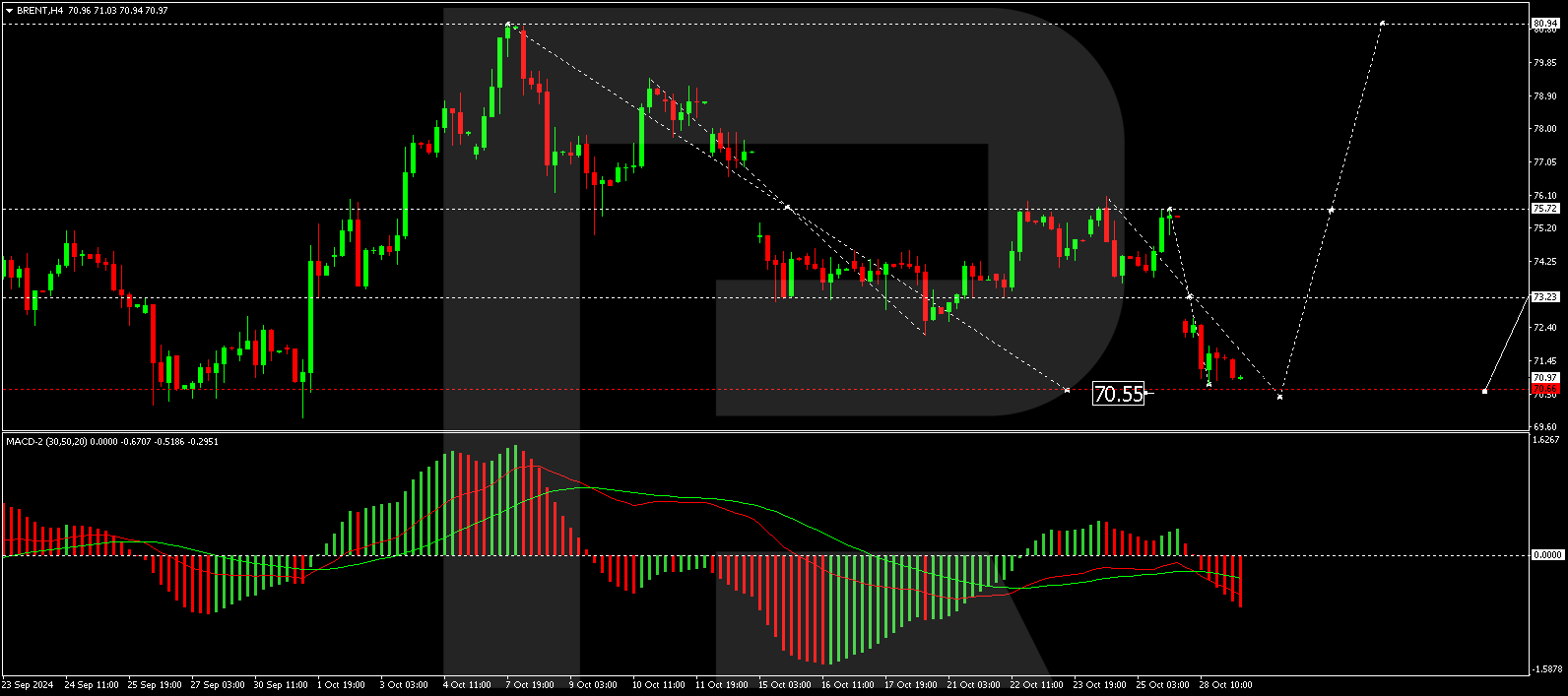
Brent crude is currently developing a corrective pattern targeting the 70.55 USD level. If this level is reached, the market may anticipate a rebound towards 75.75 USD. A breach above this could open up the possibility for a rally towards 80.90 USD, with further prospects to reach as high as 85.85 USD. The MACD indicator supports this bullish outlook, as its signal line is positioned below zero, indicating potential for an upward movement.
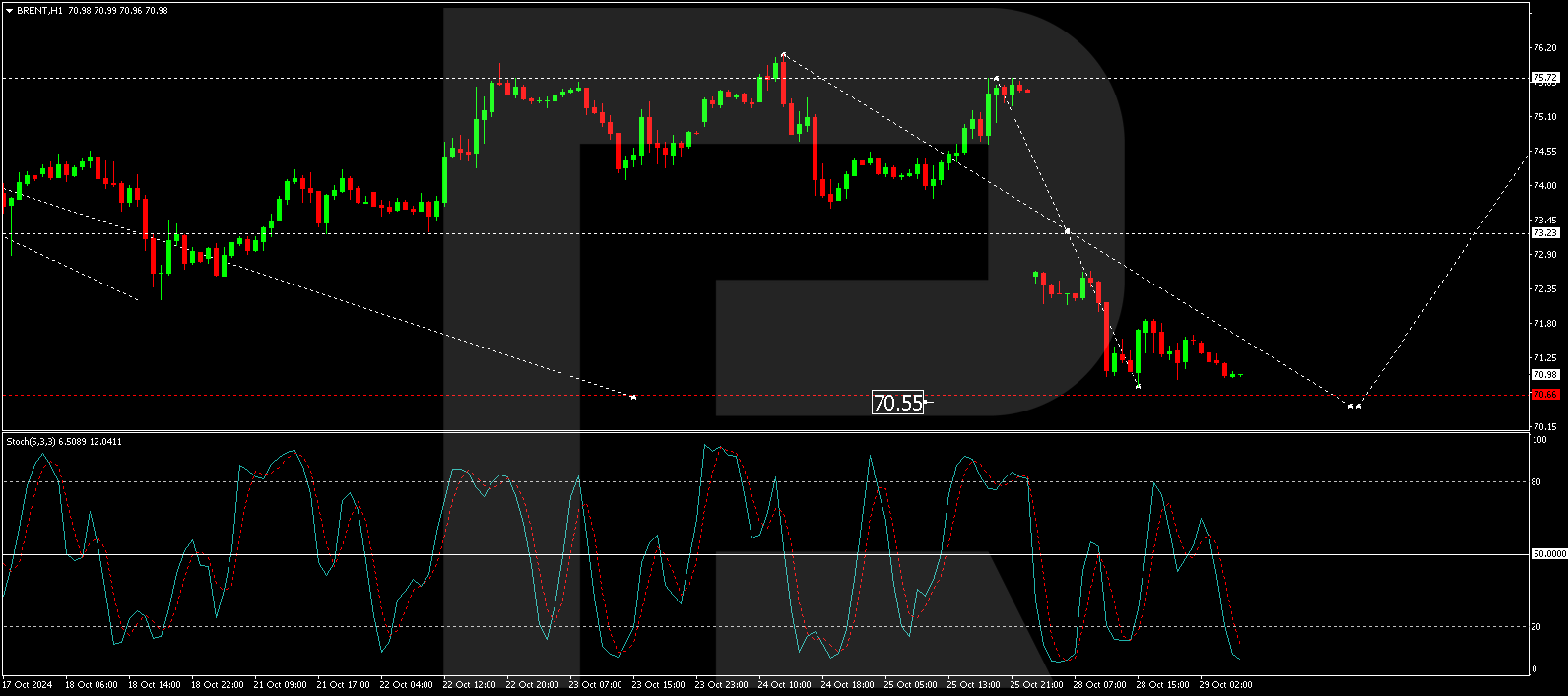
On the hourly chart, Brent is finalising a correction to 70.50 USD, currently forming the fifth wave of this corrective phase. Once the target of 70.50 USD is achieved, expectations shift towards a new growth wave, aiming for 73.23 USD as the initial target. This bullish Brent forecast is corroborated by the Stochastic oscillator, with its signal line poised below 20, suggesting a pending upward correction.
Author

Andrey Goilov
RoboForex
Higher economic education. Andrey Goilov has been working on the Forex market since 2005. A financial analyst and successful trader. Preference in trading is highly volatile instruments.