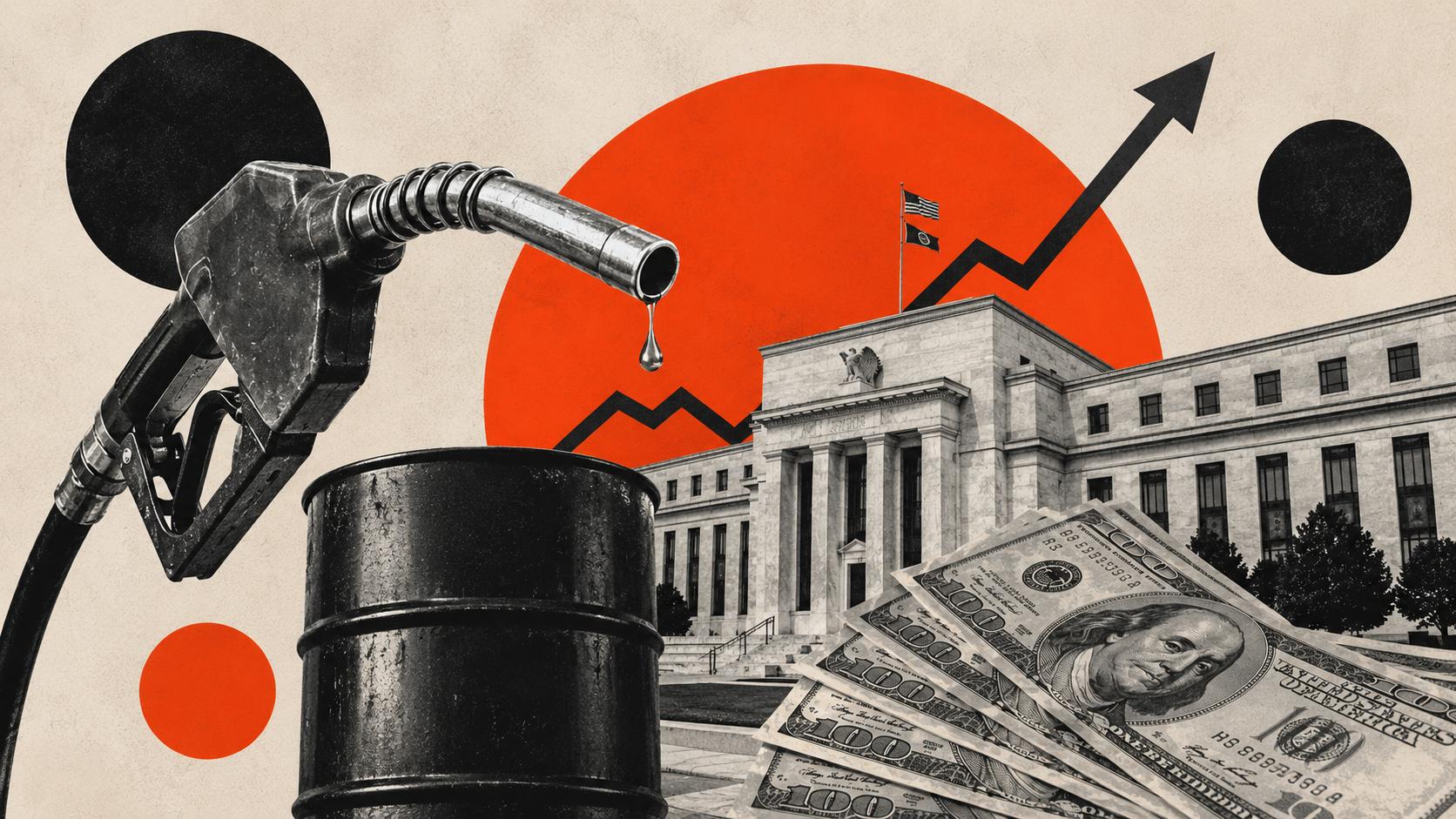
BoJ kicks off central bank week as US-Iran reach peace deal
In focus today
Today, the Swedish Labour Force Survey for May will be published. Public Employment Service data last week showed unchanged unemployment for the fifth straight month. Given the volatility in AKU unemployment, we avoid monthly forecasting. Statistics Sweden has also warned that non-response composition may have biased recent estimates, likely overstating unemployment in March and understating employment in March and April.
Overnight, we expect the Bank of Japan to raise its policy rate to 1% for the first time since 1995. Hawkish voices on the policy board have become more prominent and, with real wage growth back in positive territory and the economy holding up, we think the Bank of Japan is now ready to move.
China will also release its monthly activity data, with focus on housing and retail sales. The domestic economy weakened in April, and we expect further softness in May, as the Iran war has added uncertainty for consumers with a strong preference for saving. A key point to watch is whether the pace of home price declines continues to slow, which would suggest the market is nearing a bottom.
A string of other central banks will follow with rate announcements, starting with the Reserve Bank of Australia on Tuesday, the Fed and the Riksbank on Wednesday, and Norges Bank, Bank of England and SNB on Thursday. In addition, market focus during the week is likely to centre on developments in the Middle East and any further details released on the US-Iran peace framework.
Economic and market news
What happened overnight
US and Iran announced a 60-day peace framework, marking a significant de-escalation of the conflict. While full details are not yet public, media reports suggest Iran will reopen the Strait of Hormuz in exchange for the US lifting its naval blockade, waiving sanctions on Iranian oil and releasing part of Iran's frozen assets. Iran would be allowed to dilute enriched uranium on site, with the broader future of its nuclear programme to be negotiated during the 60-day window. The deal reportedly also covers Lebanon, although Israel has not yet commented. Brent prices have fallen around 5% to about USD 83/bbl, while equities have reacted positively to reduced geopolitical risk.
What happened over the weekend
Switzerland rejected a proposal to cap its population at 10 million, with 55% of voters opposed and 45% in favour. The government and many lawmakers warned the cap would damage the economy and restrict access to foreign labour. The result brings relief to businesses, yet the strong backing for the proposal highlights persistent concern about immigration levels.
In the US, consumer sentiment improved in June. The headline index rose to 48.9 from 44.8 in May, as both current conditions and expectations higher. Overall, the data indicate that households are somewhat less pessimistic than in May, particularly about the future, although sentiment levels remain subdued in a historical context.
In the UK, April GDP confirmed the slowdown signalled by earlier PMI readings, with the economy contracting 0.1% m/m after relatively solid growth in February and March. The decline was driven by a 0.2% fall in services, partly offset by modest growth in construction and flat production. As companies cite pressures from the Iran war and higher fuel costs, the data indicate that underlying momentum has weakened in line with the softening seen in survey indicators.
Equities: A deal between US and Iran - including a reopened Strait of Hormuz - is complete. Importantly, this is the message from both Iran and US officials. European futures jump 1.5% on the news and S&P 500 futures 1.2%. Asia is outright rallying, with South Korea and Japan up 5%. Importantly, oil prices have already fallen back to normal levels at USD 83 per barrel. This can compare to the 70-dollar prices prior to the war, in other words, not a material difference despite the reserve drainage. Just as the oil price jump made up a triple wammie of negatives through 1) higher energy costs 2) falling equity prices 3) and higher rates as markets discounted rate hikes, this will be a positive cocktail, reinforcing each other in a positive way.
Equities were higher already on Friday and for the week. S&P 500 closed 0.5% and Stoxx 600 1.9%. Tech was generally weak last week, which is a trend shift from the April-May markets. What is interesting, however, is that that other sectors have compensated for this weakness. Almost all sectors are higher for the week, primarily materials, consumer staples, real estate and financials. This is an odd mix of sectors, with the only common attribute that they have lagged in the April-May rally. Hence, tech weakness is leading to catch-up elsewhere, rather than a broader selloff. This is very much in line with our Equity strategy report published last week, where we removed many cyclical overweights as we argued for a broader catch-up. This catch-up should only accelerate now that the peace deal is signed.
FI and FX: Positive risk-sentiment has emerged following the announcement of an interim accord to halt the war between the US and Iran and to reopen the SOH. The agreement is a first step and does not entail an agreement on the nuclear program. Oil prices dropped by close to 5% with July Brent futures trading at USD 83/bbl. US treasury yields are moving lower this morning, while Asian equities are rallying. EUR/USD is trading slightly higher and is back above the 1.16 level. Ahead of the signing between US and Iran this Friday in Switzerland, markets face a packed week of central bank meetings with the BoJ, the RBA, the Riksbank, the Fed, the SNB, the BoE and Norges Bank all announcing their latest policy decisions.
Author

Danske Research Team
Danske Bank A/S
Research is part of Danske Bank Markets and operate as Danske Bank's research department. The department monitors financial markets and economic trends of relevance to Danske Bank Markets and its clients.