BoE and ECB decisions shape GBP/USD and EUR/USD outlooks

Bank of England: Dovish tone weighs on the Pound
The Bank of England (BoE) kept interest rates steady at 3.75%, but the vote was close — four out of nine members wanted another cut. That’s strengthened expectations for a rate cut in March, especially as inflation trends lower and wage growth cools.
The BoE now estimates that wage growth consistent with 2% inflation is around 3.25%, not far from current private-sector pay growth of 3.6%. With inflation likely to drop to around 1.8% by April, the central bank appears increasingly comfortable easing policy again soon.
Governor Andrew Bailey remains the key swing voter, and if the next set of data confirms a softer labour market and slower pay growth, he’s expected to support a rate cut next month. Markets are already pricing in further easing through the summer.
GBP/USD technical outlook
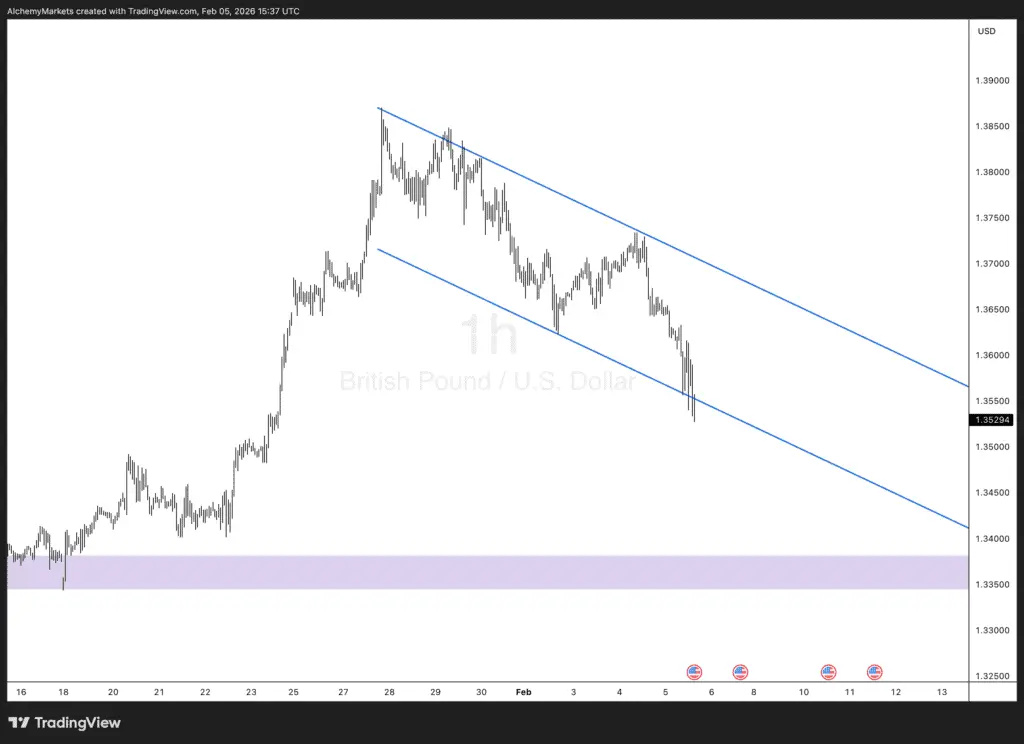
GBP/USD has been declining steadily, reflecting the market’s expectation of BoE rate cuts and overall dovish sentiment.
The 4-hour chart shows the pair trading inside a clear descending channel, now sitting around 1.3536. This pattern signals that sellers remain in control for now.
However, there’s a strong support zone near 1.34, which aligns with a prior accumulation area. If the price breaks below this channel, it could retest that zone.
Conversely, a break above the upper channel line would suggest a shift in momentum — potentially opening the way toward 1.37–1.38 in the near term.
Summary:
- Trend: Bearish within a channel
- Support: 1.34
- Resistance: 1.37–1.38
- Catalyst: March BoE meeting
European Central Bank: Comfortably on hold
The European Central Bank (ECB) also kept interest rates unchanged, showing confidence that the eurozone economy is in a “good place.” Inflation is hovering near 2%, growth remains steady, and there’s no immediate pressure to tighten or loosen policy.
That said, history shows the ECB often resumes rate cuts after long pauses if conditions shift. If the euro strengthens significantly or inflation dips below target, policymakers could opt for another small “insurance cut” later this year to prevent an undershoot in inflation.
For now, though, the ECB seems content to wait — and the market has responded with calm trading conditions.
EUR/USD technical outlook
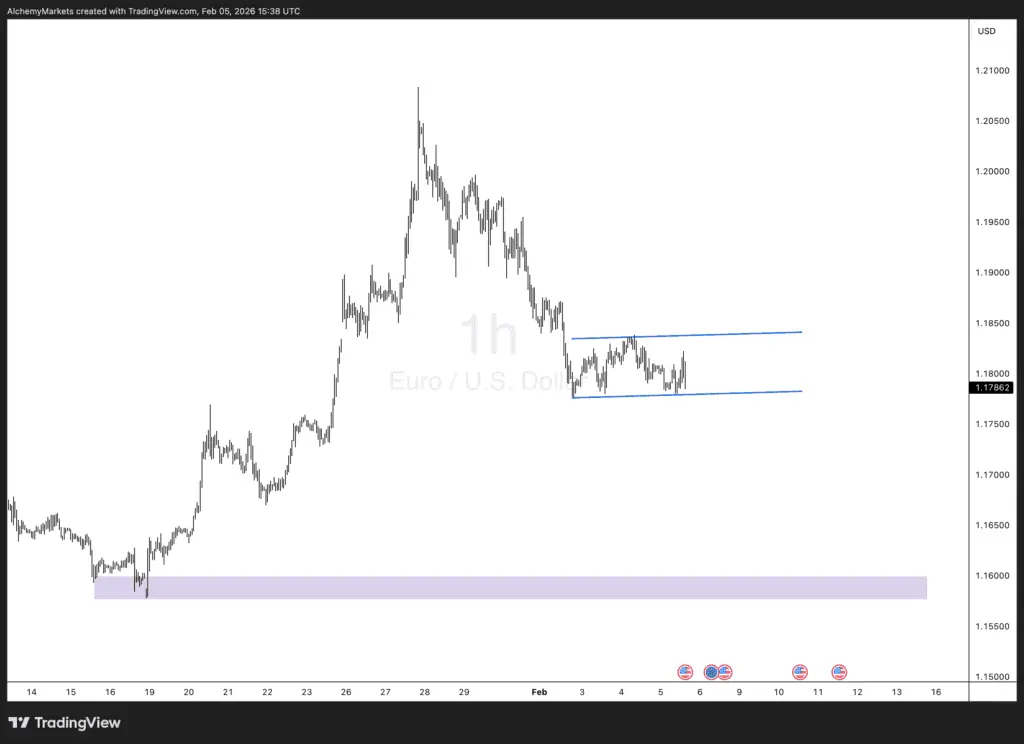
EUR/USD has been trading sideways, reflecting this steady stance. The pair is moving within a horizontal rangebetween 1.1780 and 1.1840, suggesting market indecision and low volatility.
If traders become convinced the ECB will cut rates again, or if the euro strengthens too far, we could see the pair break lower, extending its recent downtrend. For now, consolidation continues until a fresh catalyst emerges.
Summary:
- Trend: Sideways
- Range: 1.1780–1.1840
- Downside risk: Break below 1.1780 → 1.17 target
- Catalyst: ECB tone shift or euro strength
In short:
- The BoE’s dovish tone is weighing on the pound, keeping GBP/USD under pressure.
- The ECB’s calm approach keeps the euro steady, but a stronger euro could trigger renewed talk of rate cuts.
Both central banks are leaning dovish — and that means the next big moves in FX are likely to come from interest rate expectations, not surprises.
Author

Zorrays Junaid
Alchemy Markets
Zorrays Junaid has extensive combined experience in the financial markets as a portfolio manager and trading coach. More recently, he is an Analyst with Alchemy Markets, and has contributed to DailyFX and Elliott Wave Forecast in the past.