Aussie Jumps After Hawkish RBA Statement

The Japanese yen was little moved against the USD in the Asian session as the country’s service PMI numbers came out better than expected. The numbers from Nikkei-Markit showed that the services PMI were at 51.6 in January, up from 51.0 in December. This number presented a rare bright spot for the Japanese economy that is currently going through challenges as the core manufacturing sector slows. The country’s export sector is also slowing. In December, exports shrank at the quickest pace while growth in the manufacturing sector slowed.
The Asian market rose today as a reaction to the bullish momentum from the United States. Yesterday, US stocks continued the upward trend with the Dow, S&P, and Nasdaq gaining by 0.70%, 0.68%, and 1.15% respectively. The reason for the climb was the reaction to the strong jobs numbers on Friday and the relatively strong earnings season. Today, in Asia, the broader MSCI index that covers the region rose by 0.4% and neared the four-month high. However, there was no trading in most of the region as the markets closed for the Lunar New Year.
The Australian dollar rose sharply after a hawkish statement from the central bank, which left interest rates unchanged at 1.50%. In the statement, governor Philip Lowe said that the country’s economy was doing well with the unemployment rate expected to reduce to below 5%. Inflation rose by 1.8% in 2018 and is expected to pick up. The statement said:
The low level of interest rates is continuing to support the Australian economy. Further progress in reducing unemployment and having inflation return to target is expected, although this progress is likely to be gradual. Taking account of the available information, the Board judged that holding the stance of monetary policy unchanged at this meeting would be consistent with sustainable growth in the economy and achieving the inflation target over time.
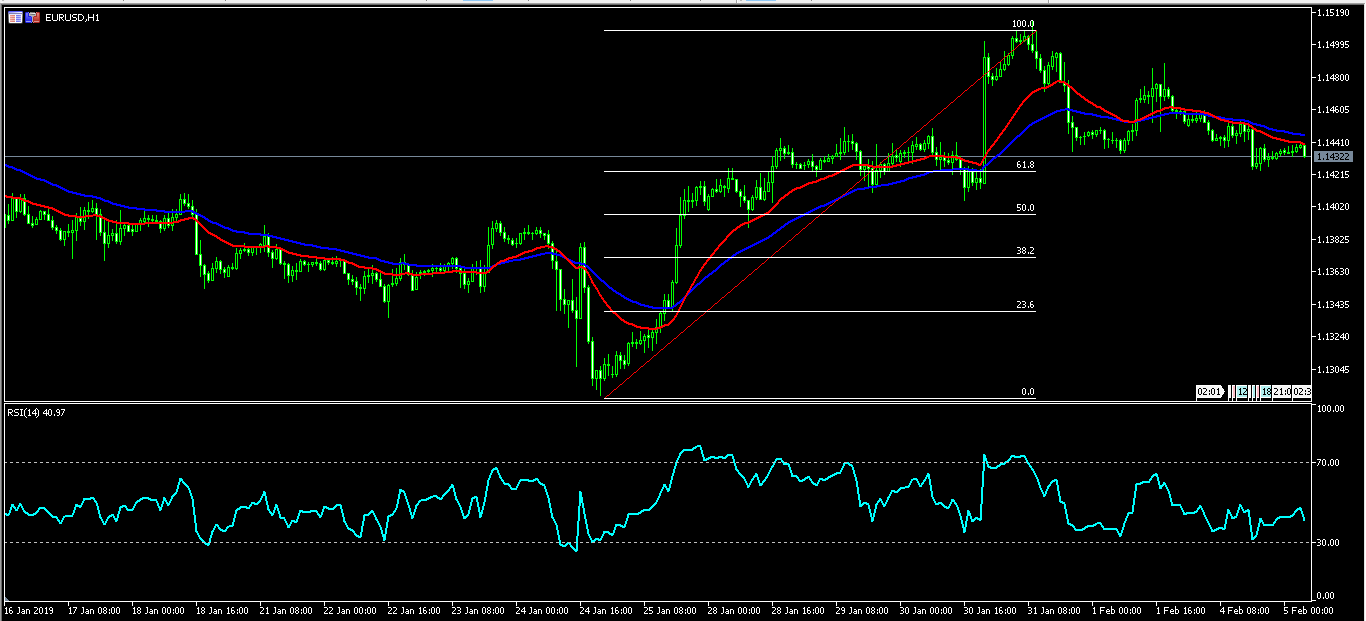
The EUR/USD pair was little moved in overnight trading as consolidation continued. The pair is now trading at 1.1435, which is lower than Friday’s high of 1.1515. The current price is below the 50 and 25-day EMAs while the RSI has remained in the 40s level. This price is also along the 61.8% Fibonacci Retracement level. In case the pair declines further, traders should focus on the 50% Fibonacci level of 1.1400.
AUD/USD
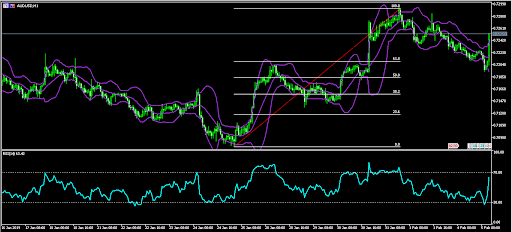
The AUD/USD pair jumped sharply after the RBA’s monetary policy decision. It reached a high of 0.7250, which was the highest level since Friday. This level is between the 61.8% and 100% Fibonacci Retracement levels. The level is also along the upper line of the Bollinger Band while the RSI too has jumped to almost the 70 level. While the pair could fall slightly, there is a possibility that the price will continue the upward trend.
XAU/USD
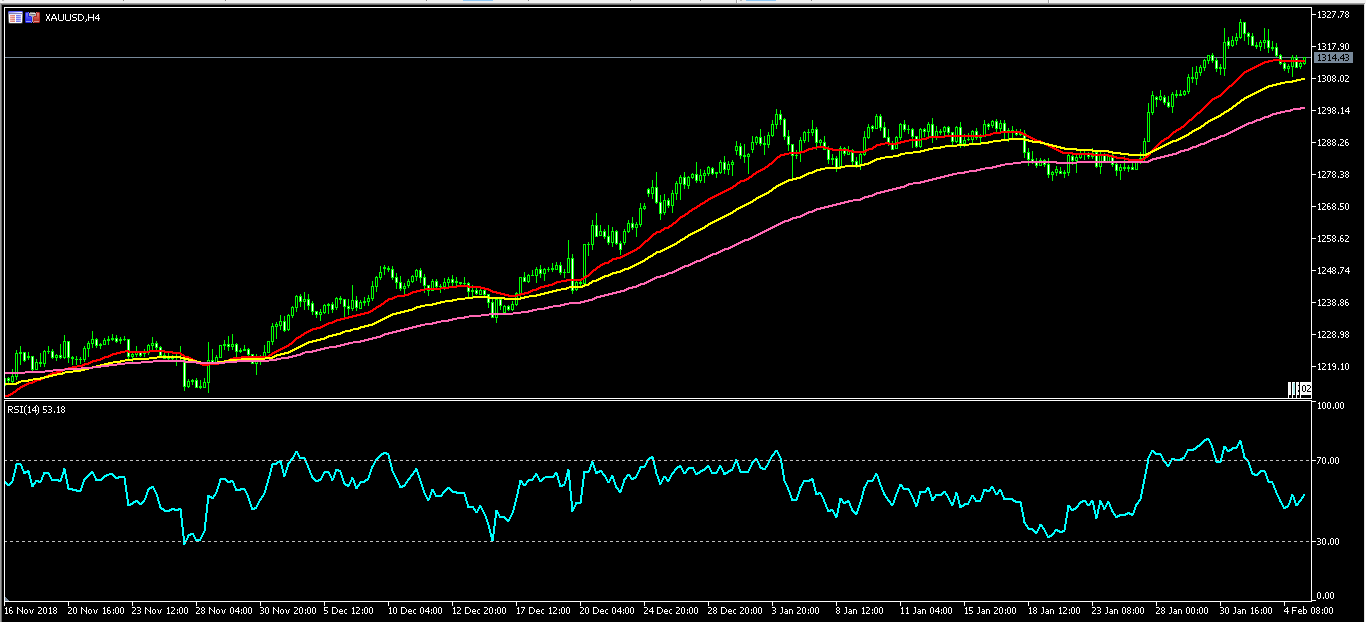
The price of gold has eased a bit as concerns about the pace of monetary policy mount. The XAU/USD pair is now trading at 1315, which is slightly lower than this year’s high of 1325. On the four-hour chart, the pair is above the 50-day EMA. It is also above the 100-day EMA, while the RSI has halted the previous declines. There is a possibility that the pair will continue the upward trend and test the important resistance level of 1350.
Author

OctaFx Analyst Team
OctaFX
OctaFX is a market-leading forex broker, providing personalised forex brokerage services to customers in over 100 countries worldwide.


![How Wall Street rigs the game [Video]](https://editorial.fxsstatic.com/images/i/market-chaos-01.jpg)