AUD/USD stabilises amid US Dollar pressures and domestic economic strength


On Monday, the AUD/USD pair remains stable around the 0.6450 mark. After benefiting from the US dollar's weakness during the extended US holiday weekend, the currency pair faced new pressures following remarks by US President-elect Donald Trump. Trump's threat to impose 100% trade tariffs on BRICS nations if they pursue a universal currency to replace the US dollar has sparked a renewed demand for safe-haven assets, bolstering the USD.
October's retail sales figures exceeded expectations, supporting the Australian dollar, and reinforcing the market's belief that the Reserve Bank of Australia (RBA) may not cut rates soon. RBA Governor Michele Bullock recently highlighted that core inflation remains elevated, which justifies continuing a restrictive monetary policy stance. The RBA believes it will take some time before inflation stabilises near its target.
Technical analysis of AUD/USD
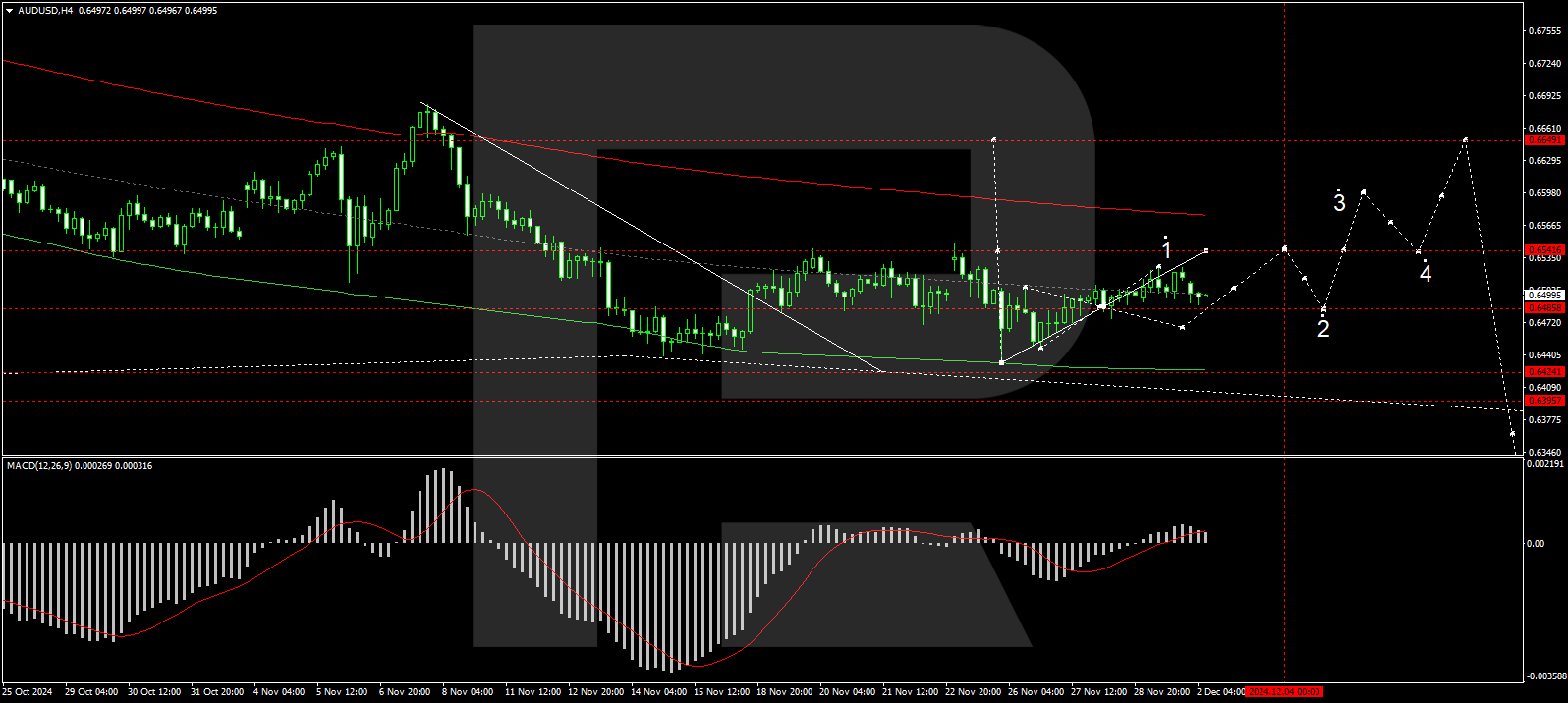
H4 chart: the AUD/USD is currently in the first phase of a correction wave, having achieved a local target at 0.6527. The market is now forming a decline structure towards 0.6466, and once this level is reached, a new growth phase will begin, aiming for 0.6542. This scenario is supported by the MACD indicator, which shows the signal line above zero and trending upwards, indicating potential for continued growth.
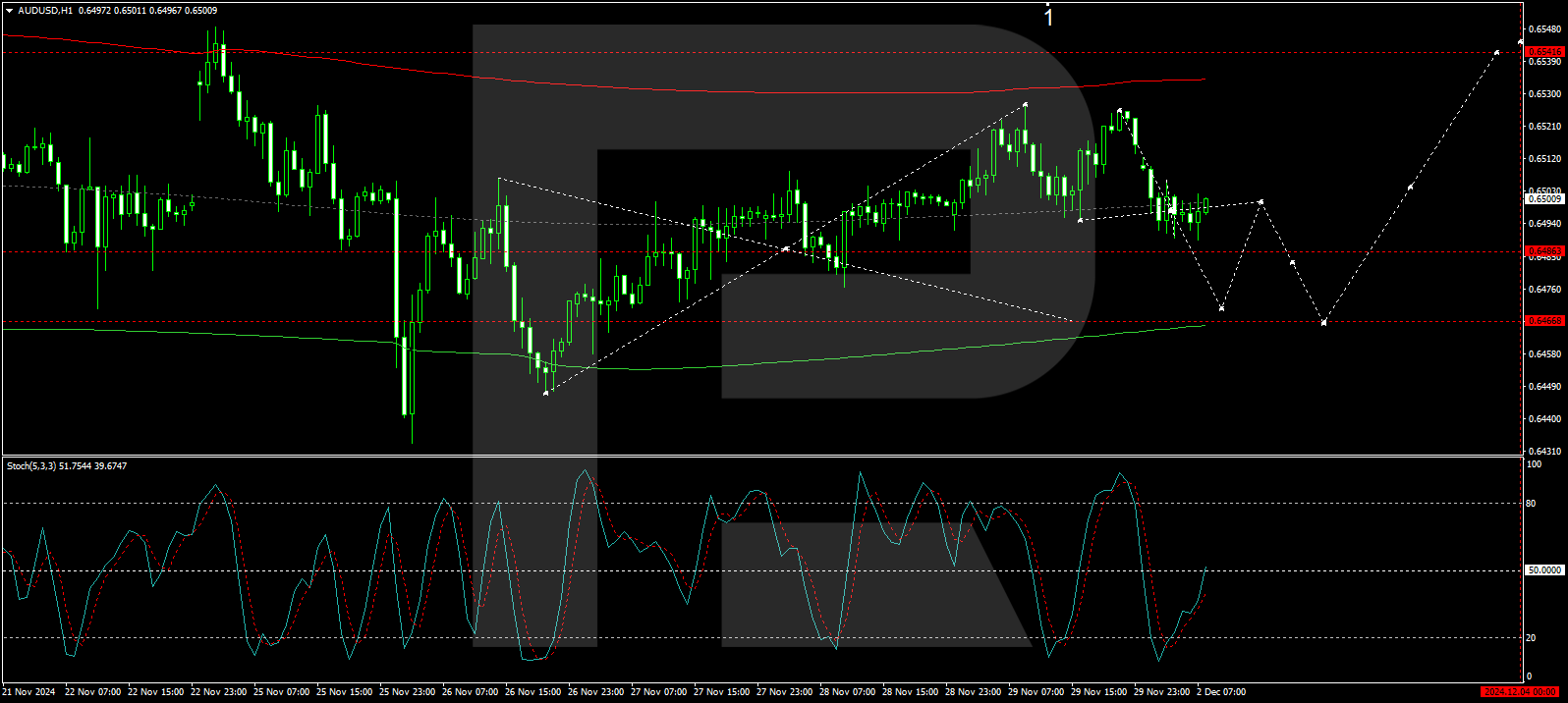
H1 chart: the pair has nearly reached the local growth target of 0.6527. A decline to 0.6470 is expected shortly, followed potentially by a rise to 0.6500 and then a drop to 0.6466. If this level is achieved, the market may prepare for another upward movement towards 0.6542. The Stochastic oscillator supports this outlook, with its signal line currently below 50 and expected to drop to 20, suggesting a forthcoming reversal and potential for growth.
Author
Andrey Goilov
RoboForex
Higher economic education. Andrey Goilov has been working on the Forex market since 2005. A financial analyst and successful trader. Preference in trading is highly volatile instruments.