SNB keeps Sight Deposit Rate steady at 0% as expected
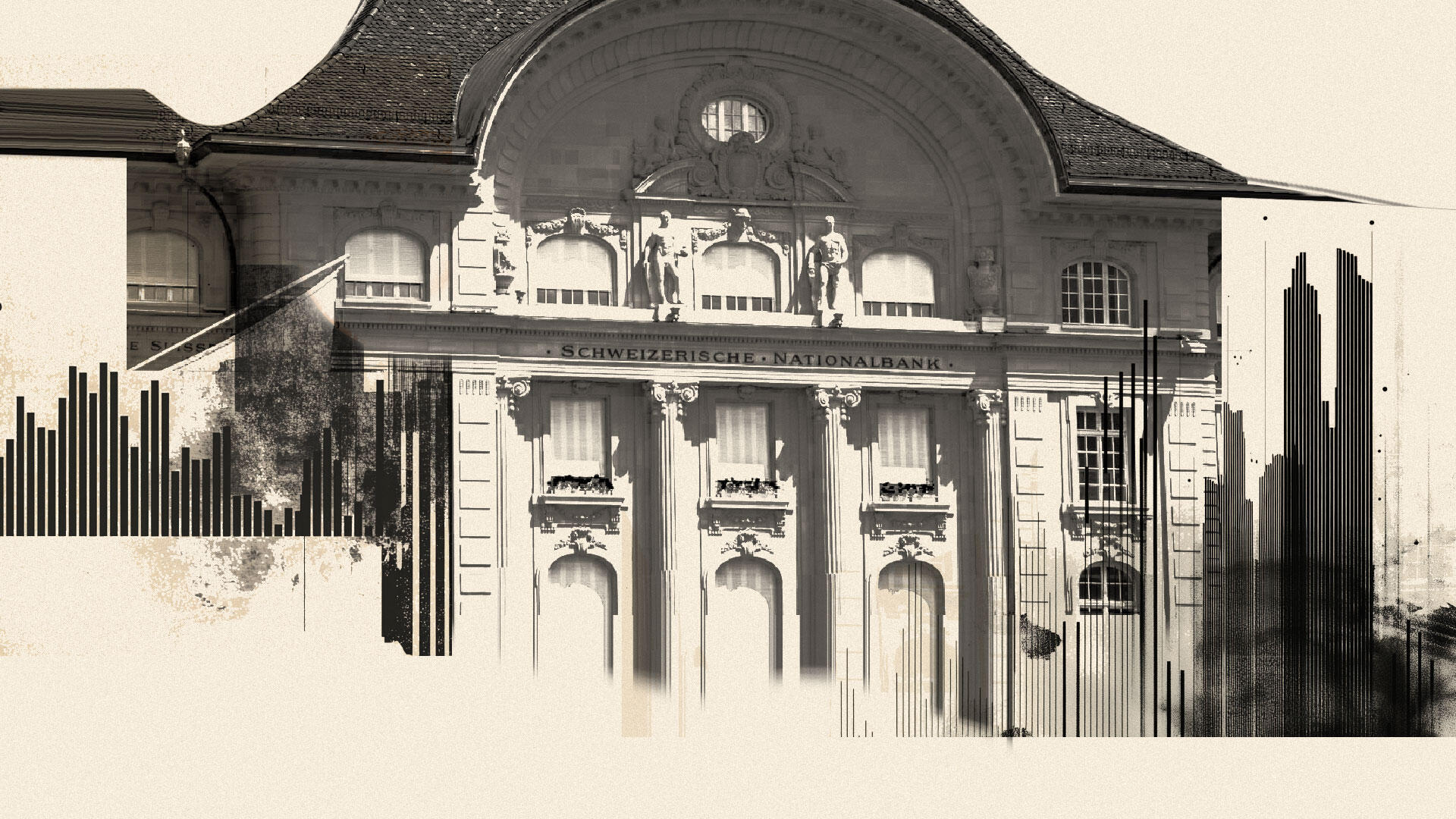
The Swiss National Bank (SNB) announced on Thursday that it left the benchmark Sight Deposit Rate unchanged at 0% after concluding its quarterly monetary policy assessment for the September quarter.
The decision aligned with the market expectations.
The central bank paused after six consecutive rate cuts from March last year to June this year.
Summary of the SNB policy statement
SNB sees 2025 Swiss GDP at around 0.2% (previous forecast was for 1.0-1.5%).
SNB sees 2025 Swiss GDP at around 1-1.5% (previous forecast was for 1.0-1.5%).
SNB sees Q2 2028 inflation at 0.0%.
SNB sees 2026 Swiss GDP at around 1% (previous forecast was for 1.0-1.5%).
Global economic growth slowed somewhat in the first half of 2025.
Global economic developments are being dampened by us tariffs and ongoing high uncertainty.
SNB anticipates that growth in the global economy will be subdued over the coming quarters.
Inflation in the us is likely to remain elevated for some time. In the euro area, on the other hand, inflation is expected to stay close to target.
Trade barriers could be raised further, leading to a more pronounced slowdown in the global economy.
It also cannot be ruled out that the global economy will prove more resilient than expected.
Economic outlook for Switzerland has deteriorated due to significantly higher us tariffs.
Tariffs are likely to dampen exports and investment especially.
Companies in the machinery and watchmaking industries are particularly affected.
In this environment, unemployment is likely to continue rising.
Economic outlook for Switzerland remains uncertain. Main risks are the US trade policy, global economic developments.
Market reaction to the SNB interest rate decision
The USD/CHF keeps its range near 0.7950 in an immediate reaction to the SNB interest rate decision. The pair is modestly flat on the day, as of writing.
Swiss Franc Price Today
The table below shows the percentage change of Swiss Franc (CHF) against listed major currencies today. Swiss Franc was the strongest against the New Zealand Dollar.
| USD | EUR | GBP | JPY | CAD | AUD | NZD | CHF | |
|---|---|---|---|---|---|---|---|---|
| USD | -0.02% | -0.07% | -0.15% | 0.00% | -0.13% | -0.12% | 0.03% | |
| EUR | 0.02% | -0.06% | -0.14% | 0.01% | -0.08% | -0.10% | 0.05% | |
| GBP | 0.07% | 0.06% | -0.06% | 0.08% | -0.06% | -0.02% | 0.14% | |
| JPY | 0.15% | 0.14% | 0.06% | 0.11% | -0.01% | 0.18% | 0.18% | |
| CAD | -0.00% | -0.01% | -0.08% | -0.11% | -0.10% | -0.11% | 0.07% | |
| AUD | 0.13% | 0.08% | 0.06% | 0.01% | 0.10% | 0.30% | 0.14% | |
| NZD | 0.12% | 0.10% | 0.02% | -0.18% | 0.11% | -0.30% | -0.10% | |
| CHF | -0.03% | -0.05% | -0.14% | -0.18% | -0.07% | -0.14% | 0.10% |
The heat map shows percentage changes of major currencies against each other. The base currency is picked from the left column, while the quote currency is picked from the top row. For example, if you pick the Swiss Franc from the left column and move along the horizontal line to the US Dollar, the percentage change displayed in the box will represent CHF (base)/USD (quote).
This section below was published at 05:05 GMT as a preview of the Swiss National Bank (SNB) interest rate decision.
SNB Interest Rate Decision Overview
The Swiss National Bank (SNB) interest rate decision is scheduled this Thursday, September 25, 2025, at 07:30 GMT, which will be followed by the post-meeting press conference at 08:00 GMT. The central bank is widely expected to leave its policy rate unchanged at 0.0% for the second straight meeting after six consecutive rate cuts since March of last year.
Moreover, market projections do not anticipate further rate cuts for the year, and any adjustments next year remain uncertain. Hence, investors will scrutinize comments from SNB Chairman Martin Schlegel for cues about thresholds required to consider negative rates again. This, in turn, will play a key role in influencing the Swiss Franc (CHF) in the near term and provide some meaningful impetus to the USD/CHF pair.
How could the decision/outlook affect USD/CHF?
Domestic inflation is below the SNB’s target, and the recent CHF appreciation could easily force the SNB to re-enter negative interest rates. This, in turn, negates the possibility of any hawkish signal and suggests that the path of least resistance for the CHF is to the downside.
Heading into the key central bank event risk, the USD/CHF pair is seen oscillating in a narrow band around mid-0.7900s amid a modest US Dollar (USD) downtick. A dovish outlook should allow spot prices to build on the previous day's bounce from the 0.7900 neighborhood, or the weekly low, and surpass last week's swing high, around the 0.7970-0.7975 area. Bulls might then aim towards reclaiming the 0.8000 psychological mark.
Conversely, any hawkish surprise could prompt aggressive selling and drag the USD/CHF pair back to the 0.7900 mark. Some follow-through selling will be seen as a fresh trigger for bearish traders and drag spot prices to the 0.7860-0.7855 intermediate support en route to the 0.7830 region, or the lowest level since September 2011, touched last week.
SNB FAQs
The Swiss National Bank (SNB) is the country’s central bank. As an independent central bank, its mandate is to ensure price stability in the medium and long term. To ensure price stability, the SNB aims to maintain appropriate monetary conditions, which are determined by the interest rate level and exchange rates. For the SNB, price stability means a rise in the Swiss Consumer Price Index (CPI) of less than 2% per year.
The Swiss National Bank (SNB) Governing Board decides the appropriate level of its policy rate according to its price stability objective. When inflation is above target or forecasted to be above target in the foreseeable future, the bank will attempt to tame excessive price growth by raising its policy rate. Higher interest rates are generally positive for the Swiss Franc (CHF) as they lead to higher yields, making the country a more attractive place for investors. On the contrary, lower interest rates tend to weaken CHF.
Yes. The Swiss National Bank (SNB) has regularly intervened in the foreign exchange market in order to avoid the Swiss Franc (CHF) appreciating too much against other currencies. A strong CHF hurts the competitiveness of the country’s powerful export sector. Between 2011 and 2015, the SNB implemented a peg to the Euro to limit the CHF advance against it. The bank intervenes in the market using its hefty foreign exchange reserves, usually by buying foreign currencies such as the US Dollar or the Euro. During episodes of high inflation, particularly due to energy, the SNB refrains from intervening markets as a strong CHF makes energy imports cheaper, cushioning the price shock for Swiss households and businesses.
The SNB meets once a quarter – in March, June, September and December – to conduct its monetary policy assessment. Each of these assessments results in a monetary policy decision and the publication of a medium-term inflation forecast.
Author

Haresh Menghani
FXStreet
Haresh Menghani is a detail-oriented professional with 10+ years of extensive experience in analysing the global financial markets.